
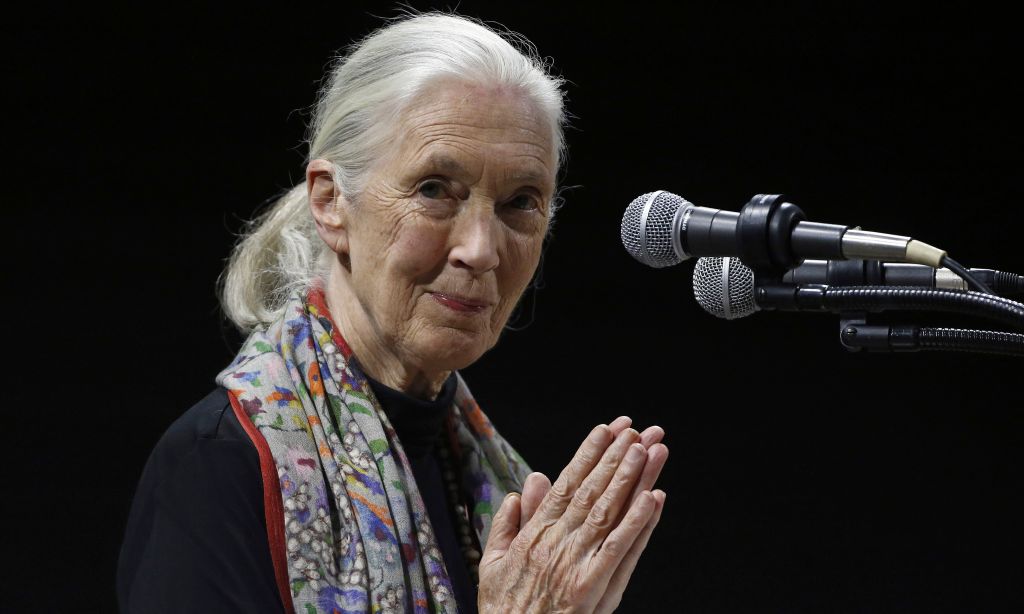
Jane Goodall, a thoughtful and gentle conservationist known for her pioneering, in-depth studies of chimpanzees where she observed their unique personalities and tool usage, has passed away. She was 91 years old.
The environmental activist gained widespread recognition, becoming a well-known figure in homes across generations due to her involvement in documentaries, television shows, and her global travels to speak at full auditoriums.
The Jane Goodall Institute shared the news of the primatologist’s passing on Wednesday through an Instagram post. As stated by the Washington, D.C.-based organization, Goodall passed away due to natural causes while she was in California on a speaking tour across the United States.
Her findings “transformed science, and she was a relentless supporter of preserving and rehabilitating our environment,” it stated.
During her time living with chimpanzees in Africa many years ago, Goodall recorded them engaging in actions that were once thought to be unique to humans. Her findings, along with her appearances in magazines and documentaries during the 1960s, changed the way people viewed not only humanity’s nearest biological relatives but also the emotional and social intricacies of all animals, while bringing her into the spotlight.
 |
|
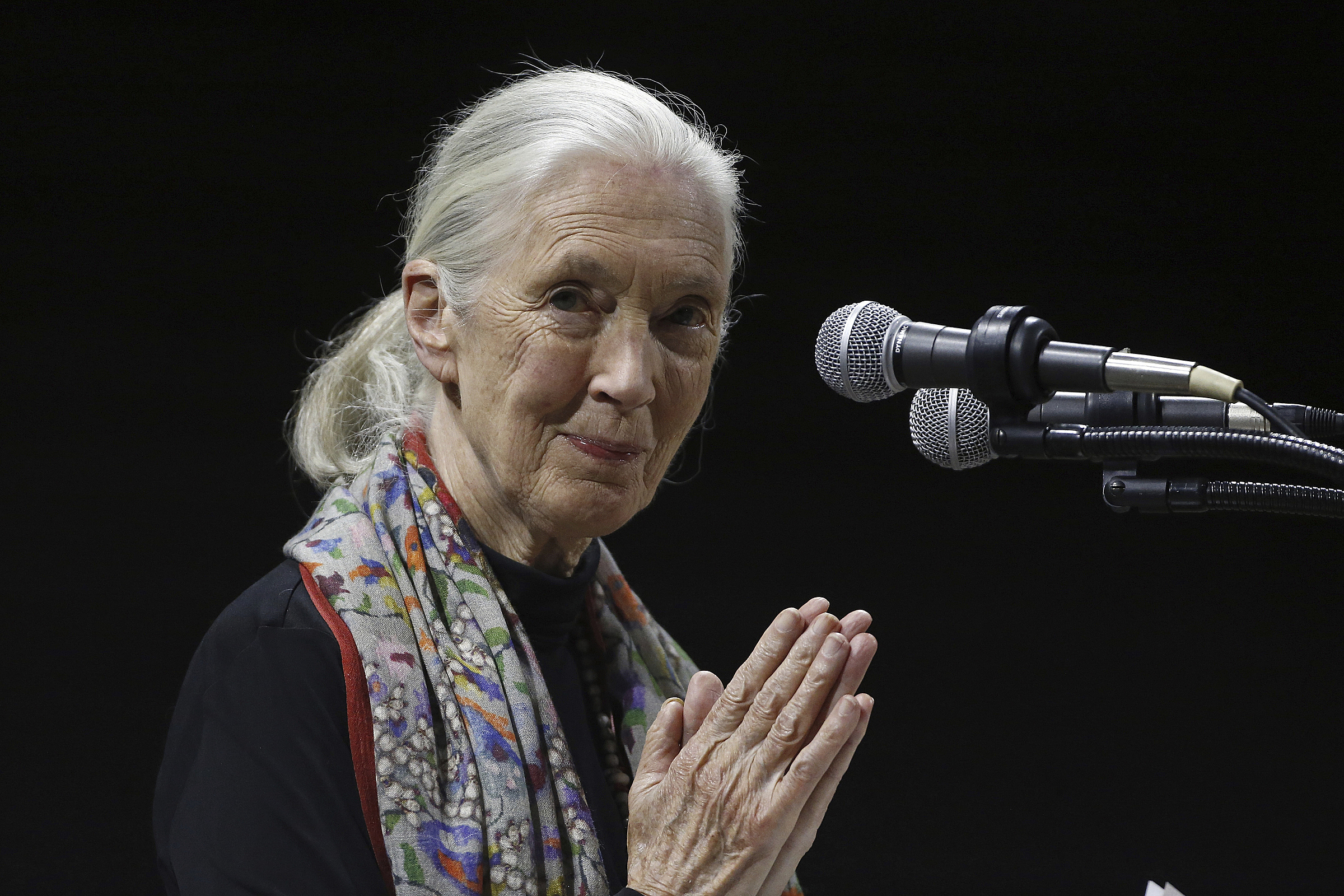
A primate scientist and environmentalist, Jane Goodall presents the 50th George Gamow Memorial Lecture at the University of Colorado in Boulder, Colorado, on October 1, 2015. Photo courtesy of AP. |
“Out in the wilderness by myself, when you’re alone, you can blend into nature and your human concerns don’t interfere,” she said.The Associated Pressin 2021. “It feels somewhat like a separation from one’s body when suddenly you start hearing various sounds and smelling different scents, and you become part of this incredible web of life.”
Goodall never gave up on the prospects of tomorrow.
She was scheduled to meet with students and teachers on Wednesday to start planting 5,000 trees in areas affected by wildfires in the Los Angeles region. Organizers found out about her passing just as the event was about to start at EF Academy in Pasadena, according to spokesperson Shawna Marino. The first tree was planted in Goodall’s honor following a moment of silence.
“I don’t believe there’s a more fitting way to celebrate her memory than by having a thousand children assembled in her honor,” Marino stated.
In her later years, Goodall spent many decades focusing on education and promoting humanitarian issues, as well as safeguarding the environment. With her distinctive British accent, she became recognized for combining the harsh truths of the climate crisis with an earnest message of optimism for what lies ahead.
From her base in the British coastal town of Bournemouth, she traveled nearly 300 days a year, even after she turned 90, for public speeches. Between more serious messages, her speeches often featured her whooping like a chimpanzee or lamenting that Tarzan chose the wrong Jane.
Messages of condolence from animal protection groups, government officials, and fans came in after the announcement of her passing.
“I am profoundly saddened by the news of Jane Goodall’s passing, our beloved Messenger of Peace. She leaves behind an incredible legacy for humanity and our planet,” stated United Nations Secretary-General António Guterres.
Nature presenter Chris Packham shared her unwavering support until the final moment.
In numerous respects, Jane perished while performing her duties,” he remarked. “The role that consumed her existence. And that was safeguarding life on Earth.
Living among the chimpanzees
While initially studying chimpanzees in Tanzania during the early 1960s, Goodall gained recognition for her unique methods. Rather than watching them from a distance, she became deeply involved in all areas of their existence. She provided them with food and assigned names rather than using numbers, a practice that drew criticism from some scientists.
Her discoveries were shared with millions when she first appeared on the cover of National Geographic in 1963 and later in a widely viewed documentary. A set of photographs featuring Goodall in the wild contributed to her fame, as well as that of some of the chimpanzees. One famous photo depicted her kneeling opposite the young chimp named Flint. Both had their arms extended, reaching toward each other.
In 1972, the Sunday Timesreleased an obituary for Flo, Flint’s mother and the leading female figure. Flint passed away shortly after displaying symptoms of sorrow and experiencing weight loss.
“What the chimpanzees have shown me over the years is that they are very similar to us. They have made the boundary between humans and animals less clear,” she stated in 1997.
Primatologist Catherine Hobaiter from the University of St. Andrews, who focuses on chimp communication, mentioned that hearing Goodall speak initially changed her perspective on science.
“It was the first time, as a young researcher studying wild apes and chimpanzees, that I realized it was acceptable to experience emotions,” she stated.
Goodall received high civilian awards from multiple nations. She was presented with the Presidential Medal of Freedom in 2025 by former U.S. President Joe Biden and in 2021, she secured the renowned Templeton Prize, which recognizes those whose lifetime achievements combine elements of science and spirituality.
The Humane World for Animals stated on Wednesday that Goodall’s impact on the animal welfare community was enormous.
“Her dedication to primates and all animals will always be remembered,” stated Kitty Block, president and CEO of the organization that was previously known as the Humane Society of the United States and Humane Society International.
Mapping a path from a young age
Born in London in 1934, Goodall mentioned that her interest in animals started around the time she began crawling. In her book, “In the Shadow of Man,” she shared an early memory of hiding in a chicken coop to watch a hen lay an egg. She stayed there for so long that her mother alerted the police, thinking she was missing.
She purchased her first book — Edgar Rice Burroughs’ “Tarzan of the Apes” — at the age of 10 and quickly decided on her future: to live among wild animals in Africa.
That plan remained with her during a secretarial course at age 18 and through two different jobs. By 1957, she received an invitation to travel to a farm in Kenya.
There, she encountered the renowned anthropologist and paleontologist Louis Leakey at a natural history museum in Nairobi. He offered her a position as an assistant secretary.
Three years later, even though Goodall did not have a college degree, Leakey inquired if she would like to study chimpanzees in what is currently Tanzania. She mentioned to the AP that he selected her “because he was looking for an open mind.”
The initial phase was marked by challenges. British officials required her to have a companion, so she brought her mother along. The chimpanzees would run away if she came within 500 yards (460 meters) of them. She also spent several weeks ill, believing it was malaria.
In the end, she earned the animals’ confidence. During the fall of 1960, she witnessed the chimpanzee known as David Greybeard crafting a tool from branches to extract termites from a colony. It was once thought that only humans created and utilized tools.
She also discovered that chimpanzees possess distinct personalities and experience human emotions such as pleasure, happiness, sorrow, and fear. She recorded relationships between mothers and their young, competition among siblings, and the hierarchy of male authority. She observed that there is no clear boundary between humans and the animal world.
In her later years, she found that chimpanzees participate in a form of conflict, and in 1987 she and her team witnessed a chimp “adopt” a 3-year-old orphan who was not genetically connected.
Becoming an activist
Her efforts expanded to international campaigning following her viewing of a shocking movie depicting experiments on lab animals in 1986.
I realized I needed to take action,” she stated. “It was time for revenge.
As the Covid-19 pandemic emerged in 2020 and disrupted her in-person gatherings, she started hosting podcasts from her childhood residence in England. Over many “Jane Goodall Hopecast” episodes, she engaged in conversations with guests such as U.S. Sen. Cory Booker, author Margaret Atwood, and marine scientist Ayana Elizabeth Johnson.
If someone aims to connect with people; if they wish to alter perspectives, they must touch the heart,” she mentioned in her first episode. “You can touch the heart by sharing stories, rather than debating with people’s intellects.
In her later years, she opposed the “gloom and doom” approach and confrontational methods used by climate activists, stating that these could have unintended negative consequences.
Her guidance: “Concentrate on the current moment and decide today in a way that will create lasting effects.”


 jasdooit
Leave a comment