
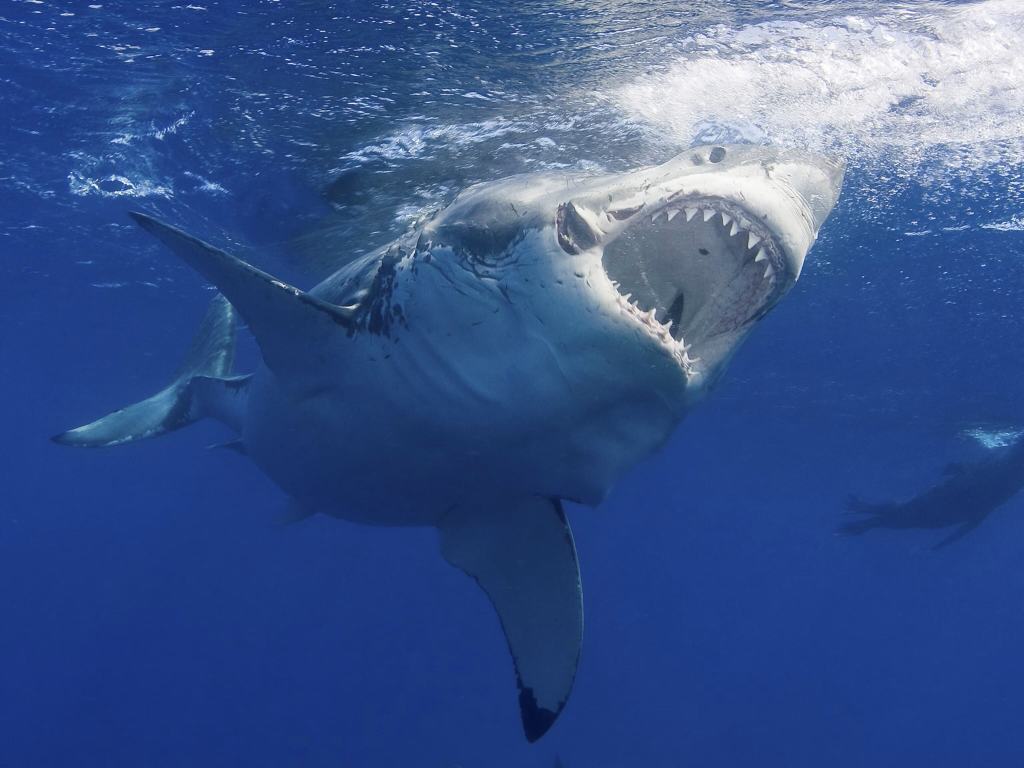
A marine scientist from Mexico was attacked by a shark on the head while conducting field research.
On the first day, The New York Times, also known as NYT, covered the incident involving marine biologist Dr. Mauricio Oyoos, who was recently bitten by a shark.
Dr. Oyoos traveled to the waters near Cocos Island, which is about 640 km southwest of the Costa Rican coast, on the 27th of last month. As per reports, he was carrying out conservation studies by placing identification tags on sharks to monitor specific individuals.
At a depth of 39 meters, a Galápagos shark approximately 3 meters long emerged. Dr. Oyoos used a harpoon to attach a identification tag, managing to hit the base of the dorsal fin.
The event took place later. The surprised shark moved approximately 1 meter before abruptly charging at Dr. Oyoos with its mouth agape.
Dr. Oyoos recounted the event: “The shark moved toward me at an amazing speed. Its jaws were fully open. My whole head was inside the shark’s mouth in under a second.”
The shark bit Dr. Oyoos’ head, and he heard a cracking noise from his skull. Luckily, the shark let him go right away. “It released me as soon as it bit my skull. Then it swam off with its mouth still open,” he explained.
The shark also broke his diving mask, causing it to fill with blood and water. Moreover, the air hose was damaged by the shark’s teeth. “I couldn’t see, but I faintly noticed the shark’s shadow moving off,” Dr. Oyoos remembered. “It could have killed me if it had wanted to.”
Although he was bleeding and had difficulty breathing, he gradually made his way to the top. He was then brought aboard the boat by his coworkers and taken to Cocos Island for urgent medical care.
Thinking back on the event, Dr. Oyoos remarked, “I attempted to take a breath, but it didn’t help. To be honest, it seemed like everything was happening in slow motion. Part of me remained calm, trying to figure out my next move.”
He was moved to a hospital in San José, the capital of Costa Rica, and is now waiting for surgery to address his jaw injuries. He was given stitches for wounds resulting from 27 shark teeth that penetrated and damaged his skin.
This marked Dr. Oyoos’ first encounter with a shark in 30 years of his research. Although he suffered serious injuries, he stood up for the shark, claiming it was not responsible.
The shark didn’t notice me and was surprised by the tagging dart. It was a defensive response,” he said. “The shark was frightened. It’s not the shark’s fault.



 jasdooit
Leave a comment