
Film promotion plays a vital role in the movie-making process. It’s where the industry connects with viewers. Typically, you’ll encounter a trailer, some clips, and a few posters before a film is released. The objective is to generate enough interest for people to watch or attend the cinema.
That’s the usual route. However, occasionally, for viewers, it’s preferable to approach without prior knowledge. No previews, no hints, no initial reviews. You simply start watching and allow the narrative to develop. That’s how I experienced The Lost Bus.
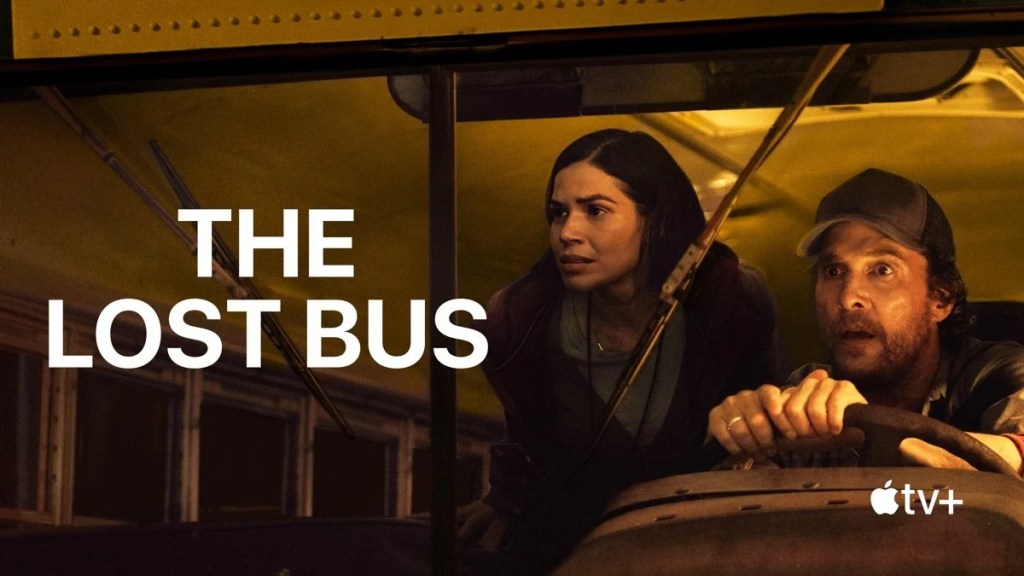
I noticed the thumbnail on Apple TV, recognized Matthew McConaughey, and started watching without any background information. By the time it ended, I realized that was the ideal way to experience this specific movie.
The movie, directed by Paul Greengrass, is adapted from Lizzie Johnson’s book Paradise: One Town’s Struggle to Survive an American Wildfire. It draws inspiration from the 2018 Camp Fire in California, which was the most fatal wildfire in the state’s history. The plot centers on a bus driver and a schoolteacher who attempt to rescue 22 children stuck in a bus as the fire approaches.
From the beginning, it’s clear that this is a Greengrass film. His signature shaky camera is present throughout. He utilized it well in The Bourne Supremacy and The Bourne Ultimatum, but here, initially, it seems excessive. The camera is constantly moving, even during quiet moments, and it’s distracting. You question whether every scene truly requires that handheld style.
However, when the fire begins, the style proves effective. The trembling shifts from being a nuisance to an essential element. It provides the flames with energy, making the world seem unstable, vibrant, and perilous.
The filming portrays the chaos with incredible authenticity. At times, I was unsure if certain scenes were genuine footage or computer-generated effects. The burning homes, walls of smoke, and falling trees appeared as if they were real archival clips from the event.
What’s remarkable is the way the fire transforms into a character. It behaves like a living entity, erratic and seemingly conscious. The camera tracks it as if it’s pursuing the survivors.
Indeed, certain scenes may bring to mind Sam Raimi’s The Evil Dead. The glowing embers move in front of the screen as if they are purposeful. You can sense the warmth just by watching the shots, and many scenes are so intense that you might question how they were able to record such moments.
One of the movie’s most powerful visual decisions is its employment of contrast. You transition from almost total darkness to brightness, from peaceful quiet to overwhelming turmoil in a flash. At one moment you’re in hell, and the next you’re in paradise. The cinematography immerses you in this disorientation, where every path seems fraught with peril.
McConaughey is the central figure of the movie. He portrays a character who is imperfect yet profoundly human. His choices aren’t always correct, but they align with the role the film intended for him. This is what adds emotional depth to the narrative. You become invested in his survival not because he’s a hero, but because he’s making an effort, just as most people would in such a scenario.
America Ferrera, portraying Mary the teacher, brings unexpected depth to the narrative, particularly with the details revealed at the conclusion. Combined, they convey a realistic feeling of urgency, exhaustion, and perseverance.
And the kids, despite some exaggerated scenes, are surprisingly well-developed. The way the plot involves them keeps your pulse racing, and I found myself tensing up occasionally, almost yelling at the screen.
The unexpected twist arrives at the conclusion when you discover it is rooted in actual occurrences. Before that, it seems like a typical survival film. Then it dawns on you, these were genuine individuals. The significance of this realization sets in gradually, altering your perspective on everything you have just witnessed.
The movie doesn’t take things too far. It remains under control. Much of the horror is suggested, rather than displayed. You grasp the devastation without being made to witness every gory detail.
A part of me hoped it took a more serious turn, not for the sake of shock, but for authenticity.
An R rating might have allowed Greengrass to depict the complete magnitude of what those individuals went through.
Nevertheless, the movie remains cohesive.
It’s intense, heartfelt, and filmed with a focus on realism. Greengrass is among the rare directors capable of maintaining suspense without losing command. He alternates between the individuals struggling to stay alive and those making choices from a distance, illustrating how one group’s decisions impact the other. This dual viewpoint keeps the narrative dynamic and the consequences evident.
Visually, it’s designed for the big screen. The expansive views of burning forests, the gradual movement of smoke through the sky, and the red glow consuming entire neighborhoods are all highly cinematic. This makes me question why Apple released the film directly to streaming instead of starting with a theatrical release.
The rhythm is fast-paced. With a runtime just shy of 90 minutes, it doesn’t squander any time. It presents the characters, escalates the suspense, and moves directly to the core. No extra explanations, no empty content. It’s effective—something many contemporary films could benefit from.
The Lost Bus doesn’t revolutionize the disaster genre, but it doesn’t need to. It simply presents a genuine story with sincerity and concentration. It focuses on survival, not show, on how regular individuals deal with extreme challenges, and what that entails in detail.
It’s not flawless. It takes some cautious approaches and doesn’t delve too deeply into the horror of the actual event. However, despite these constraints, it remains compelling and authentic.
I entered without prior knowledge and left deeply affected. Perhaps this is the way more movies should be experienced, rather than through trailers, especially in an era with four trailers and constant TV commercials that reveal too much, but instead through exploration. Just a narrative, free from distractions, fulfilling its purpose perfectly. Provided by SyndiGate Media Inc.Syndigate.info).





Leave a Reply