
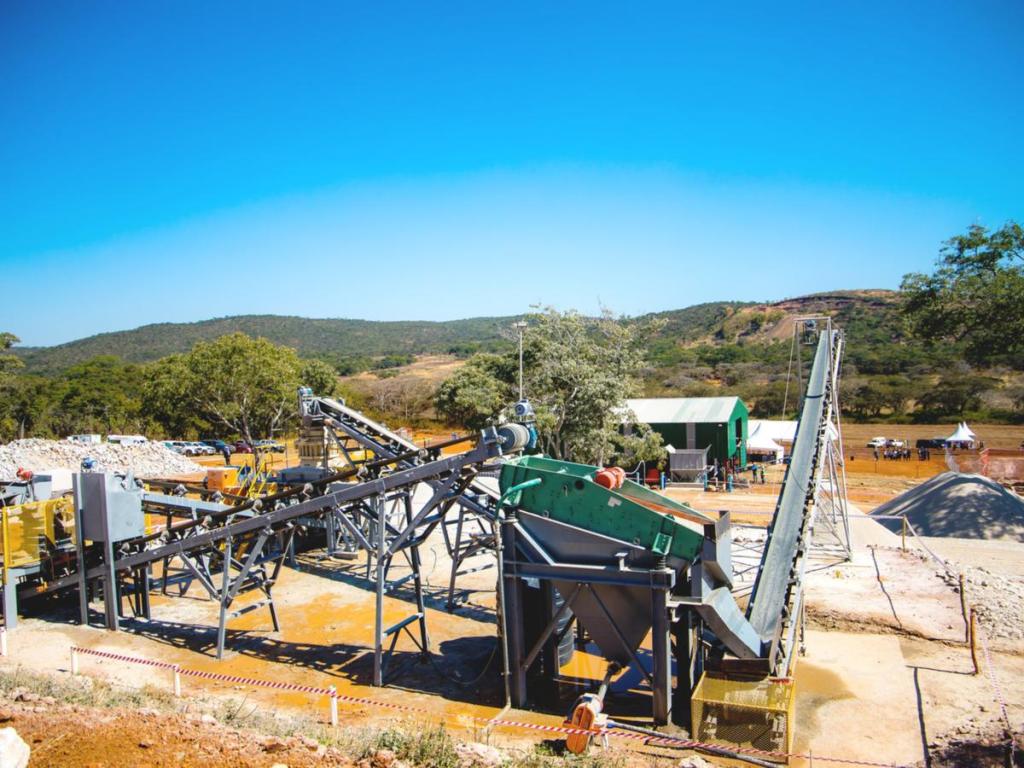
Prospect Lithium Zimbabwe (PLZ) has begun building a 70-megawatt power plant as part of a strategic initiative to boost regional electricity availability.
This effort seeks to improve the energy supply for PLZ, a division of China’s Zhejiang Huayou Cobalt Limited, which is among the top manufacturers of lithium-ion battery materials globally and a newcomer in the cobalt materials sector.
The funding for the solar energy plant will decrease dependence on the national electricity network, which is experiencing growing demand due to the fast-growing economy, household consumers, and the mining industry.
PLZ is involved in lithium processing and aims to move from exporting raw concentrates to value addition.
The firm is building a lithium sulfate facility to convert raw lithium concentrates into more valuable salts,
Mining corporations are progressively allocating resources to secure power supplies to maintain their activities.
PLZ Arcadia Mine, located near Harare, can process 50,000 tonnes of lithium sulfate each year.
The firm will begin manufacturing lithium sulphate in the first quarter of 2026 through its newly established US$400 million facility in Goromonzi.
In recent times, several leading mining firms have taken steps to invest in energy projects, with a substantial focus on renewable energy solutions.
These efforts have been crucial in reducing the strain on the nation’s primary electricity provider, which is finding it difficult to keep up with the increasing energy needs of the mining industry.
Zimplats, currently working on setting up an 185MW solar energy facility, previously introduced a 35MW plant in July.
The investment in solar energy is expected to significantly bolster the company’s energy autonomy while also contributing to the company’s sustainability goals.
In a similar manner, Caledonia Mining’s Blanket Mine, situated in Gwanda, completed the installation of a solar facility with a power output of 12.2MW in 2023, with construction costs amounting to roughly US$14 million.
A 4,4MW solar farm was initiated at the Turk Mine located in the Bubi District, now providing energy for its mining activities.
In a separate update, the Dinson Iron and Steel Company located in the Chirumhanzu District has advanced its move toward energy independence by establishing an internal power generation system following an investment in a 50MW plant.
A cement manufacturer, PPC Zimbabwe, has also indicated plans to build two solar energy facilities at a price of $40 million.
The plants will have a total capacity of 30MW, with one site in Colleen Bawn producing 20MW and the other in Bulawayo having a capacity of 10MW.
These solar facilities will greatly improve the energy supply for PPC’s cement plants, maintaining consistent production and decreasing dependence on the national power network.
During a recent visit to PLZ’s Arcadia Mine, Minister of Mines and Mining Development Winston Chitando stated that the company is making every effort to reduce the time the mine is not operational.
“The tour has uncovered significant construction work being done by Prospect. They are building a 70-megawatt power plant. This initiative stems from the investor’s acknowledgment of the necessity to increase power supply for the mine and make the required investments to ensure a stable power source,” stated Minister Chitando.
These changes indicate a larger pattern in Zimbabwe’s mining and industrial industries, where there is an increasing awareness of the significance of sustainable and consistent energy supplies to promote economic development and environmental responsibility.
Amid these changes, Energy and Power Development Minister July Moyo has recently presented a more comprehensive renewable energy plan, featuring the groundbreaking Kariba Floating Solar Project, the 22MW Pomona waste-to-energy initiative, and multiple major solar farms in the Matabeleland, Midlands, and Mashonaland West regions, which are being constructed by independent power producers (IPPs).
This occurs as PLZ anticipates doubling its revenue when its lithium sulfate plant begins operations in the first quarter of 2026.
PLZ stated that the construction of the new lithium sulfate processing facility is almost finished, with 75 percent of the work completed.
The facility aims to generate around 60,000 tonnes of lithium sulfate annually, representing a major advancement in Zimbabwe’s efforts to enhance the value of its lithium resources.
Lithium sulfate has a higher market value compared to spodumene and petalite concentrates manufactured by Prospect.
This advancement corresponds with the Government’s initiative to promote local value addition in the lithium mining industry.
In 2022, the administration prohibited the export of raw lithium in an effort to prevent illegal trafficking and encourage local refining.
It is evaluating the possibility of expanding the restriction to cover lithium concentrates starting from January 2027, as part of an extensive plan to develop and enhance economic benefits from Zimbabwe’s mineral resources.
Copyright 2025 The Herald. All rights reserved. Distributed by AllAfrica Global Media ().
Tagged: Zimbabwe, Energy, Southern Africa, Economy, Business and Finance
Provided by SyndiGate Media Inc.Syndigate.info).



 jasdooit
Leave a comment