
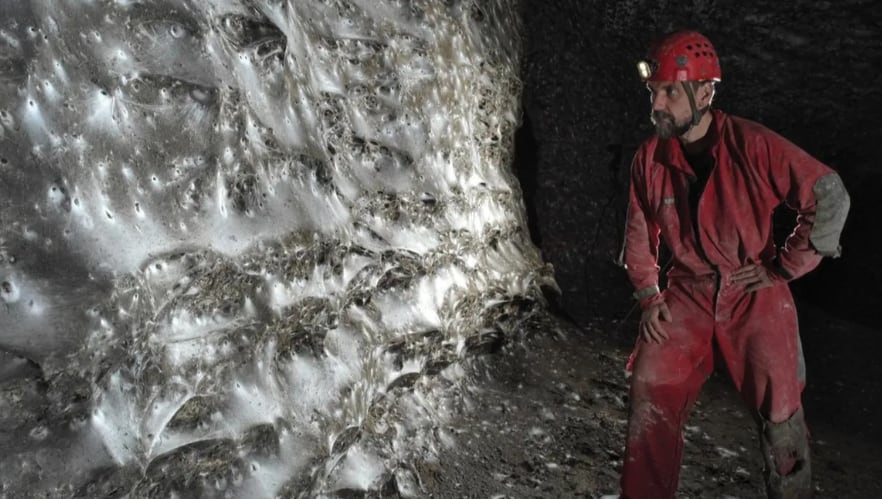
A massive spider web covering 32 pyeong (about 106 square meters) was found in a sulfur cave close to the Greece-Albania border.
As reported by science media Live Science on the 7th, a research group led by Professor Istvan Urak, a biologist from Sapientia-Transylvania Hungarian University, recently released a paper detailing this finding in the journal *Subterranean Biology* on the 17th of last month.
The cave containing the massive web discovered by the research team was created through the damaging effect of sulfuric acid.
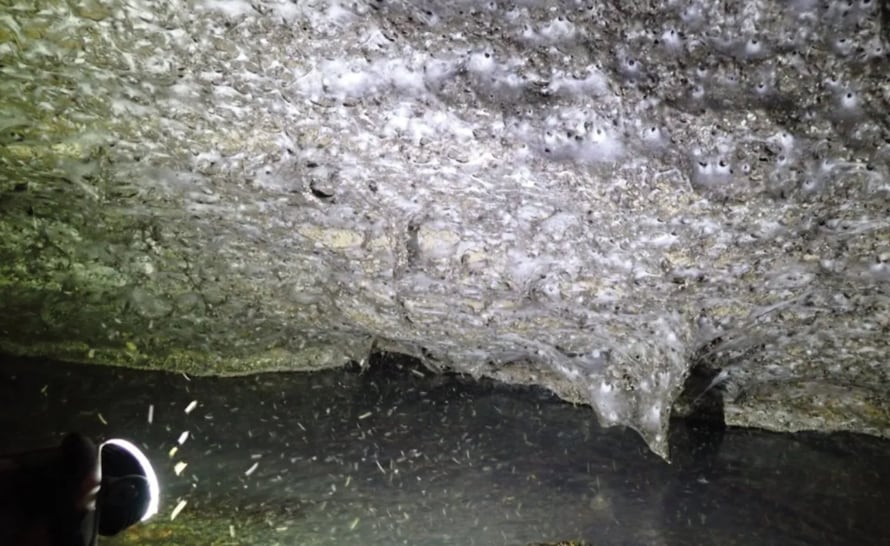
Scientists found a group of thousands of tiny, funnel-shaped spider webs that are stuck together in this location. Covering an area of 106 square meters, which is about 32 pyeong, it stretches from the narrow, low ceiling close to the cave entrance along the walls. It is regarded as the biggest spider web ever recorded. Although the web was initially discovered by members of the Czech Speleological Society in 2022, Professor Urak’s team was the first to take samples and carry out research on it.
Within this large spider community, around 111,000 spiders from two different types were discovered. Namely, 69,000 Jipgakage spiders (*Tegenaria domestica*) and 42,000 Rinerigone bagans (*Prinerigone vagans*).
Significantly, although they originally lived in houses and wetlands respectively and had a competitive relationship that led them to expel each other, the two species formed a “mega-city” within the cave. The research team mentioned, “This is the only known instance where two species share the same web structure and live together in such large numbers,” noting that the two species, which have poor eyesight in the dark environment, seem to have opted for coexistence.
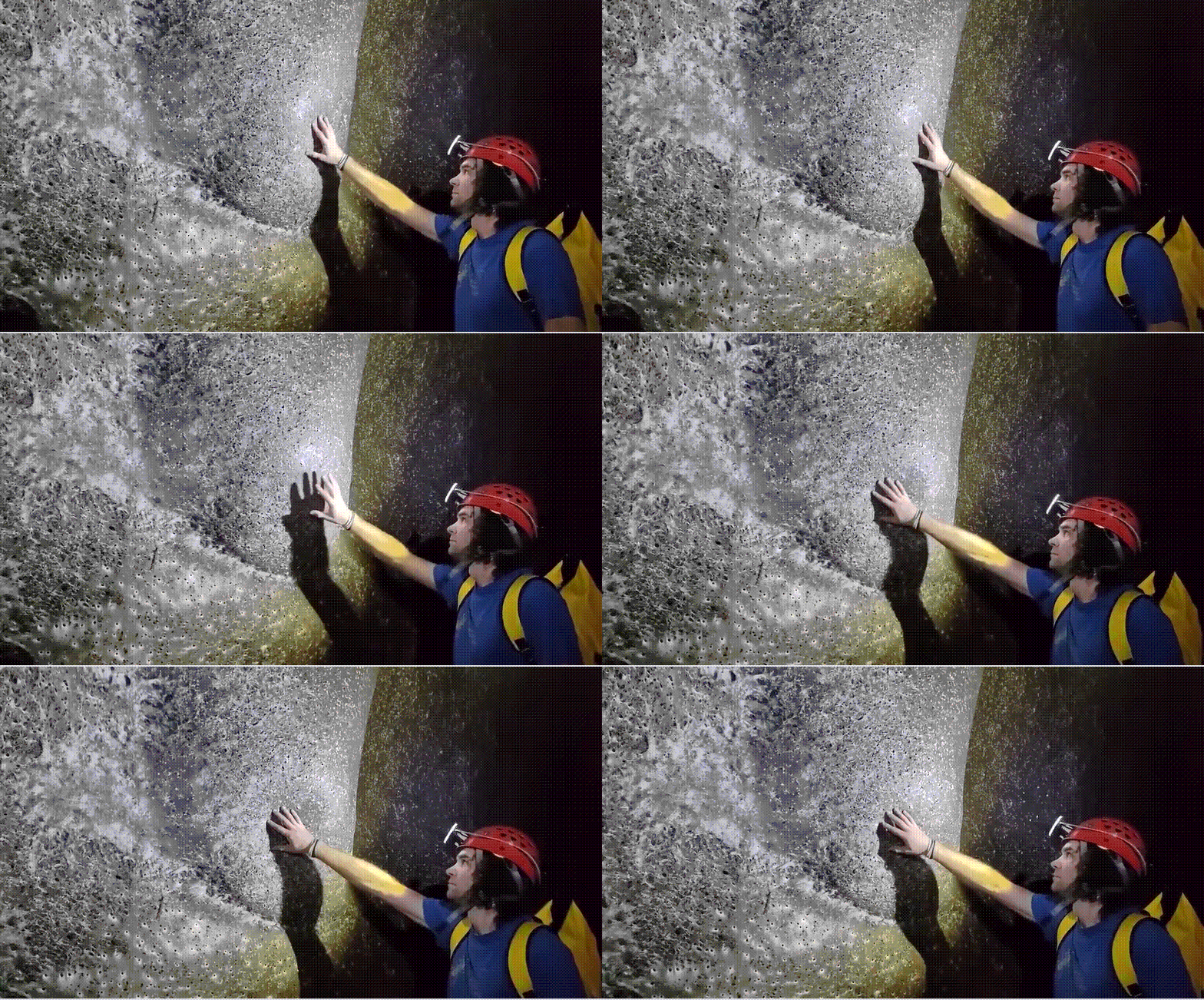
The study group found that the spiders living in this cave exhibit genetic differences compared to related species found elsewhere. This indicates that the cave-dwelling spiders have adjusted to the dark surroundings. Professor Urak stated, “Certain species demonstrate extraordinary genetic flexibility in harsh conditions,” and noted, “These circumstances can lead to behaviors that are uncommon in typical environments.”
The food chain seen within the cave is given as the explanation for why numerous spiders have made this place their home. The stream rich in sulfur at the cave’s entrance supports microorganisms, which serve as nourishment for gnats, and these gnats are the main diet of the spiders.
Taking into account these distinct features, the research group highlighted the importance of preserving this spider’s environment. Moreover, further studies on the large spider web are currently being conducted.



 jasdooit
Leave a comment