
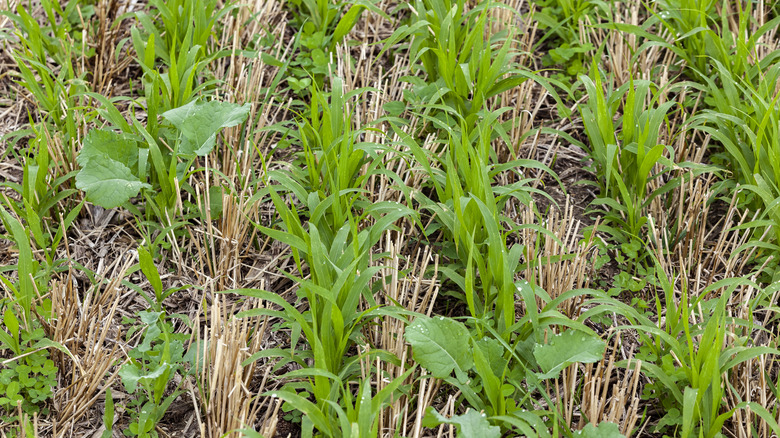
Agriculture specialists are advising the government to encourageA crucial approach to attaining food and nutritional security, while safeguarding the environment and boosting farmers’ earnings.
Regenerative agriculture refers to farming methods that restore soil vitality, including cover cropping, mulching, reduced tilling, agroforestry, crop rotation, and the application of organic manure and biofertilizers.
Mary Nyale, the country director for Kenya at Farm Africa, stated that this method is essential for rejuvenating depleted soils and enhancing the lives of small-scale farmers.
We need to understand which regenerative agriculture techniques are most effective in specific regions for enhancing soil health and crop yields,” she stated. “This is crucial for boosting incomes and food security.
Farm Africa, a nonprofit organization that collaborates with small-scale farmers throughout eastern Africa, has been spearheading initiatives to expand regenerative agriculture through theThe project aimed at enhancing regenerative agriculture in Kenya, carried out in collaboration with AGRA. From 2017 to 2024, over 50,000 farmers in Embu and TharakaNithi regions embraced these methods, achieving impressive outcomes.
Farmers reported Up to 81 percent higher yields, 92 percent improved water retention, and decreased soil erosion and crop failure. The move towards organic and low-input farming also enhanced profitability and resilience.
However, Nyale mentioned that challenges still exist—including high input costs and inadequate extension services.
To close the gap, Farm Africa has launched aa community-focused advisor system, in which a single advisor assists anywhere from 200 to 500 farmers.
At Farm Africa’s 40th anniversary event, Nyalereaffirmed the organization’s dedication to sustainable and climate-resistant agriculture.
Professor Jacqueline McGlade from Strathmore University and chief scientist at Downforce Technologies stated that soil health needs to be measurable in order to bring about meaningful change.
She emphasized a new program,The Economics of Ecosystems and Biodiversity for Agriculture and Food (TEEBAgriFood), an initiative focused on measuring the value of Kenya’s ecosystems—beginning with the Mau, Cherangani, and Loita water towers.
“A significant advancement lies in how we manage our lands and farming,” McGlade stated.
We need to acknowledge the genuine value of ecosystems to create food systems that are resilient to climate change and sustainable.
With increasing climate challenges, specialists believe that regenerative farming provides Kenya not only a solution for its soil health—but a long-term outlook for its agricultural community and food production.
Provided by SyndiGate Media Inc. (Syndigate.info).



 jasdooit
Leave a comment