


In the competition for AI leadership, U.S. technology companies possess the funding and hardware, but their goals have encountered a fresh challenge: electricity supply.
“The main challenge we are facing today is not an excess of computing power, but rather the power and…the capacity to complete builds quickly near the power source,” acknowledged Microsoft CEO Satya Nadella during a recent podcast with OpenAI’s Sam Altman.
“So if you’re unable to do that, you might end up with a lot of chips stored in inventory that I can’t utilize,” Nadella added.
Repeating the 1990s dotcom boom focused on developing internet infrastructure, current technology leaders are investing record amounts to create the silicon foundation for the artificial intelligence revolution.
Major tech companies such as Google, Microsoft, AWS (Amazon), and Meta (Facebook) are utilizing their substantial financial resources to invest approximately $400 billion in 2025, with even higher amounts expected in 2026 — supported at the moment by confident investors.
This cash has eased an early obstacle: obtaining the millions of chips required for the computing power competition, with tech giants speeding up their internal processor manufacturing as they aim to catch up with global leader Nvidia.
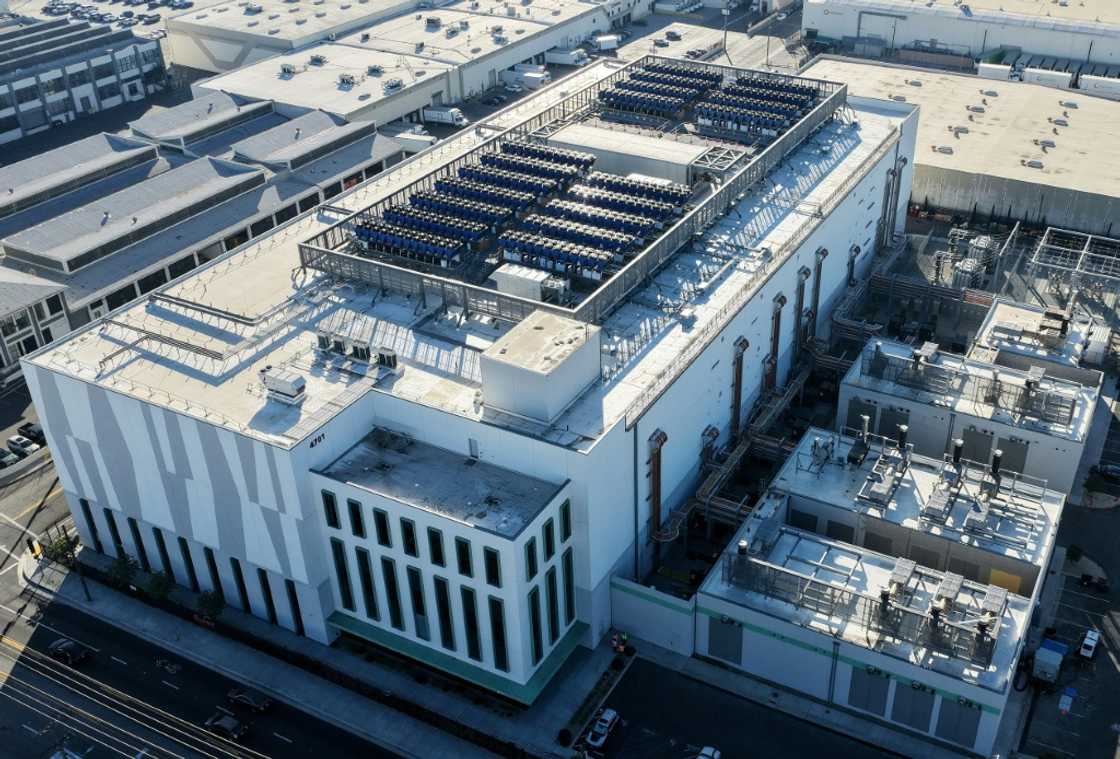
These will be placed in the racks that populate the large data centers — which also require significant amounts of water for cooling.
Constructing large data centers typically requires an average of two years in the United States, whereas implementing new high-voltage power lines can take between five to ten years.
Energy wall
The “hyperscalers,” a term used in Silicon Valley to refer to large technology companies, recognized the energy challenge approaching.
A year prior, Virginia’s primary electricity supplier, Dominion Energy, already possessed a data-center order portfolio of 40 gigawatts — matching the generation capacity of 40 nuclear power plants.
The power it needs to utilize in Virginia, the globe’s biggest cloud computing center, has now increased to 47 gigawatts, the company revealed recently.
Accused of increasing home electricity costs, data centers in the United States
may represent between 7% and 12% of total national consumption by 2030, compared to 4% at present, as indicated by multiple research reports.
However, some professionals believe the forecasts might be exaggerated.
“Both utility providers and technology firms have a motivation to support the swift increase in electricity consumption predicted,” warned Jonathan Koomey, a well-known specialist from UC Berkeley, in September.
Similar to the internet boom of the late 1990s, “numerous data centers that are discussed and planned, and in certain instances even officially announced, may never be constructed.”
Emergency coal
If the anticipated growth actually occurs, it may result in a 45-gigawatt deficit by 2028 — matching the energy use of 33 million U.S. households, as reported by Morgan Stanley.
Some American utility companies have postponed the shutdown of coal-fired power stations, even though coal is the largest contributor to climate-related pollution.
And natural gas, which fuels 40 percent of data centers globally, as reported by the International Energy Agency, is seeing increased popularity due to its rapid deployment capabilities.
In the U.S. state of Georgia, where data centers are rapidly increasing, a utility company has sought permission to set up 10 gigawatts of gas-fueled generators.
Certain companies, along with Elon Musk’s venture xAI, have moved swiftly to acquire second-hand turbines from other countries to establish expertise rapidly. Even the practice of recycling aircraft turbines, a long-standing specialized approach, is becoming more popular.
“The actual existential danger at this moment is not the level of climate change. It’s the possibility of losing the AI competition if we don’t have sufficient power,” stated Interior Secretary Doug Burgum in October.
Nuclear, solar, and space?
Major technology companies are subtly minimizing their environmental pledges. For instance, Google had previously committed to achieving net-zero carbon emissions by 2030, but it took that statement off its website in June.
Rather, businesses are focusing on extended initiatives.
Amazon is promoting a resurgence in nuclear energy via Small Modular Reactors (SMRs), a technology that is still in the experimental phase and would be simpler to construct compared to traditional reactors.
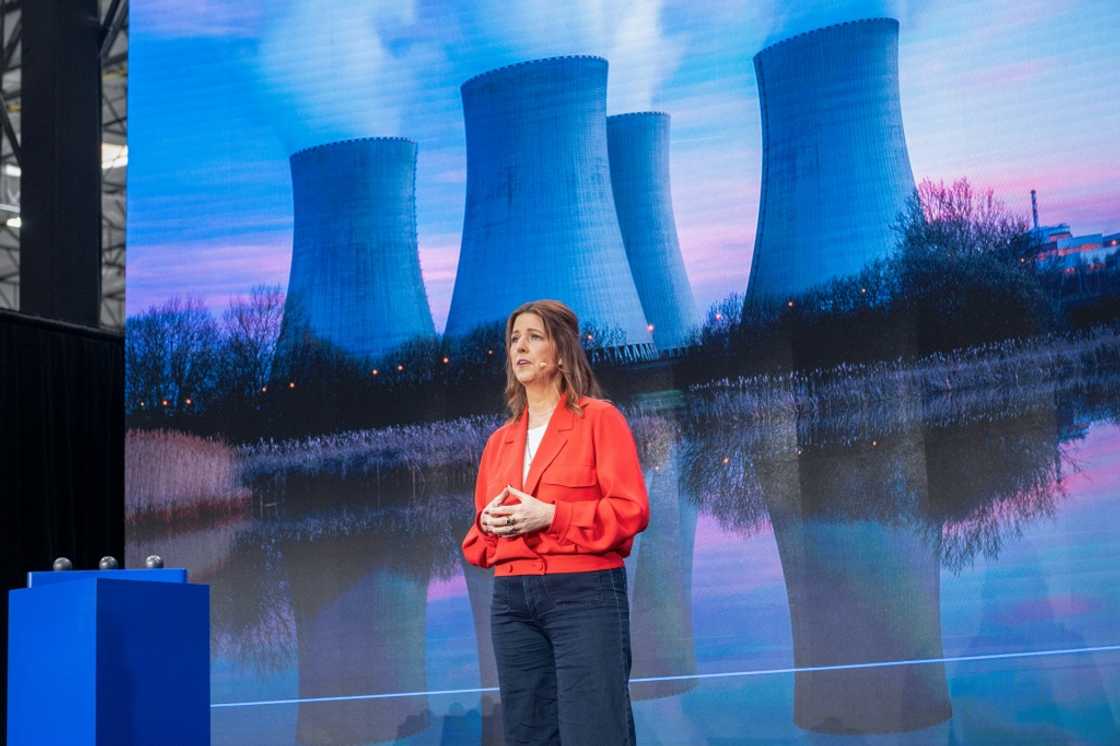
Google intends to restart a reactor in Iowa in 2029. Additionally, the Trump administration declared in late October an $80 billion funding allocation to initiate construction on ten traditional reactors by 2030.
Big tech companies are also pouring significant resources into solar energy and energy storage systems, especially in California and Texas.
The entity responsible for managing Texas’s power grid intends to increase its capacity by around 100 gigawatts by 2030, solely through these technologies.
In the end, Elon Musk, via his Starlink initiative, and Google have both suggested placing chips in space, utilizing solar power. Google intends to carry out trials in 2027.




 jasdooit
Leave a comment