
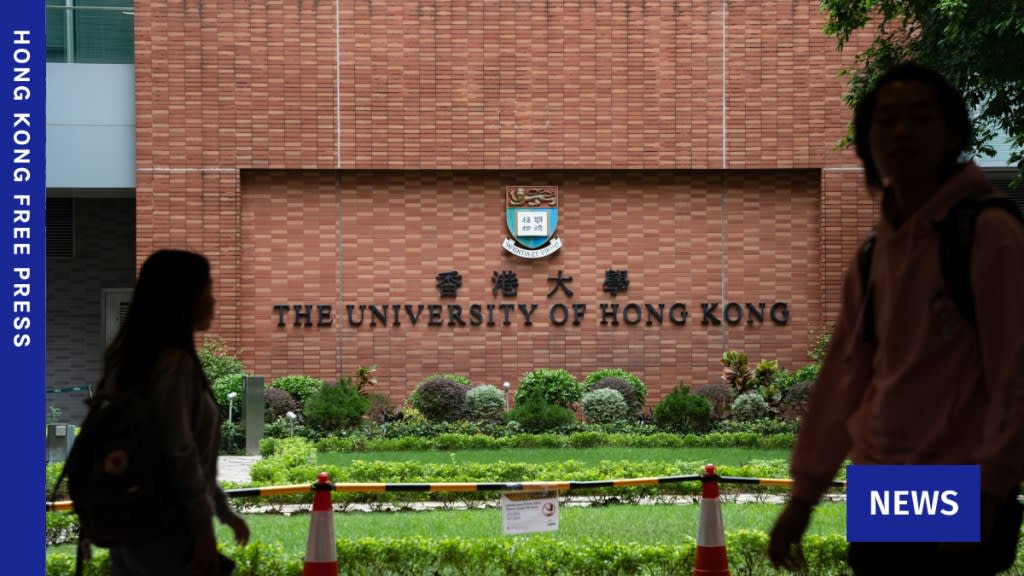
The University of Hong Kong (HKU) has initiated an official inquiry regarding a doctoral dissertation that was discovered to include fabricated citations created through artificial intelligence (AI).

HKU will implement “suitable disciplinary measures” if any violations of research ethics and guidelines are discovered during its investigation into the matter.papernamed “Forty years of fertility transition in Hong Kong,” the university stated to HKFP on Monday.
An inquiry was initiated following online claims that the paper was published in an academic journalStudies on China’s Population and Developmentincluded “AI hallucinations,” referring to incorrect, false, or deceptive data produced by the system.
HKU doctoral candidate Bai Yiming was identified as the main author, with HKU’s population health chair professor Paul Yip serving as the corresponding author, and Billy Li from the government’s Census and Statistics Department along with three other scholars as co-authors.
The claims originated from apostOn Threads on Saturday, it was stated that the majority of the sources mentioned in the paper were “non-existent.”
Local newspaper Ming Pao reportedon Monday, it was noted that out of the 61 references listed, which comprised academic papers, books, government statistics, and Legislative Council documents, 21 entries had a Digital Object Identifier (DOI) link, and 35 featured links to Google Scholar.
However, when clicking on the links, seven DOIs were marked as “not found,” and 22 Google Scholar links indicated the article could not be located, the report stated.

In reply to HKFP’s inquiries, HKU stated that the university has a strict set of policies and guidelines regulating the use of artificial intelligence in academic research. It is treating the accusations seriously and has launched an official investigation following standard protocols.
“HKU reaffirms its dedication to high academic and research standards. All researchers at HKU must ensure their work adheres to globally recognized standards for quality and ethical behavior,” the university stated.
Yip confirmedA student told the local media outlet HK01 on Sunday that he used AI to organize the references but did not review the content. He took responsibility as the corresponding author of the paper and apologized for the incident.
He expressed his disappointment regarding the incident, stating that he would mandate students to take a course to enhance their understanding of AI.
Yip, recognized for researching suicide patterns in Hong Kong, supported the academic honesty of the authors and stated the paper was not made up and had gone through two rounds of evaluation.

He mentioned that he had informed the journal, which is operated by the German-British academic publishing firm Springer Nature, and the accurate version of the article will be posted in the near future.
According to Springer Nature’s website, Yip is a member of theStudies on China’s Population and Developmentboard of editors, chaired by Qiao Xiaochun from Peking University.
The document also seemed to present conflicting details regarding the backgrounds of the three co-authors: KP Wat, Eddy Lam, and BK So.
In a section that presented the authors, the paper mentioned that Wat and Lam were affiliated with HKU, whereas So was from Jinan University in Guangzhou.
In a different part discussing authors and their affiliations, the paper mentioned that Wat and Lam were affiliated with Hong Kong Metropolitan University, whereas So was associated with Jilin University in Changchun.
HKFP has contacted Yip, Springer Nature, and HKU for their response.
Just last week, HKU regained its status as the leading university in Asiain the 2026 QS Asia University Rankings following 15 years.
HKU’s President and Vice-Chancellor Zhang Xiang stated on Tuesday that the top position highlighted the university’s academic excellence and emphasized its contribution to influencing global higher education.


 jasdooit
Leave a comment