
Does instructing 600 students to take an exam online equate to the university helping and encouraging cheating?
In the age of artificial intelligence, large-scale social experiments are taking place everywhere.
After the recent identification of ‘group cheating’ through tools such as ‘ChatGPT’ during non-in-person midterm exams at Yonsei University and Korea University, discussions regarding ‘university teaching approaches in the AI era’ have become more intense within academic communities. Although the cheating was clearly attributable to the students, some critics claim that completely prohibiting the use of ChatGPT in the AI era is not advisable. Additionally, there are concerns about whether leading universities in South Korea should offer large-scale online courses to hundreds of students with multiple-choice (short-answer) examinations, considering current trends.
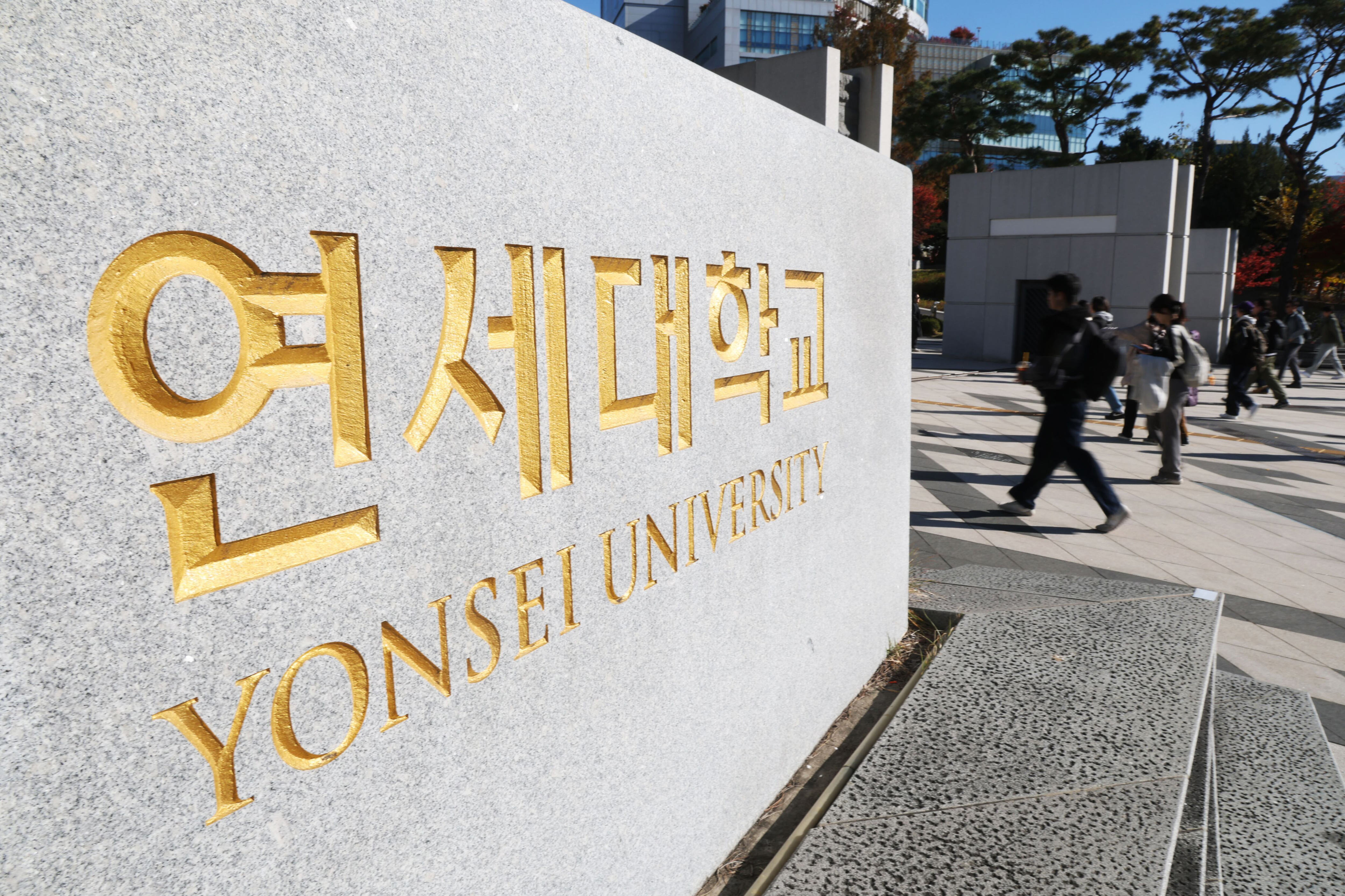
The problem arose during Yonsei University’s mid-term exam for the liberal arts course titled “Natural Language Processing (NLP) and ChatGPT.” The instructor asked 600 students to take the test through an online platform and submit self-recorded videos to ensure they weren’t cheating. However, later investigations found proof that many students used AI tools such as ChatGPT to cheat. The university mentioned that students who admitted to this would get a zero, while those who didn’t would be suspended indefinitely. The professor had previously stated that “all exams forbid the use of electronic devices, AI, books, or any reference materials.”
Nevertheless, several individuals in the academic field consider it ironic that the course—focused on the fundamentals of generative AI—prohibited the use of AI. A professor from the Education Department at a university near Seoul remarked, “As students utilize AI extensively, educators are progressively creating exams with questions that cannot be addressed solely by AI. It’s unexpected that a class focused on AI principles would tell students not to use it.”
A professor from a private university stated, “It is impractical to depend only on students’ integrity for online examinations. If the test is not open-book, it should be held in person with appropriate oversight from the institution.”
Park Joo-hyung, a faculty member in the Education Department at Gyeongin National University of Education, stated, “Today’s university students consider assignments generated with AI as work they have personally created by entering data. Although instructors need to modify their teaching and assessment approaches accordingly, many universities are not making these changes.”
Large-scale online classes have also drawn negative feedback. The course ‘Multidisciplinary Understanding of an Aging Society’ from Korea University, where cheating took place, was a massive open online course (MOOC) with more than 1,400 participants. The class required students to view online lectures and complete multiple-choice tests online, with 12 professors taking turns in teaching. During the mid-term exam, hundreds of students were found exchanging answers through a KakaoTalk group chat.
Academic experts have raised doubts about the size of these classes, with remarks such as “I thought this was a cyber university” and “In a time when critical thinking is essential, merely delivering knowledge through large lectures is not suitable.” Online courses, which saw an increase during the COVID-19 pandemic, are still widely used, and the number of large lectures is on the rise. At Korea University, the number of large lectures with 201 or more students increased from 32 in 2023 to 79 in 2024. Critics state, “In an era where AI offers all the answers, small group discussions analyzing AI responses are necessary, yet local universities are expanding large lectures for ‘cost efficiency.’”
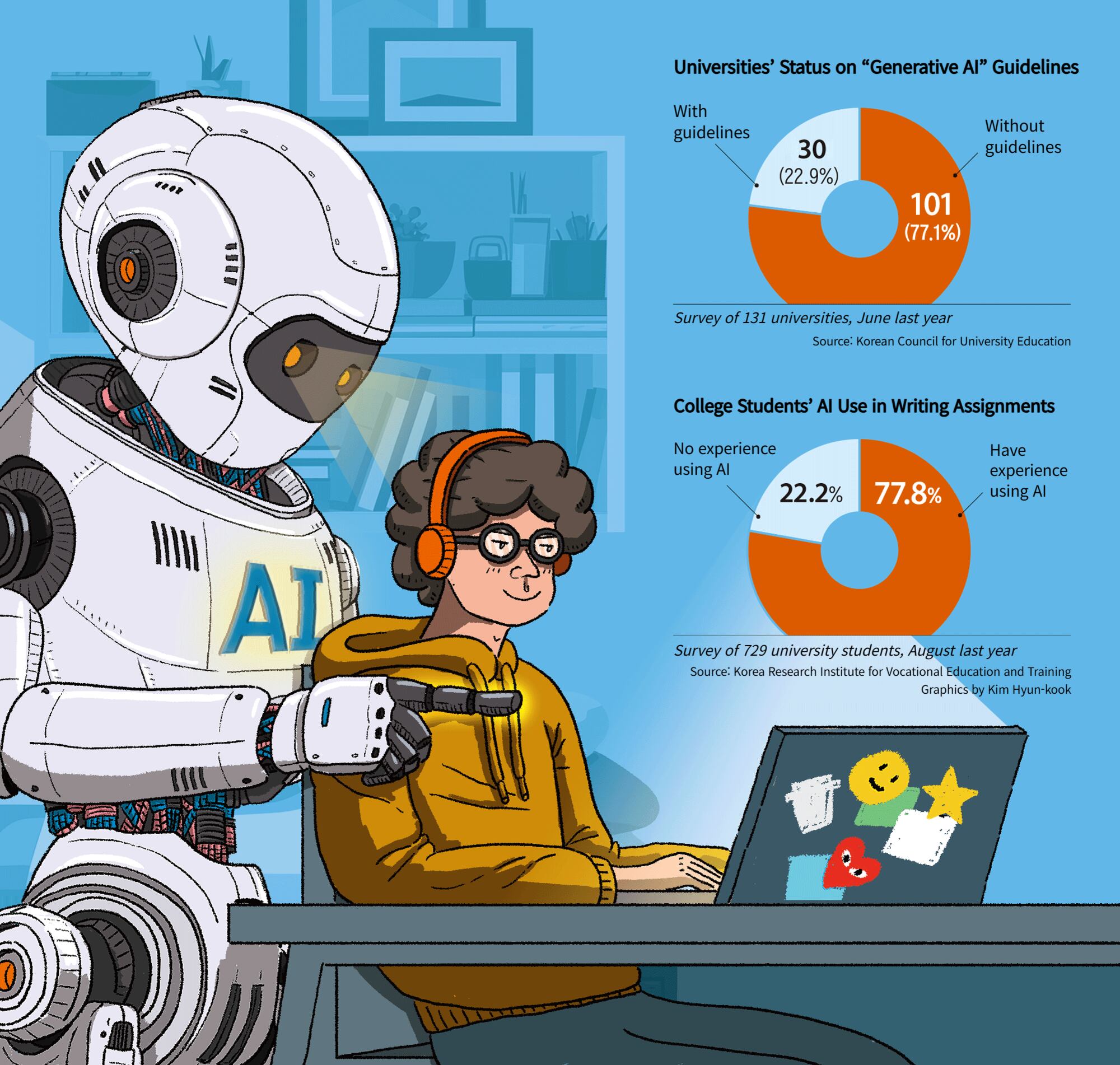
The absence of AI usage policies in numerous universities presents another challenge. A 2023 survey conducted by the Korean Council for University Education, involving 131 institutions, revealed that only 30 (23%) had established guidelines for generative AI. Yonsei University simply mentions, “The application and extent of generative AI are decided by each professor’s course regulations.”
A graduate student from a private university in Seoul stated, “No instructor has given specific instructions regarding the use of AI or consequences for breaking the rules in their course outlines. When questioned, they simply mention, ‘Don’t copy and paste entire content,’ which leaves students unclear about the limits.”
Lee Kyung-jeon, a faculty member in the Big Data Applications department at Kyung Hee University, stated, “Colleges need to quickly create educational programs and instructional techniques that fit the AI age, instead of just telling students not to use AI for cheating.”




Leave a Reply