
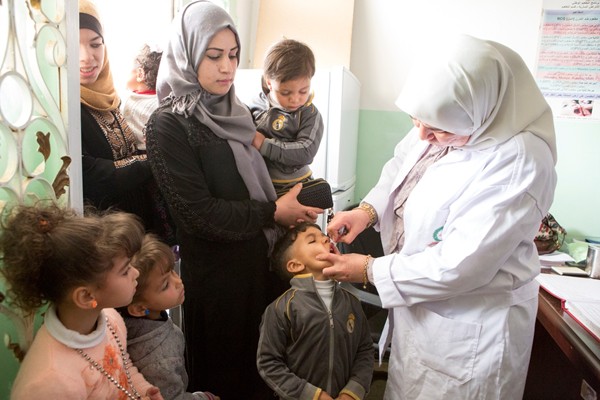
The 43rd gathering of the Emergency Committee, established under the International Health Regulations (IHR or Regulations), regarding the global spread of poliovirus was called by the WHO Director-General on 01 October 2025. Eight of the nine committee members and the advisor participated via video conference with nations affected by the virus, supported by the WHO Secretariat. The Emergency Committee examined data concerning wild poliovirus (WPV1) and circulating vaccine-derived polioviruses (cVDPV) in relation to the global goal of stopping and certifying the eradication of WPV1 by 2027 and ceasing and certifying the elimination of cVDPV2 by 2029. Technical updates were provided on the conditions in the following countries: Benin, Cameroon, Chad, Germany, Israel, and Pakistan. The Committee reviewed comprehensive written reports on the situation in Afghanistan.
Amendments to the IHR, approved by the Seventy-seventh World Health Assembly through resolution WHA77.17 in June 2024, became effective on 19 September 2025 for 182 out of 196 State Parties.[1] The 43rd session of the IHR Emergency Committee regarding polioviruses, which took place on 01 October 2025, marked the first under the updated regulations. Significant changes to the IHR include, among others, expanded requirements for reporting polioviruses; the introduction of the concept of “pandemic emergency”[2], a more elevated level of global public health alert concerning a public health emergency of international concern (PHEIC); actions aimed at improving equitable access to essential health products; and acknowledgment of health documents in both non-digital and digital forms.
Wild poliovirus
Since the most recent Emergency Committee meeting on 18 June 2025, 15 new WPV1 cases have been documented in the two countries where the virus is endemic, Afghanistan (2 cases) and Pakistan (13 cases). The cases in Afghanistan originated from the South and East Regions, whereas in Pakistan, they were reported from Khyber Pakhtunkhwa and Sindh provinces. As of 17 September 2025, a total of 28 WPV1 cases have been recorded: 4 in Afghanistan and 24 in Pakistan. This is significantly lower than the 99 WPV1 cases reported throughout all of 2024. Regarding environmental monitoring, 443 WPV1-positive samples have been identified in 2025 so far (53 from Afghanistan and 390 from Pakistan), compared to 741 positive samples detected during the entire year of 2024 (113 from Afghanistan and 628 from Pakistan).
The Committee expressed worry about the continued WPV1 spread in both endemic nations, especially within the southern (South Afghanistan – Quetta Block) and central (Northwest Pakistan/South KP – Southeast Afghanistan) cross-border epidemiological routes.
In Pakistan, WPV1 is still found in environmental samples throughout the four main provinces. The highest level of transmission is occurring in South Khyber Pakhtunkhwa (KP), as shown by ongoing reports of WPV1 cases and positive environmental isolates. While Karachi in Sindh Province has not reported any WPV1 cases in 2025, the presence of WPV1 in environmental samples suggests that transmission is still happening within the city. A reduction in both WPV1 cases and environmental detections has been noted in the Quetta Block and Peshawar. Active WPV1 transmission is also being observed in 2025 in Lahore, Punjab Province, and various districts within the Central Pakistan epidemiological block. In Afghanistan, strong transmission is still taking place in the southern area, identified through both acute flaccid paralysis (AFP) and environmental monitoring. WPV1 transmission in the eastern part of Afghanistan has decreased significantly in 2025, reflecting improved immunity among the population.
In terms of molecular epidemiology, there has been a general decline in genetic diversity from 2020 to 2023. Nevertheless, a rise in genetic diversity was noted in 2024, leading to the division of two genetic clusters into eight distinct genetic clusters, three of which remain active in 2025. The other transmission chains continue to spread within populations and regions where immunization rates remain consistently low, particularly in the border areas of the southern and northern epidemiological corridors across the two countries where the disease is endemic.
Afghanistan and Pakistan keep carrying out a vigorous and largely coordinated campaign schedule, aiming to achieve high vaccination rates in key reservoir areas and to respond promptly and effectively to any detections of WPV1 in other regions of each nation. Afghanistan conducted two national and three sub-national vaccination rounds, whereas Pakistan carried out three national and one sub-national round during the first half of 2025.
In Afghanistan, operations are being carried out through the site-to-site approach, with concentrated efforts aimed at enhancing operational and communication methods to ensure maximum reach among targeted children under this method. House-to-house campaigns have not been conducted since October 2024 due to security issues, which restrict full campaign access for all children. The Committee noted its concern that site-to-site campaigns frequently do not reach every child, especially younger ones, potentially leading to increased geographic spread of the virus within Afghanistan and beyond. In Pakistan, the program is encountering difficulties in consistently and effectively reaching all target children in South Khyber Pakhtunkhwa, the region currently experiencing the highest level of WPV1 transmission in the country; over 250,000 children remain unvaccinated, mainly due to access challenges caused by insecurity.
The Committee expressed gratitude for the robust leadership and strong dedication to polio eradication in Pakistan across all levels, including the active involvement of the Prime Minister, the Federal Minister for Health, and the Prime Minister’s Special Advisor on Polio Eradication. The Committee also recognized the consistently high reported coverage and Lot Quality Assurance Sampling (LQAS) pass rates at both national and provincial levels. However, the Committee identified variations in campaign quality at the district and sub-district levels, which were linked to operational difficulties and ongoing security issues, especially in Khyber Pakhtunkhwa and Balochistan provinces. The Committee also highlighted the continued presence of WPV1 in Karachi, despite high vaccination coverage in recent campaigns. Halting WPV1 transmission will necessitate converting Pakistan’s strong political and programmatic commitment into high-quality execution of vaccination plans, as advised by the Technical Advisory Group, during the upcoming low-transmission period. Special attention must be given to core reservoirs and regions with ongoing transmission.
Apart from the seasonal movement of people within and between the two countries where the disease is prevalent, the continuous return of undocumented migrants from Pakistan to Afghanistan is further complicating the program’s operational challenges. This displacement of populations heightens the risk of poliovirus spreading across borders and within each country. The Committee observed that this risk is being addressed through vaccination efforts at border checkpoints and by updating micro-plans in regions of origin and return. The Committee also acknowledged the effective coordination between the programs in Afghanistan and Pakistan at both national and subnational levels, and encouraged the continuation of these cooperative initiatives. Sustaining synchronized vaccination campaigns between Afghanistan and Pakistan, as well as achieving consistently high vaccination rates in border regions of both countries, will be crucial to comprehensively stop WPV1 transmission.
In conclusion, the existing data suggest that global WPV1 transmission is still limited to the two countries where it is endemic. Nevertheless, between 2024 and 2025, there has been a geographic expansion combined with ongoing transmission in the core reservoir regions of both endemic countries.
Circulating vaccine-derived polioviruses (cVDPV)
As of 17 September 2025, a total of 143 cVDPV cases have been reported, with 136 being cVDPV2, five being cVDPV3, and two being cVDPV1. Furthermore, 141 environmental samples have shown positive results for cVDPV, including 11 cVDPV1, 121 cVDPV2, and nine samples that tested positive for both cVDPV1 and cVDPV2. In 2024, there were 463 reported cVDPV cases, comprising 448 cVDPV2, 11 cVDPV1, and 4 cVDPV3. During the same year, 291 environmental samples tested positive for cVDPV, with 288 being cVDPV2 and three being cVDPV3. Since the last Emergency Committee meeting, new cVDPV1 outbreaks have emerged in Algeria, Djibouti, and Israel. More recently, Cameroon and Chad have reported cVDPV3 outbreaks, while the 2024 cVDPV3 outbreak in Guinea has persisted into 2025.
Nigeria and Chad in the Lake Chad Basin, alongside Yemen and Ethiopia in the Horn of Africa, are the primary sources of the global cVDPV2 cases in 2025. The Democratic Republic of the Congo and Somalia, which had previously faced high levels of cVDPV2 spread, have seen a notable reduction in transmission this year. Nevertheless, obstacles remain in maintaining effective operations and reaching every child during polio immunization efforts.
A total of 20 circulating cVDPV2 emergence groups have been identified in 2025, as opposed to 31 in 2024 and 27 in 2023. Out of the 20 emergence groups found in 2025, five were newly discovered this year: two originated from the new OPV2 vaccine, while the source of the remaining three is still being examined. Since its implementation in 2021, around 2 billion doses of nOPV2 have been given out, and a total of 32 cVDPV2 emergences have been linked to nOPV2. The Committee observed that nOPV2 continues to show much higher genetic stability and a significantly reduced risk of reverting to neurovirulence when compared to Sabin OPV2.
As of 2025, two cases of cVDPV1 have been reported so far, one from Algeria and another from the Democratic Republic of the Congo (DR Congo). Furthermore, cVDPV1 outbreaks have been verified in Djibouti and Israel, according to environmental surveillance findings (nine in Djibouti and ten in Israel).
In 2025, Cameroon and Chad noted the simultaneous presence of type 2 and type 3 cVDPV. The same cVDPV3 strain led to outbreaks in both nations, with one case in Cameroon (onset of paralysis in May 2025) and two in Chad (onsets in June and July 2025). The cVDPV3 outbreak in Guinea, initially identified in 2024, has persisted into 2025. Overall, Guinea documented six cVDPV3 cases between 2024 and 2025.
The Committee observed that while the global spread of cVDPV1 and cVDPV3 continues at reduced levels in comparison to cVDPV2, the increase seen in 2025 is a matter of concern. This highlights the essential need to maintain strong population immunity against type 1 and type 3 polioviruses via effective routine vaccination, as well as to guarantee prompt and efficient response measures if any cases are identified.
The Committee observed that the likelihood of cVDPV outbreaks is primarily influenced by a mix of factors including difficult access, unstable conditions, large numbers of children who have not received any vaccinations or are under-vaccinated, and continuous movement of populations.
Conclusion
- The Committee reached a unanimous decision that the risk of global poliovirus transmission still represents a Public Health Emergency of International Concern (PHEIC) and advised prolonging the Temporary Recommendations for an additional three months.
- The Committee, following a comprehensive examination of the epidemiological and programmatic conditions, reached a unanimous decision that the situation does not qualify as a pandemic emergency.
In arriving at the decision that the risk of global transmission of poliovirus still represents a PHEIC, the Committee took into account the following elements:
Potential for continued global transmission of WPV1
The Committee observed that the possibility of global transmission of WPV1 remains due to the following reasons:
- Resumed and strong WPV1 transmission within the main reservoirs, especially in the southern part of Afghanistan and in Karachi and South Khyber Pakhtunkhwa in Pakistan.
- The spread of WPV1 in geographically significant regions, such as Central Pakistan and certain areas within Punjab Province, has become well-established.
- Ongoing discrepancies in campaign effectiveness and a significant number of unvaccinated and under-vaccinated children in critical regions, influenced by barriers caused by instability (e.g. South KP), inadequate operational execution (e.g. mobile vaccination approaches in Afghanistan and inconsistent quality in parts of Pakistan), and reluctance to vaccinate in specific communities (e.g. South KP, Quetta Block, Southeast Afghanistan), all leading to deficiencies in population immunity.
- Continuous migration of people between the two countries where the disease is present, including those returning from Pakistan to Afghanistan, resulting in the spread of WPV1 across borders.
- Migration of people from the two countries where the disease is prevalent to nearby and far-off nations, posing a threat of global transmission.
Potential ongoing risk of international spread of cVDPV
Due to the following factors, the risk of global transmission of cVDPV seems to stay significant:
- Ongoing cVDPV2 transmission in the Lake Chad Basin, especially in high-risk regions of Nigeria, continues to pose a risk for increased spread.
- Severe cVDPV2 spread in the Horn of Africa, particularly in Ethiopia. Countries in the Horn of Africa are still facing combined humanitarian and health crises, which complicates the execution of effective vaccination programs on time.
- A significant number of unvaccinated and vulnerable children in the northern governorates of Yemen, where an effective OPV strategy to address the current cVDPV2 outbreak has not yet been put in place because of instability and limited access. Additional difficulties remain in the prompt delivery of AFP stool samples from these regions. Full access to all children in southern and central Somalia continues to be a major obstacle.
- An increasing disparity in intestinal mucosal immunity among young children since the worldwide discontinuation of OPV2 in 2016, along with a significant number of unvaccinated children in specific regions.
- New outbreaks of cVDPV1 in Algeria, Djibouti, and Israel, along with cVDPV3 outbreaks in Cameroon, Chad, and Guinea, suggest ongoing low levels of routine vaccination and IPV coverage in various nations, leading to vulnerable immunity gaps. The likelihood of new and growing cVDPV1 and cVDPV3 outbreaks seems to have risen in 2025.
- Continuous cross-border transmission, including the spread into areas that have been re-infected — with Cameroon and Chad noting new cVDPV3 outbreaks, and Algeria, Djibouti, and Israel reporting new cVDPV1 outbreaks.
Additional contributing factors include:
- Inadequate routine vaccination: Numerous countries possess underdeveloped vaccination systems that may face additional challenges due to humanitarian crises such as conflicts and prolonged complex emergencies. This rising susceptibility puts communities in unstable regions at higher risk for polio outbreaks.
- Persistent insecurity and conflict in various regions that continue to act as sources of cVDPV transmission.
- Insufficient access: Inaccessibility continues to pose a significant threat, especially in northern Yemen and Somalia, where large communities have not received the polio vaccine for prolonged durations exceeding a year.
- The present situation with limited resources adds difficulty to the complete and efficient execution of essential elimination efforts.
Risk categories
The Committee offered the Director-General the following recommendations designed to minimize the chance of global transmission of WPV1 and cVDPVs, according to the risk classification outlined below:
- Countries affected by WPV1, cVDPV1, or cVDPV3.
- Countries affected by cVDPV2, with or without signs of local spread.
- Countries that have had a recent outbreak of WPV1 or cVDPV in the past 24 months (last case reported more than 13 months ago).
Standards to evaluate whether Countries are no longer affected by WPV1 or cVDPV:
- Poliovirus Case: 12 months following the date when the most recent case began, plus an additional month to consider the time needed for case identification, examination, laboratory analysis, and reporting, or when all reported Acute Flaccid Paralysis (AFP) cases that occurred within 12 months of the last case have been tested for polio and ruled out for Wild Poliovirus type 1 (WPV1) or circulating Vaccine-Derived Poliovirus (cVDPV), and environmental or other samples gathered within 12 months of the last case have also returned negative results, whichever period is longer.
- Isolation of WPV1 or cVDPV in the environment or other settings (without a polio case): 12 months following the collection of the latest positive environmental or other sample (for example, from a healthy child) plus one month to allow for laboratory testing and reporting.
- These standards may differ for WPV1 endemic nations and countries experiencing prolonged, continuous polio outbreaks, requiring a more thorough evaluation in relation to the quality of surveillance.
Once a nation satisfies these conditions and is no longer considered infected, it will stay on a ‘watch list’ for an additional 12 months to ensure increased oversight. Following this time frame, the country will no longer be under Temporary Recommendations.
Temporary recommendations
Countries affected by WPV1, cVDPV1, or cVDPV3 that pose a risk of global transmission
(as of information available at WHO headquarters on 04 June 2025)
WPV1
Afghanistan’s latest identification on 24 August 2025
Pakistan’s latest detection on 07 August 2025
cVDPV1
Algeria’s latest confirmation on 17 March 2025
Democratic Republic of the Congo’s latest detection on 25 June 2025
Djibouti’s latest identification on 04 May 2025
Israel’s latest detection on 09 July 2025
cVDPV3
Cameroon’s latest confirmation on 30 May 2025
Chad’s latest detection on 22 July 2025
Guinea’s latest detection on 07 Mar 2025
These countries should:
- Formally announce, if it hasn’t been done yet, at the level of head of state or government, that stopping the spread of poliovirus is a national public health emergency and take all necessary actions to aid in the elimination of polio; if this announcement has already been made, the emergency status should remain in place as long as the response is needed.
- Make sure that every resident and long-term visitor (staying for more than four weeks) of any age receives a dose of bivalent oral poliovirus vaccine (bOPV) or inactivated poliovirus vaccine (IPV) between four weeks and 12 months before traveling abroad.
- Make sure that individuals who need to travel urgently (within four weeks) and have not received a dose of bOPV or IPV in the last four weeks to 12 months get a polio vaccine at least by the time they leave, as this will still offer advantages, especially for those who travel often.
- Make sure that these travelers are given an International Certificate of Vaccination or Prophylaxis as outlined in the Model International Certificate of Vaccination or Prophylaxis (ICVP), found in Annex 6 of the IHR, to document their polio vaccination and act as evidence of immunization. It should be noted that, according to resolution WHA77.17, ICVPs issued on or after 19 September 2025 (the date the amendments come into effect) by countries that have adopted the amendments must follow the updated Model ICVP in Annex 6.
- Limit the international travel of any resident who does not have proof of proper polio vaccination at the time of departure. These guidelines are applicable to all international travelers, regardless of their starting point or mode of transportation (by road, air, and/or sea).
- Further strengthen cross-border initiatives by greatly enhancing collaboration at the national, regional, and local levels to notably boost vaccination rates among travelers crossing the border and among high-risk cross-border communities. Enhanced coordination of cross-border activities should involve more rigorous oversight and monitoring of vaccination quality at border transit points, as well as tracking the percentage of travelers who are found unvaccinated after they have crossed the border.
- Continue to strengthen initiatives aimed at boosting routine vaccination rates, including the exchange of coverage data, since high levels of routine immunization are a crucial part of the polio elimination plan, especially as global efforts near success. Nations that have not yet incorporated a second dose of IPV into their standard vaccination programs must quickly adopt this measure. When accessible, countries should also evaluate the introduction of the hexavalent vaccine, which has been approved by Gavi.
- Establish a top-tier surveillance system that ensures fair coverage across all communities, allowing for early identification of new poliovirus strains and efficient tracking and reaction to changing disease patterns.
- Make sure that both regular and additional immunization efforts cover all regions and communities fairly, with the goal of achieving consistent high levels of population immunity and safeguarding every child from polio-related paralysis. The GPEI and other key international health organizations should assist nations in providing equitable and prompt access to the advised polio vaccines via existing global systems.
- Continue these measures until the following conditions are satisfied: (i) no new infections have occurred for a minimum of six months and (ii) there is proof of complete implementation of high-standard eradication efforts across all infected and at-risk regions; if such evidence is not available, these measures must remain in place until the state fulfills the above evaluation criteria indicating it is no longer affected.
- Submit to the Director-General a periodic update on the execution of the Temporary Recommendations regarding international travel.
Countries affected by cVDPV2, with or without signs of community spread:
(as of the data available at WHO Headquarters on 17 September 2025)
- Latest detection in Algeria 21 Jul 2025
- Angola’s latest report 17 Jul 2025
- Benin’s latest confirmation on 12 June 2025
- Most recent detection in Burkina Faso on 30 March 2025
- Cameroon’s latest confirmation on 07 Apr 2025
- Central African Republic’s latest report 21 Jun 2025
- Chad’s latest detection on 05 August 2025
- Latest detection in Côte d’Ivoire 06 February 2025
- Democratic Republic of the Congo’s latest report: May 16, 2025
- Djibouti’s latest identification on 04 May 2025
- Ethiopia’s latest confirmation on 05 June 2025
- Finland’s latest detection on 19 November 2024
- Germany’s latest detection on 28 July 2025
- Ghana’s latest confirmation on 20 August 2024
- Israel’s latest detection on 11 February 2025
- Niger’s latest confirmation on 18 April 2025
- Nigeria’s latest confirmation on 24 July 2025
- Occupied Palestinian Territory (oPt) latest detection 05 March 2025
- Most recent detection in Papua New Guinea on 11 July 2025
- Poland’s most recent detection on 21 January 2025
- Latest detection in Senegal: 05 March 2025
- Most recent detection in Somalia: 04 August 2025
- Latest detection in South Sudan on 03 Dec 2024
- Spain’s latest detection on 16 September 2024
- Sudan’s latest confirmation on 16 April 2025
- The United Kingdom of Great Britain and Northern Ireland’s most recent detection on 20 January 2025
- United Republic of Tanzania’s latest confirmation on 18 August 2025
- Yemen’s latest detection on 27 July 2025
Countries that have experienced the importation of cVDPV2 but lack evidence of local spread should:
- Formally announce, if it hasn’t been done yet, at the highest level of leadership, that stopping or halting the spread of poliovirus is a country’s top public health crisis.
- Conduct immediate and thorough investigations and risk analysis to establish whether local spread of the imported cVDPV2 has occurred, necessitating an immunization action.
- Acknowledging the presence of a distinct system for addressing type 2 poliovirus infections, Member States are advised to seek vaccines from the global new OPV2 reserve.
- Continue to strengthen efforts to boost routine vaccination rates, as achieving high levels of routine immunization is a crucial part of the polio elimination plan, especially as global eradication becomes more attainable. Nations that have not yet added a second dose of IPV to their regular vaccination schedules must quickly adopt this measure. When it becomes accessible, countries should also evaluate the introduction of the hexavalent vaccine, which has been approved by Gavi.
- Enhance monitoring for polioviruses and reinforce regional collaboration and cross-border coordination to guarantee prompt identification of the virus.
- Establish a top-tier surveillance system that ensures fair coverage across all communities, allowing for early identification of new poliovirus strains and efficient tracking and reaction to changing epidemiological patterns.
- Make sure that both regular and additional immunization efforts cover all regions and communities fairly, with the goal of achieving consistent high levels of population immunity and safeguarding every child from poliovirus-related paralysis. The GPEI and other key international health partners need to assist nations in providing equitable and prompt access to advised polio vaccines via existing global systems.
Countries experiencing local spread of cVDPV2, posing a risk of global transmission, should, in addition to the aforementioned steps:
- Urge residents and individuals staying for an extended period (more than four weeks) to get an IPV shot between four weeks and 12 months before traveling abroad.
- Make sure that individuals who get this vaccination can obtain a suitable document to track their polio immunization record.
- Strengthen regional collaboration and transnational coordination to improve monitoring for early identification of poliovirus, and immunize refugees, travelers, and people living near borders.
For both sub-categories:
- Continue these measures until the following conditions are fulfilled: (i) a minimum of six months has elapsed without any detection of VDPV2 circulation within the country from any origin, and (ii) there is proof of complete implementation of high-quality eradication efforts in all affected and high-risk regions; if such evidence is not available, these measures should remain in place until the state meets the standard of a ‘state no longer infected’.
- After 12 months with no signs of transmission, submit a report to the Director-General detailing the actions undertaken to follow the Temporary Recommendations.
- Submit to the Director-General a periodic update on the execution of the Temporary Recommendations.
Countries no longer have polio, but were previously infected with WPV1 or cVDPV within the past 24 months(as of the data available at WHO headquarters on 17 September 2025)
WPV1
country last virus date
cVDPV
country last virus date
- Egypt cVDPV2 01 Aug 2024
- Equatorial Guinea cVDPV2 26 March 2024
- France (French Guiana) cVDPV3 06 Aug 2024
- Gambia cVDPV2 15 February 2024
- Guinea cVDPV2 12 Jun 2024
- Indonesia cVDPV2 10 July 2024
- Kenya cVDPV2 31 Jul 2024
- Liberia cVDPV2 08 Jun 2024
- Mali cVDPV2 02 Jan 2024
- Mauritania cVDPV2 13 December 2023
- Mozambique cVDPV1 17 May 2024
- Sierra Leone cVDPV2 28 May 2024
- Republic of the Congo cVDPV2 07 December 2023
- Uganda cVDPV2 07 May 2024
- Zimbabwe cVDPV2 25 Jun 2024
These countries should:
- Quickly enhance regular vaccination programs to increase or sustain community immunity.
- Improve the effectiveness of monitoring systems, by exploring the implementation or expansion of additional techniques like environmental monitoring, in order to minimize the chances of missing WPV1 and cVDPV spread, especially within groups that are at higher risk or more susceptible.
- Step up actions to guarantee immunization for mobile and cross-border communities, internally displaced people, refugees, and other at-risk groups.
- Strengthen regional collaboration and border coordination to enable timely identification of WPV1 and cVDPV, as well as immunization of vulnerable population groups.
- Continue these measures with records of complete implementation of high-standard monitoring and immunization efforts.
Additional considerations and recommendations
The Committee observed that the Global Polio Eradication Initiative (GPEI) has created an Action Plan designed to maintain and improve program operations in line with the objectives of the GPEI Strategy, within the constraints of available resources. The Committee commended the thorough and collaborative approach taken by the GPEI in developing the plan. Nevertheless, the Committee raised concerns about the current funding gap, which is estimated to be nearly 30%, presenting a major risk to all aspects of the program, including the capacity to sustain effective poliovirus monitoring. These risks are further increased by simultaneous financial limitations across WHO, international partners, and national governments, indicating broader fiscal challenges in the global health sector. Consequently, the Committee encouraged donor countries and partner organizations to enhance their financial contributions, highlighting that the effects of insufficient funding could be significant and widespread. The Committee also urged national governments to place polio eradication at the forefront of their domestic frameworks to protect the achievements made and continue progress toward global eradication.
The Committee highlighted the essential need for strong oversight of the GPEI Action Plan’s execution to allow for the early detection and prompt handling of new risks and shortcomings. This monitoring must thoroughly include all program elements, such as vaccination efforts along with field and laboratory surveillance.
The Committee observed that WPV1 transmission has continued with a generally high rate of infection in the two endemic countries during the peak transmission season. Although transmission is still widespread, it is primarily fueled by core reservoirs and areas with ongoing transmission—especially South Khyber Pakhtunkhwa and Karachi in Pakistan, and the Southern Region of Afghanistan. The Committee acknowledged that the current momentum of the Pakistan program, combined with the upcoming low transmission season, offers a crucial chance to stop WPV1 transmission in the first half of 2026. This objective will largely rely on progress made in South Khyber Pakhtunkhwa, Karachi, and Southern Afghanistan. The Committee encouraged the Afghanistan polio program to consider practical options for shifting to house-to-house vaccination, highlighting that site-to-site campaigns have not yet reached the necessary coverage and quality levels for eradication.
The Committee highlighted the importance of a thorough, government-wide strategy in countries where polio is common, reaching down to the district level, to ensure the standard needed for effective polio elimination efforts and halt the spread of WPV1. This kind of approach is more essential than ever to maintain global trust and ongoing backing for the polio eradication initiative.
The Committee observed the ongoing spread of cVDPV2 in the African Region, especially in the Lake Chad Basin and the Horn of Africa. Although the total number of cVDPV2 cases has decreased over the past two years, the Committee raised concerns about continued transmission in Algeria, Angola, Chad, Ethiopia, and Nigeria. While Nigeria has recently seen a reduction in cVDPV2 cases, the virus still spreads in several key areas, which could threaten the progress made in other parts of the country. In Somalia, there is an indication of a decline in cVDPV2 cases; however, due to the challenges in reaching children in southern and central Somalia, this trend should be viewed carefully, and increased attention is needed. The Committee also recognized the difficulties in carrying out immunization efforts in the northern governorates of Yemen, where cVDPV2 transmission remains active.
The Committee observed the start of vaccination efforts following the cVDPV2 outbreak in Papua New Guinea. Due to the extremely low population immunity to type 2 poliovirus, the Committee highlighted the importance of delivering the vaccination response with high standards. The Committee underlined that immediate actions are necessary to enhance surveillance, particularly by tackling areas where acute flaccid paralysis (AFP) monitoring is lacking, to reduce the chances of undetected cVDPV2 spread and to accurately track developments.
While the risk of global spread of cVDPV1 and cVDPV3 is much lower compared to cVDPV2, the Committee raised concerns about the recent cVDPV1 outbreaks in Algeria, Djibouti, and Israel, as well as the cVDPV3 outbreaks in Cameroon, Chad, and Guinea, which require ongoing attention. These incidents reveal areas where immunity against type 1 and type 3 polioviruses is insufficient and emphasize the importance of improving regular vaccination efforts. The Committee advised maintaining high-quality responses to these outbreaks to stop their further spread.
The Committee observed that numerous countries impacted by cVDPV are still facing conflict and instability, which hinders both regular immunization programs and polio vaccination efforts. The Committee also pointed out that simultaneous health crises and disease outbreaks in various countries add further complexity to the timely and efficient execution of vaccination responses. Recognizing the varied and often challenging operational settings at both national and sub-national levels, the Committee stressed the significance of tailored operational and social mobilization approaches to ensure high-quality campaign implementation and ultimately stop cVDPV transmission. The Committee also underlined the necessity for coordinated sub-regional strategies and enhanced cross-border cooperation to address challenges arising from open borders and shared operational difficulties in polio outbreak-affected nations.
The Committee observed the ongoing cross-border spread of cVDPV2 in the African and Eastern Mediterranean Regions, the identification of cVDPV2 in several countries within the European Region, and the detection of cVDPV2 in Papua New Guinea associated with the 2024 transmission in Indonesia. The Committee also recognized the shared cVDPV3 transmission occurring in Chad and Cameroon. These developments highlight that polio continues to pose a global threat until it is completely eradicated. The Committee stressed the crucial importance of maintaining effective surveillance systems in polio-affected and high-risk countries and advised that the GPEI provide all required support under the Global Polio Surveillance Action Plan. The Committee emphasized the significance of preserving the capacity of the Global Polio Laboratory Network to continue aiding eradication efforts through timely and accurate detection of polioviruses. The Committee noted the necessity for high-income countries to maintain high-quality poliovirus surveillance, given the ongoing risk of importation, as recently shown by detections in the European Region. Strong surveillance remains vital for early identification and prompt response to both imported cases and new outbreaks. The Committee recommended that program messaging regarding the international spread of polioviruses be adapted to specific contexts and settings, including ensuring suitable communication in high-income countries, with the goal of promoting understanding and sustained support for global polio eradication initiatives.
The Committee acknowledged the essential part that mobile and migrant groups contribute to sustaining WPV1 transmission in areas where the virus is still prevalent, as well as to cVDPV transmission across the African Region and worldwide. The Committee recommended that immunizing those who are constantly moving should be considered a high priority, highlighting the need to recognize various types of mobile populations, including seasonal, economic, and agricultural migrants, and to effectively reach them using country-specific, customized strategies and methods.
The Committee observed that new OPV2 maintains higher genetic stability than Sabin OPV2. Nevertheless, the likelihood of new cVDPV2 outbreaks rises if the time between outbreak response campaigns is more than four weeks or if the vaccination process is not up to standard, highlighting the importance of prompt and effective immunization initiatives.
The Committee observed that the changes to the IHR, approved by the Seventy-seventh World Health Assembly via resolution WHA77.17, became effective on 19 September 2025 for 182 out of 196 Member States. The Committee considered the updated International Health Regulations while conducting its discussions and in assessing and providing guidance on the Temporary Recommendations.
In light of the present circumstances involving WPV1 and cVDPVs, along with the information submitted by affected nations, the Director-General endorsed the Committee’s evaluation. On 10 November 2025, it was concluded that the poliovirus scenario remains a public health emergency of international concern (PHEIC) concerning WPV1 and cVDPV. Nevertheless, this situation does not qualify as a pandemic emergency.
The Director-General approved the Committee’s suggestions for nations classified as ‘States infected with WPV1, cVDPV1 or cVDPV3 posing a risk of international spread’, ‘States infected with cVDPV2 posing a risk of international spread’, and ‘States that have been infected by WPV1 or cVDPV within the past 24 months’. The Temporary Recommendations under the IHR were also extended to minimize the risk of poliovirus spreading internationally, effective from 10 November 2025.
——–
[1] The text of the International Health Regulations (2005), updated in 2014, 2022, and 2024, can be found athttps://apps.who.int/gb/bd/pdf_files/IHR_2014-2022-2024-en.pdf[accessed on 21 October 2025].
[2] Under the revised Article 1 of the IHR, “pandemic emergency” is described as “a public health emergency of international concern resulting from a contagious disease and:”
(i) possesses, or is at significant risk of experiencing, extensive geographic distribution across and within various States; and
(ii) is surpassing, or is at significant risk of surpassing, the ability of health systems to cope within those countries; and
(iii) is leading to, or poses a significant likelihood of causing, major social and/or economic disturbance, such as interruptions in global transportation and commerce; and
(iv) necessitates swift, fair, and intensified collaborative international efforts, employing comprehensive government and societal strategies.
Copyright 2025 World Health Organization. All rights reserved. Distributed by AllAfrica Global Media ().
Tagged: Africa, International Organizations and Africa, Health and Medicine, Polio, External Relations
Provided by SyndiGate Media Inc. (Syndigate.info).


 jasdooit
Leave a comment