
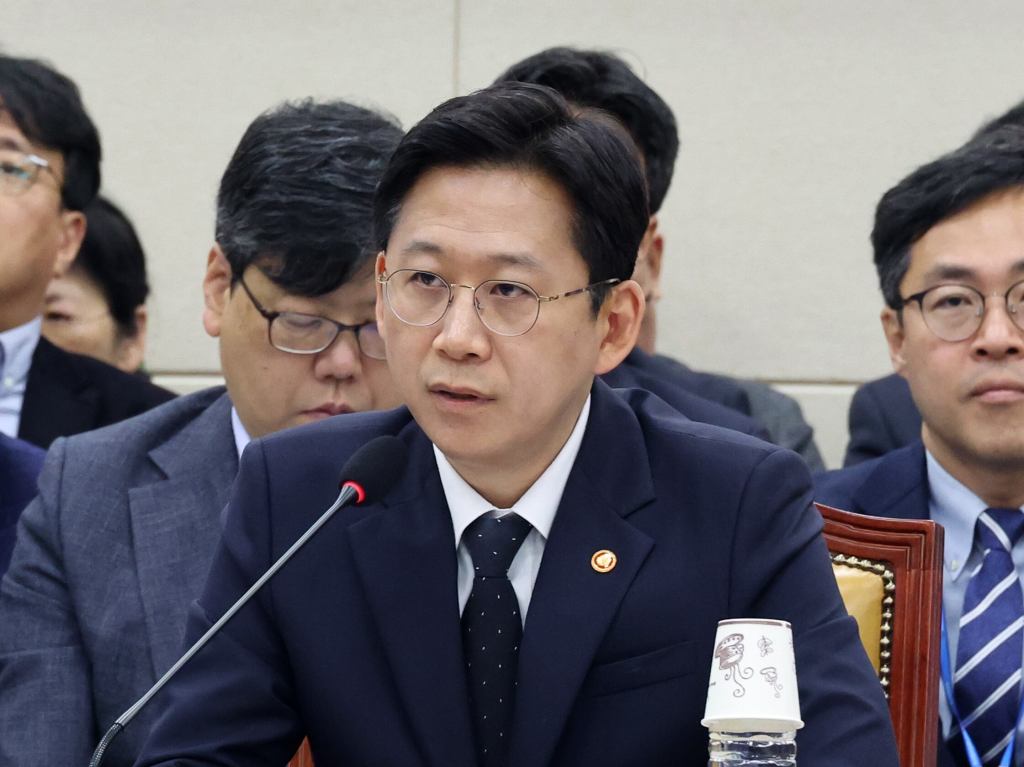
The Ministry of Science and ICT officially released a draft enforcement regulation for the “Basic Act on the Development of Artificial Intelligence (AI) and the Establishment of a Trustworthy Foundation, etc. (AI Basic Act)” on the 12th, set to come into force from January next year, and has begun a 40-day period for legislative review.
The AI Basic Act marks South Korea’s initial thorough AI legislation, approved via a collaborative effort between political parties in the previous year. In September, the Ministry of Science and ICT developed the draft enforcement regulations, incorporating views from the National AI Strategy Committee, businesses, and specialists.
The proposal contains specific rules including ▲criteria for support projects aimed at promoting the AI sector ▲selection of organizations to assist in implementing national AI policies ▲responsibilities to guarantee AI safety and openness. The term “high-performance AI model,” which is subject to safety standards, refers to models surpassing 10^26 flops (based on total computational power), a level that has not been reached either domestically or worldwide. It requires explicit disclosure and labeling of “deepfakes” or generated content to ensure users are informed. AI utilized solely for defense or security purposes is excluded from the law’s scope.
The Ministry of Science and ICT intends to provide a grace period exceeding one year before initiating penalties during the first phase of implementation, and will establish a unified support center for companies under the AI Basic Act. Minister Bae Kyung-hoon said, “The enforcement regulations of the AI Basic Act will act as a foundational element for South Korea to advance as a leading global AI nation in the top three. We will proactively incorporate feedback from the field to promote industrial development and create a reliable foundation.”
The preliminary legislative document can be found on the Ministry of Science and ICT’s website, with feedback welcomed until December 22.



 jasdooit
Leave a comment