
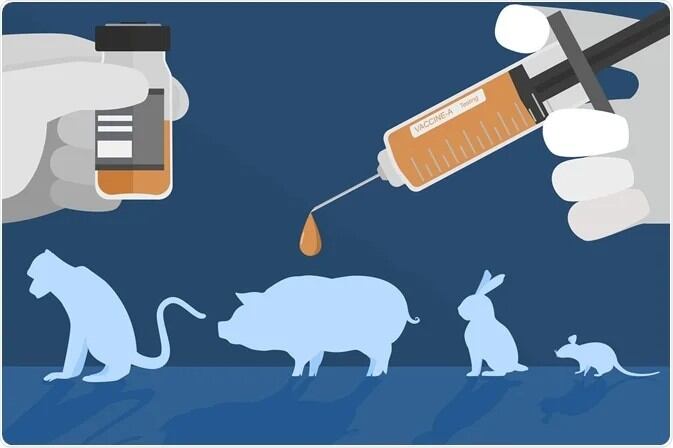
The British government has revealed a strategy to progressively decrease the use of animals in scientific experiments by employing artificial intelligence (AI) and 3D bioprinting technology moving forward.
As reported by the Guardian on the 11th, UK Science Minister Patrick Balance said, “Artificial intelligence analysis and 3D bioprinting techniques can adequately substitute conventional animal testing in medical and scientific sectors.” He further noted, “Although animal testing has been essential for areas such as vaccine creation, we think it can be gradually eliminated using other technologies.”
◇How to Substitute Animal Testing
The British government intends to stop clinical trials involving animal skin and eyes by the end of 2026. In 2027, it will also cease animal testing to check the effectiveness of botulinum toxin (Botox), which temporarily tightens and paralyzes muscles. Several animal-based clinical trials aimed at determining how quickly medications are absorbed into the body will be stopped by 2030.
Rather than relying on animal testing, the government will proactively implement organoids (artificial miniature organs), AI evaluation, and 3D bioprinting techniques that mimic human tissues.
◇”Advancing Science Without the Use of Animal Testing”
Minister Balance stated, “The UK is a country that has a deep affection for animals. We are committed to ending animal testing across all relevant fields and quickly implementing safe and efficient alternative methods.”
The British government has been examining the elimination and reduction of animal testing for more than two decades. For example, animal testing for cosmetics and their components was banned in 1998, but following its departure from the EU, regulatory changes occurred, permitting animal testing for specific chemical assessments. The debate about ending animal testing in new drug development gained renewed attention in the 2020s. Although more than 2 million animal tests were carried out each year in the UK up until the early 2010s, there was an increasing demand from academia for “ethical scientific research,” prompting calls for less animal testing. This statement reflects these demands and confirms that the UK government acknowledges the progress of alternative technologies and their capacity to guarantee safety.
The academic community has also shown their backing. The UK Royal Zoological Society remarked, “The government’s statement reflects a clear objective to end animal testing” and further noted, “It will act as a basis for developing infrastructure and cooperative networks to promote research that does not rely on animals.”




 jasdooit
Leave a comment