
Should Lesotho ever create a Ministry of Comedy, Scrutator suggests that the initial task should be to present the Ministry of Trade, Industry and Business Development with a Lifetime Achievement Award for Unjustified National Self-Defeat. Indeed—what the Romans accomplished in architecture, what the Greeks achieved in philosophy, the Ministry of Trade has done in economic nonsense. It shouldn’t be named the Ministry of Trade, Industry and Business Development. Rather, it should be called the Ministry of Mistrade, Deindustrialization and Business Destruction.
Certainly, dear readers, we are now confidently entering 2026 with a bold strategy: dismantle the economy to preserve it.
As per a report in a local weekly, the government has ultimately chosen to implement its well-known Regulation 34—a piece of economic fantasy that claims Basotho will turn into entrepreneurs the instant foreigners are removed from the economy. It’s akin to an “economic baptism through eviction.” Remove them, and suddenly, Basotho will emerge as business experts, skilled in supply chain management, cash flow modeling, purchasing, logistics, refrigeration, storage, inventory rotation, and customer service. In an instant. Like ready-made noodles.
If Scrutator had one wish for Lesotho’s decision-makers, it would be that they eventually uncover the groundbreaking realization that entrepreneurship isn’t born from prohibiting individuals. It thrives when people are empowered. Unfortunately, we find ourselves moving forward recklessly into a time where the government appears to think that Basotho will automatically become top-tier entrepreneurs just because outsiders are driven out of the market.
But let’s not ruin the humor.
As reported by the local weekly, the Ministry has recently notified foreign traders—those persistent individuals who work 18 hours daily, skip weekends, remain silent about issues, don’t ask for tenders, and ensure stores are well-stocked—that their licenses will not be extended. The reason? Basotho business owners are “prepared” to assume control.
Are you ready? READY!? Ready for what, precisely? With which capital? What abilities? What supply sources? What trucks? What storage facilities? What distribution agreements? What cooling systems? What business strategies? What understanding of finance? The honorable Minister needs to reveal where this group of fully trained businesspeople has been concealed. Under the bed? Behind the counter? In hiding?
Foreigners control the retail industry not due to the oppression of Basotho, but because Basotho were simply absent. Just absent. Not present. Not selling. Not stocking. Not investing. Not taking risks. Not working hard. Not being there.
And now, abruptly, will Basotho appear magically because foreigners will be driven out? When? After lunch?
This reasoning is so incredibly foolish it warrants its own museum display.
According to the Ministry of Trade, 80% of the jobs in the inspected retail sector are created by foreign-owned companies. Eighty. Not eight. Not eighteen. Eighty. So, when these foreign businesses shut down, what do we end up with?
– 80% unemployment?
– 80% angry youth?
– 80% more people entering Ladybrand to purchase cabbage and toothpaste?
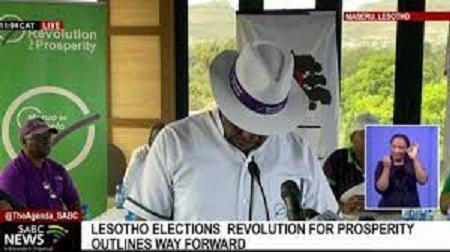
And now we listen to the Minister of Trade, Mokhethi Shelile—once hesitant, once seemingly reasonable—has become a full-time advocate for Regulation 34. What caused the shift? Political pressure. The very same political pressure that has already damaged hospitals, schools, roads, and every reform initiative in this nation.
And now it has returned to disrupt the economy.
SThe critic is not deceived. The Minister is aware that this will lead to disorder. He understands that the Basotho are unprepared to occupy these areas. He is also aware that closing foreign companies will result in empty store shelves, significant job losses, dissatisfied people, and rapidly increasing prices. However, similar to someone who spots a cliff yet continues to press the accelerator to make a point, he has chosen to move forward.
When stores in Lesotho are empty, keep in mind: it’s not outsiders who left the nation. It’s the skilled workers who departed from the government department.
Let us take a brief moment to recognize the remarkably elegant irony:
Lesotho urgently appeals to foreign investors for opportunities in manufacturing, textile industries, renewable energy, mining, agriculture, and tourism.
But selling tomatoes? No, no, no—THAT is too significant. Only a Mosotho can sell tomatoes.
Indeed, we are a nation that employs outsiders to construct medical facilities yet denies them the right to sell bananas.
The paradoxes would be amusing if they weren’t heartbreaking.
NNaturalized citizens—poor souls—are now realizing that being a Mosotho is a conditional benefit. You are welcome… until someone decides you are not. Until you are suddenly too foreign to run a barbershop but not too foreign to pay taxes.
Scrutator should also highlight the remarkable foolishness of restricting services such as laundry, photocopying, shebeens, hair salons, street vendors, fruit and vegetable sellers, scrap metal collection, and shoe repairs to “locals only.” Goodness—what a brilliant idea! Soon, we might witness billionaires coming out of photocopy shops. The Basotho could turn into the Dubai of photocopying.
Let us be serious.
YYou cannot regulate the Basotho into prosperity.
You can’t create entrepreneurship through legislation.
It’s impossible to create a strong economy through the prohibition of competition.
That is the way to create poverty.
That is the way to create underground trading networks.
This is how you foster bitterness.
That is how you create a system that even a donkey could surpass.
SCruator thus makes this last appeal to Minister Shelile:
Sir, turn back before your policy turns into a national death notice.
Stop enforcing stupidity.
Cease viewing the economy as a political coloring book.
Stop blaming foreigners.
Begin to uplift the Basotho with genuine initiatives, authentic education, actual funding, meaningful changes, and effective structures.
Since prohibiting outsiders will not make the Basotho wealthy.
But this will result in everyone becoming poor.
The reality is unmistakable: you don’t foster entrepreneurs by prohibiting competition. You cultivate them by encouraging competition. By offering access to funding. By promoting training and skill enhancement. By lowering the expenses associated with running a business. By cutting down on bureaucratic hurdles. By enhancing infrastructure. By addressing inefficiencies in customs procedures. By ensuring a reliable power supply that doesn’t fail every Friday afternoon.
These are the factors that shape genuine entrepreneurs—not rules crafted as if written by someone who merely read a book titledHow to Create a Financial System Based on Optimistic Beliefs.
The Basotho are entitled to empowerment. They deserve genuine economic involvement. They deserve access to possibilities. However, empowerment needs to be constructed, not just announced. It should be attained, not passed down. It requires nurturing, not imposed by removing those who are already contributing.
Scrutator will state this openly: prohibiting foreigners from engaging in business will not produce a single genuine entrepreneur. It will lead to anger, shortages, joblessness, and disorder. Eventually, the same government will go back to Parliament seeking changes, exceptions, explanations, and urgent actions.
Since the economy is not influenced by feelings, it is governed by facts.
Scrutator, therefore, calls on Minister Shelile to rethink his passionate campaign. Policies must be based on facts, not political slogans. When foreign-owned stores shut down, it won’t be the politicians who face the consequences. It will be the Basotho whom these regulations claim to safeguard.
Cease blaming outsiders. Begin supporting the Basotho.
That would truly be a Revolution of Prosperity.
Ache!!!
Copyright 2025 Lesotho Times. All rights reserved. Shared by AllAfrica Global Media ().
Tagged: Lesotho, Governance, Economy, Business and Finance, Southern Africa
Provided by SyndiGate Media Inc. (Syndigate.info).


 jasdooit
Leave a comment