
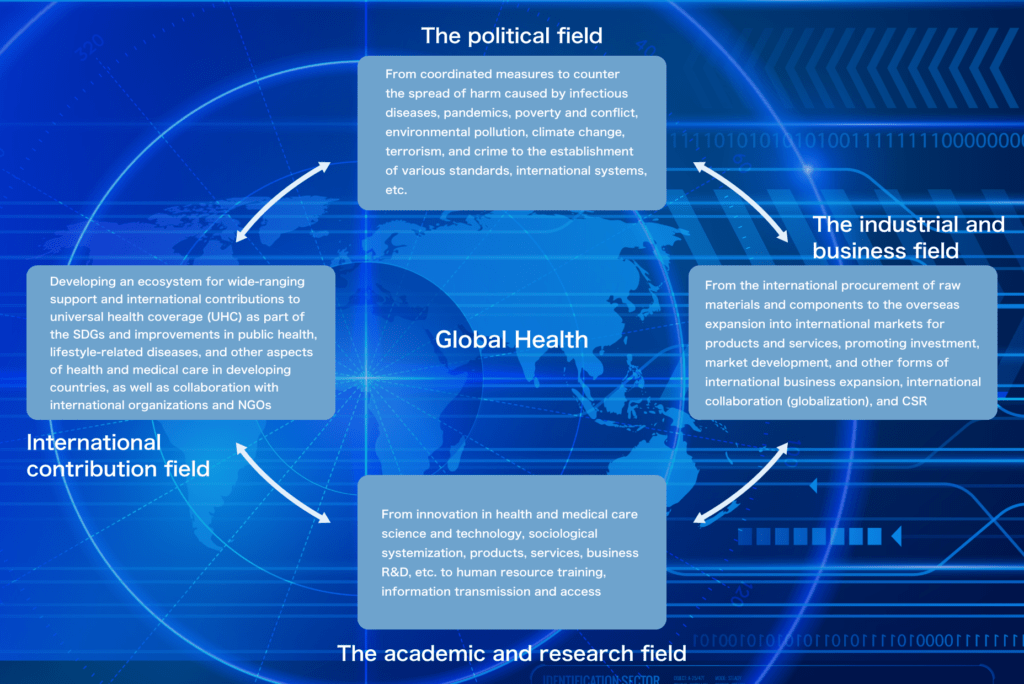
Over the past two decades, there has been remarkable advancement in global health: millions of lives have been saved, significant declines in death rates, and substantial rises in life expectancy in some of the world’s most impoverished nations.
However, the situation has evolved. Funders are reducing financial assistance allocations. Countries responsible for implementation wish to assume greater responsibility. Local communities are seeking increased involvement. The approach that has driven such advancements will not be the one to guide future efforts.
To adjust, we need to change the global health system, making it more effective, more attuned to nations, and more connected and creative.
More than 20 years back, the Global Fund alliance was established to address a significant deficiency in the current framework. By uniting the capabilities of governments with the enthusiasm of communities, the influence of civil society, and the practical approach of the private sector, this distinctive public-private collaboration has demonstrated remarkable effectiveness, having saved 70 million lives and reduced the overall death rate from AIDS, tuberculosis, and malaria by 63%.
We now need to re-imagine ourselves once more: extract greater value from each dollar, assist nations in their journey toward self-sufficiency, and play a role in the wider evolution of the global health system.
Getting the Most Out of Each Dollar
Enhancing the effectiveness of each dollar involves providing quick and cost-effective access to life-saving innovations. This is exactly what we are achieving with lenacapavir, a new, 100% effective, long-acting injectable HIV prevention method. For the first time ever, this innovative HIV prevention medication will be introduced in both low- and middle-income countries as well as high-income nations simultaneously. The initial shipments to Africa are happening this month. A generic version, which will reduce costs even further, will be available shortly after.
We have adopted a comparable strategy with the newest mosquito nets designed to combat malaria, which are 45% more efficient than conventional nets and cost just an additional 70 cents. Additionally, we have implemented AI-powered digital X-rays, which enable enhanced TB detection in some of the most challenging and isolated areas.
Collaborating with partners enables us to achieve results more quickly. When it comes to providing life-saving innovations, time is equivalent to lives. The greater the scale, the more significant the impact. We cannot tolerate lengthy pilot programs or gradual implementations.
However, advancements only enhance health results when they are accessible to those who need them the most. High costs, underdeveloped healthcare systems, prejudice, and discrimination continue to be significant obstacles. Addressing these challenges is not solely about health fairness and human rights; it is also an epidemiological and economic necessity. If these innovations fail to reach individuals at greatest risk, we diminish their effectiveness and squander resources.
Increasing the effectiveness of each dollar spent also involves breaking down silos around health products and diseases. A more cohesive, patient-focused approach that addresses infectious diseases alongside noncommunicable conditions and mental health can lead to improved results and cost savings—provided it is done properly. Incorporating multi-pathogen capabilities into targeted disease interventions also enhances our frontline protection against new health challenges. For the Global Fund, these changes have significant consequences. We need to collaborate with partners to reform program design and implementation, while maintaining the focus on disease outcomes.
Ongoing enhancements in efficiency remain crucial. Given that operational expenses account for roughly 6% of funds distributed by donors, the Global Fund is already very efficient. However, by utilizing technology, including artificial intelligence, to further simplify and automate procedures, we are cutting costs by an additional 20%, while also easing the load on partner nations.
Speeding Up the Journey to Independence
Severe reductions in external funding highlight the necessity for nations to quicken their move towards self-sufficiency. However, this is a process, not an instant change. A too sudden shift could hinder progress and result in the loss of millions of lives. The preparedness of countries for such a transition varies greatly.
The Global Fund will collaborate with nations to speed up their path toward independence – providing support, encouraging progress, and eventually stepping aside.
That’s why we have updated transition planning and co-financing strategies. For certain countries, we will establish a transition schedule that makes this three-year grant period their final one. For others, the transition process might span two grant cycles. We will collaborate with governments to create strong transition plans for all countries except the poorest and those affected by conflict.
In order to assist with transitions, we are enhancing our assistance to nations in strengthening their public financial management systems and accessing new funding sources. We have already completed 14 Debt2Health swaps and 14 blended-finance deals. We are actively supporting the creation of national health insurance programs in various countries.
We can also assist nations in maintaining access to high-quality, cost-effective medicines by simplifying their use of our collective purchasing system with their own funds. Countries in transition often face much higher costs and substantial administrative expenses, but these challenges can be mitigated through our global reach and digital procurement tools. By providing advance financing and collaborating with regional purchasing platforms, we offer countries greater flexibility.
Certainly, there are nations where a mix of economic hardship, conflict, and weak governance, along with the severity of health challenges, makes achieving self-sufficiency a more remote goal. Nevertheless, even in such situations, we must focus more on sustainability, supporting the development of systems and capabilities that will serve as the basis for the future.
Health development aid continues to be crucial – to combat the most fatal diseases, assist nations in achieving self-sufficiency, and enhance global health security. Nations that have gained the most from globalization also bear a responsibility to fund global public goods like health – not only due to generosity, but also for their own benefit. However, we must adopt more intelligent strategies in integrating grants, national financial resources, and private investment to establish routes toward self-reliance.
Reimagining the Worldwide Health System
The Global Fund emerged from a spirit of upheaval – driven by the conviction that traditional methods were too sluggish, too rigid, and too disconnected from frontline realities. That same dynamic force should continue to propel us today.
In order to adjust to the new circumstances, the Global Fund is determined to implement major changes: reducing our expenses, streamlining our operations, and increasing our ability to respond to the needs of countries. We also understand that the entire global health system must undergo transformation, and we are ready to contribute our share to achieving this change.
Despite its achievements, global health has grown excessively complicated and disjointed, with overlapping efforts and red tape posing obstacles for nations and diminishing effectiveness. We need to streamline the structure—consolidating or shutting down organizations when suitable, defining responsibilities clearly, and altering how we collaborate both among ourselves and with countries.
As the leading multilateral financier in global health, covering the three diseases and health systems overall, the Global Fund possesses resources that could be utilized more broadly — for instance, our ability to shape markets, our global procurement system, or our distinct role in enhancing community health systems. However, the way the Global Fund develops in terms of its mission and focus should not be decided independently, but as part of a larger vision for the future of the global health landscape, including the WHO, Gavi, disease-specific organizations such as UNAIDS, product development partnerships like Unitaid and CEPI, and our collaboration with the World Bank and other multilateral development banks.
Moving towards bilateral methods is not the solution, as it could increase complexity and reduce efficiency and effectiveness. Enhancing our multilateral system is the optimal choice—however, it requires making difficult decisions. In light of limited resources, we need to be strict in identifying where external funding provides the greatest benefit, and how to best allocate responsibilities among agencies based on their strengths. The way we proceed is crucial. The transformation of global health should not be controlled from Geneva or New York, but should instead showcase the leadership of nations and communities, along with regional organizations such as the African Union.
From Disruption to Reinvention
Over the past two decades, advancements in global health have demonstrated what humanity is capable of achieving when united. Amidst rising doubt, nationalistic tendencies, and more self-serving perspectives in discussions, the evidence—such as the saving of tens of millions of lives, significant drops in death rates, substantial rises in life expectancy, and considerable economic gains—serves as a powerful testament that ambitious thinking and collective action can lead to remarkable achievements.
However, the model that has been effective until now needs to evolve. The advancements made over the last two decades represent one of humanity’s most significant public health accomplishments. The coming two decades will challenge us to demonstrate the same level of courage in reshaping the system as we did in establishing it.
The decision is clear: progress or decline. We need to adjust to new circumstances, and do it bravely, safeguarding the elements that have led to success, while not being held back by history. Most importantly, we must stay dedicated to our objectives – preserving lives, eliminating the most dangerous infectious diseases, and creating healthcare systems that provide health for everyone and enhance our safety. When people unite, no obstacle is too great.
This commentary was first released onForbes.
Copyright 2025 Global Fund to Combat AIDS, Tuberculosis and Malaria. All rights reserved. Distributed by AllAfrica Global Media ().
Tagged: Africa, Health and Medicine, International Organizations and Africa, External Relations
Provided by SyndiGate Media Inc. (Syndigate.info).



 jasdooit
Leave a comment