
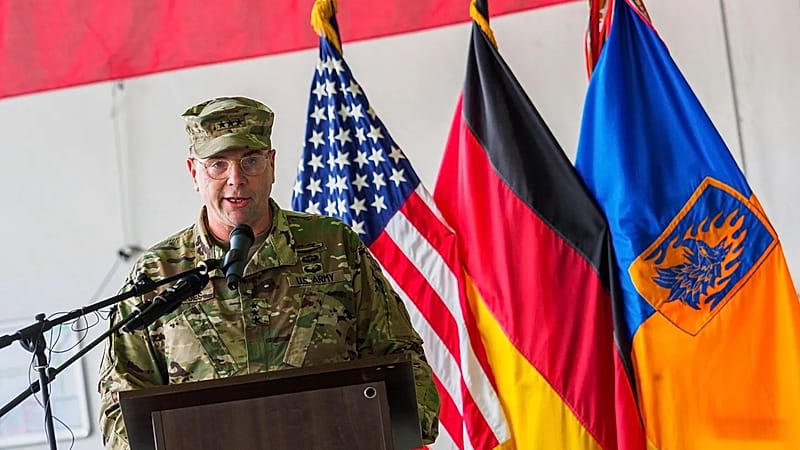
The 28-point peace initiative released last week by Russia and the United States, which aimed to bring an end to Russia’s large-scale military operation in Ukraine, created confusion, particularly among European nations that were not part of the discussions.
A key issue during this period is whether Europe can still depend on the rule-driven framework that has defined its security for many years, with the United States acting as its guardian, or if this situation has allowed Russia to increase its efforts to create instability in its nearby region and across the continent.
At this year’s Berlin Freedom Conference, Euronews interviewed retired Lieutenant General Ben Hodges, who previously served as the commander of the United States Army in Europe.
He outlined the reasons why Washington relies on Europe, and how Ukraine’s loss would also lead to adverse effects for the United States.
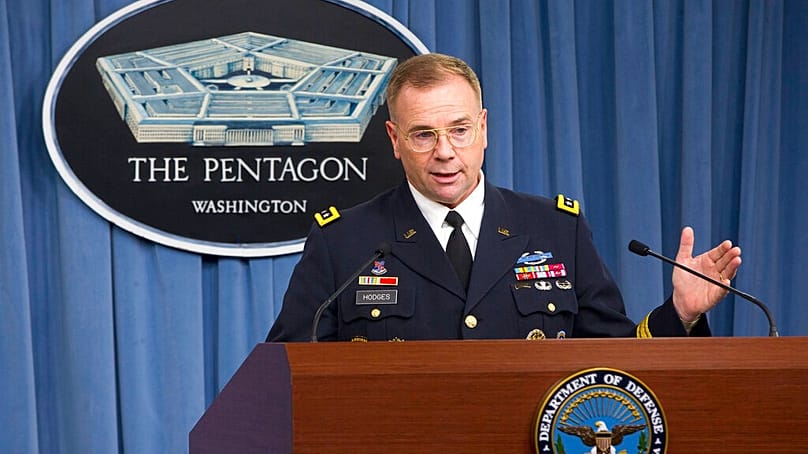
Euronews: How would a final victory for Ukraine benefit the United States?
General Ben Hodges stated that Europe is America’s largest trading partner. The economic success of the United States is tied to the prosperity of Europe. European well-being relies on the region’s stability and safety, which are being undermined by the conflict initiated by Russia. Hence, achieving victory in this war against the Russian aggressor is crucial.
Furthermore, if Russia is not halted in Ukraine and this conflict spreads into NATO territory, we might end up in a real-world military confrontation with Russia.
Discouraging China is also significant: the Chinese are observing whether we are committed to sovereignty and international law, and if we are a dependable ally.
In conclusion, Russia continues to support Iran and North Korea. If you are concerned about these two nations, defeating Russia first will further isolate them, thereby minimizing the harm they can cause to Israel or South Korea.
Euronews: What is your opinion on whether the United States remains a trustworthy NATO ally?
General Hodges: I suppose that’s true, yes. However, I believe it’s regrettable that people even pose this question, as the Trump administration has introduced uncertainty regarding whether the US would take action.
Here’s the paraphrased version of your text: That’s the issue: the Russians might make a risky mistake if they think the U.S. has no intention of taking action beyond just making declarations. This belief increases the chance of Russian involvement.
Now, as I observe the actions and statements made by the administration over the last ten months, it is clear that the top priority is the Western Hemisphere, encompassing both North and South America.
Second in importance: the Indo-Pacific region, although this is largely from an economic perspective.
Third in line is likely the Middle East. As the administration tends to focus on transactional approaches rather than ones rooted in values or traditional strategies of diplomacy, much of its efforts revolve around securing business agreements.
That suggests Europe is likely ranked 4th in terms of importance. You can expect a decrease in the US military presence here, as they have already announced a reduction of the US Army. presence in Romania.
Euronews: Are you anticipating a decrease in military personnel stationed in Germany?
General Hodges: I think it’s nearly certain, but I’m not sure. They discussed it extensively in the Trump era, yet surprisingly, the number of U.S. troops permanently stationed in Germany rose during his first term.
Now, I believe, they are more committed to carrying this out. There isn’t much that we possess in Europe, particularly what the US Army has stationed there.
The Army’s presence in Europe is not required in the Pacific, but it could be cut to save funds and resources. I believe the overall US Army will decrease in size, with some of these reductions coming from Europe.
Euronews: Do you believe there will also be cuts at air bases, like Ramstein?
General Hodges: Possibly. However, Ramstein is crucial for all our operations, not only in Europe, but also in Africa and the Middle East.
The facilities that our European partners permit us to maintain for the Navy and the Air Force are crucial for us.
Although I can envision a few, it’s not really that significant. Removing something would mean losing a capability.
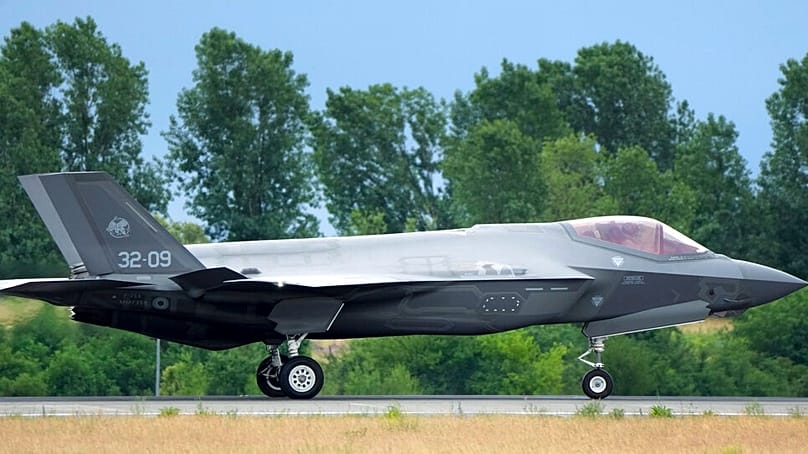
Euronews: Germany is acquiring 35 F-35s from the United States. Trump mentioned a kill switch in these fighter jets previously. This feature has never been verified, but could it introduce additional risks for the German armed forces?
General Hodges: There is no such thing as a kill switch. What constitutes a vulnerability, though, are the updates. The F-35 is essentially a flying computer, which is what makes it so unique. It’s all the systems, the connectivity, and what the pilot is capable of achieving beyond our conventional understanding of what a fighter pilot does.
And thus, potentially, if, for any reason, the United States found itself dissatisfied with a specific nation that had F-35, and Trump said “no more,” the German government, the British government, the Dutch, and all other countries receiving or currently using the F-35 — Finland, Sweden — would have taken steps to safeguard themselves against such interference. I believe this situation is highly improbable, though.
I’m not claiming it’s impossible, but I would have significant doubts about the Trump administration taking such an action, as it would be both politically unwise and detrimental to business.
If we are not considered trustworthy, it clearly has an effect on business as well. For these reasons, I believe the Trump administration would be hesitant to undertake any actions that could lead to such consequences.
Euronews: It is reported that Germany purchases approximately 80% of its arms from Europe, with only a minor portion coming from the United States. Might this change present a threat to the transatlantic alliance?
General Hodges: The decision of where Germany – or any country – acquires its weapons should primarily depend on what provides the German Armed Forces with the greatest effectiveness.
As you mentioned, approximately 80% of what the German Armed Forces will possess is primarily produced in Germany.
But there are certain things Germany is still not able – or willing – to manufacture. Consider the Patriot systemGermany possesses strong air and missile defense systems, but within its category, the Patriot is considered the top choice. Therefore, for the time being, you would prefer that option.
At the same time, all parties – including the United States – are aiming to minimize weaknesses. We are currently highly susceptible due to Chinese controlon rare earth materials, for instance.
Therefore, you aim to minimize these weaknesses, and I assume the German ministry has similar intentions.
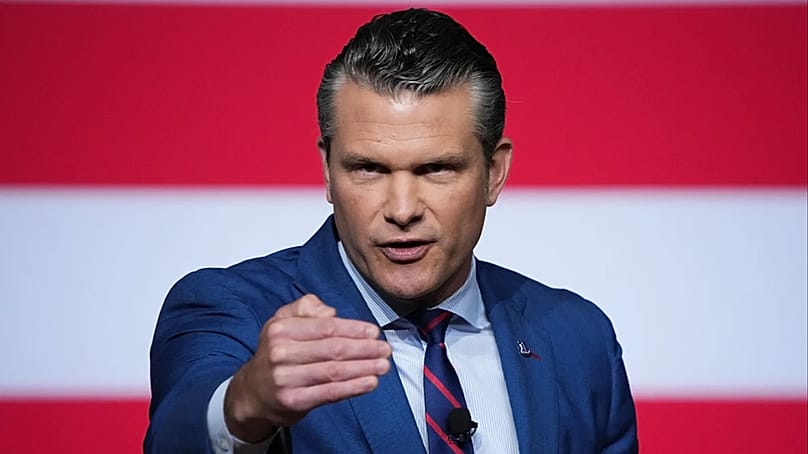
Euronews: As a former military official, how do you view someone like Defense Secretary Pete Hegseth commanding the army, particularly following his speech where he criticized “woke” policies, diversity, and the physical preparedness of the troops?
General Hodges: The key takeaway from that speech was that I felt a sense of relief upon seeing those hundreds of women and men present—high-ranking officers—sitting there in a professional, respectful, and quiet manner.
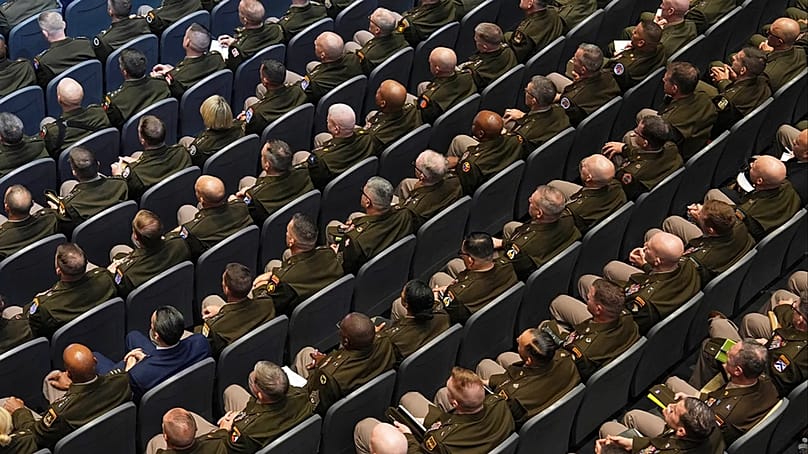
They prevented it from becoming a protest, which was the intention of Secretary Hegseth, the Secretary of Defense, and President Trump. They remained seated and listened because we hold our pledge to the Constitution very seriously.
This goes beyond a mere administrative task; it is something we deeply appreciate. The oath is sworn to the Constitution, not to the president, although Article 2 of the Constitution designates the president as commander-in-chief. The oath centers on protecting the Constitution itself.
Certainly, they are aware that Secretary Hegseth has removed numerous – nearly a dozen – generals and admirals without justification. This leads to significant pressure on senior officers who must execute the missions assigned by the Pentagon. They also understand that their Constitutional responsibility is to follow lawful commands.
Euronews: Do you believe many of them will proceed with that?
General Hodges: Well, here’s my take – or more accurately, here’s what is supposed to happen – and I’m certain that most people do this: you attempt to stop undesirable or unlawful commands from being issued.
Many behind-the-scenes efforts take place when the secretary states, “We are going to do this, this, and this.” It is the responsibility of the Chairman of the Joint Chiefs to respond, “Mr. Secretary, we cannot do that.” And you strive to ensure it never becomes public.
You could say, “I understand your goal. Here’s a method to achieve that outcome without violating any laws or international regulations.”
It’s extremely challenging, I’ll be honest. And the administration often appears satisfied to act as they please, not regarding this as a priority. The clear example that comes to mind is the so-calledVenezuelan drug boats.
Then there’s the president discussing the use of American cities for training purposes. That’s an issue. On a different topic, Secretary Hegseth appears determined to push women to the side. He didn’t explicitly state “we’re going to eliminate all the women,” but he continuously highlighted male-oriented standards.
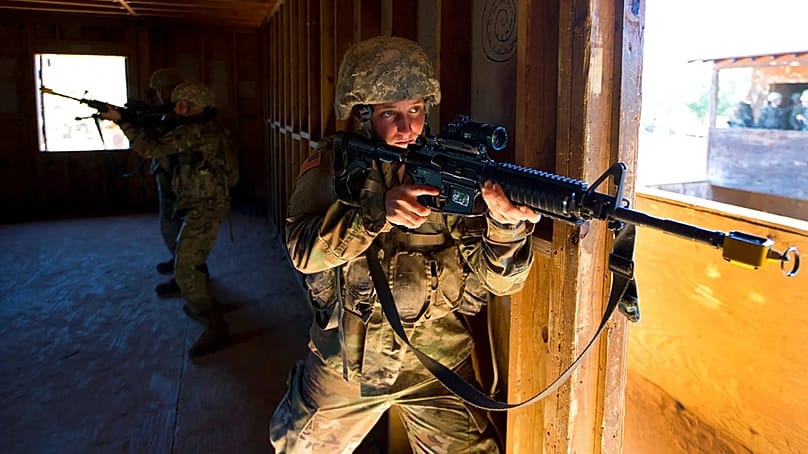
The U.S. Army has a 20% female presence for practical reasons: initially, due to the necessity of that intellectual capacity, and secondly, because there aren’t enough men who are willing to enlist.
This is not about being “woke,” but rather about common sense. However, his method may deter skilled young women from thinking about joining the military for four or five years. These are significant risks.



 jasdooit
Leave a comment