
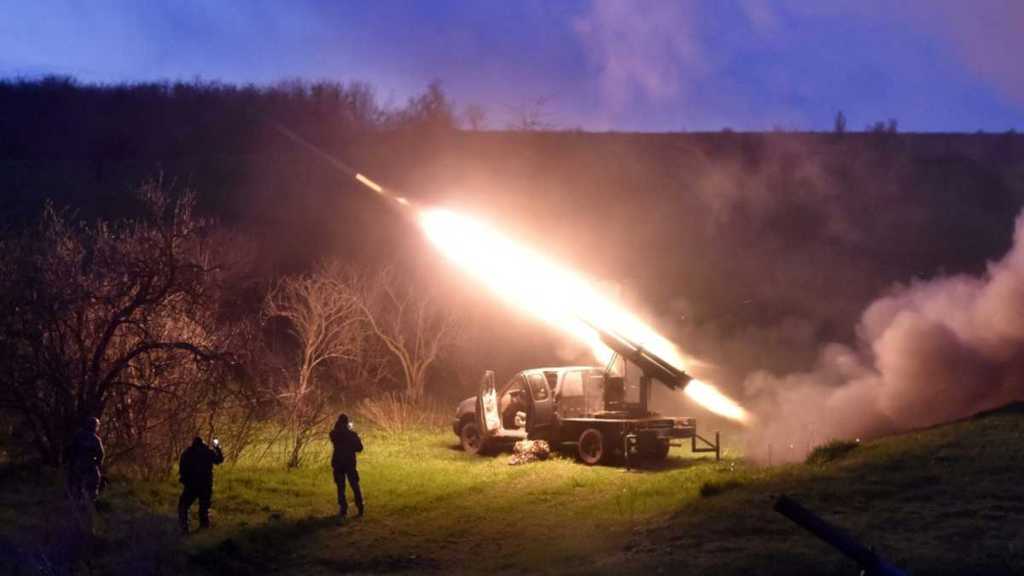
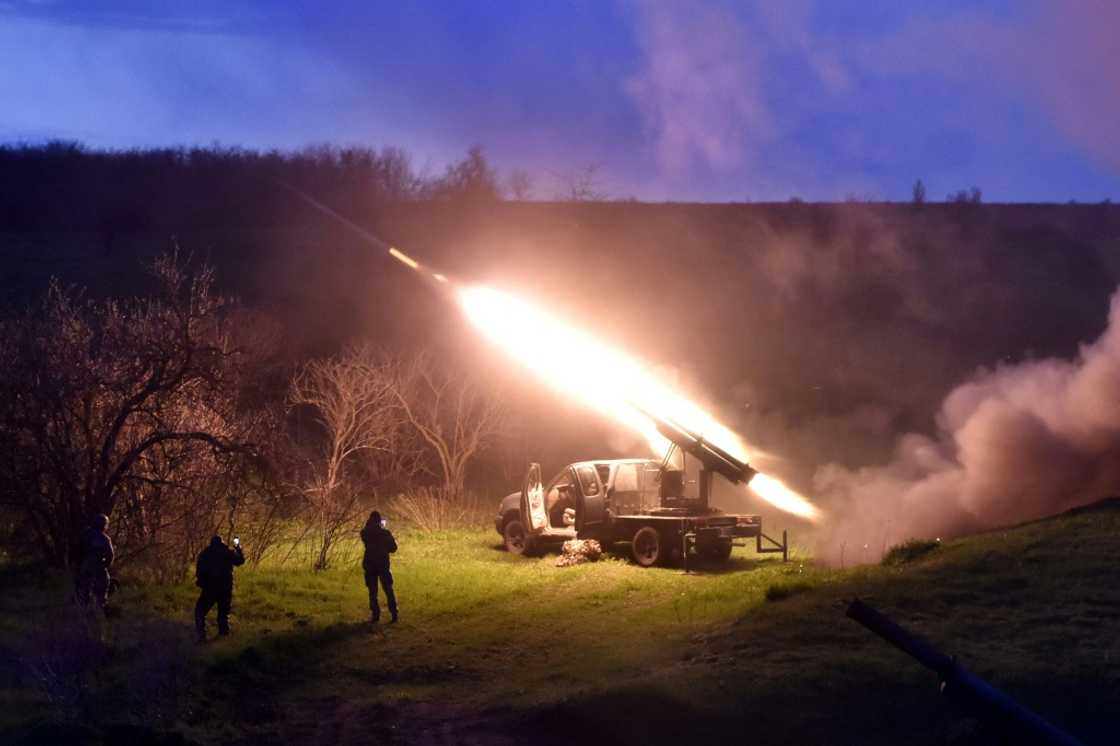
The top 100 arms manufacturers worldwide generated a new high of $679 billion in sales last year, according to researchers who noted that conflicts in Ukraine and Gaza increased demand, although production challenges slowed shipments.
The figure was 5.9 percent greater than the previous year, and during the 2015-2024 period, income for the top 100 arms manufacturers increased by 26 percent, as stated in a report from the Stockholm International Peace Research Institute (SIPRI).
“Last year, global arms sales hit an all-time high according to SIPRI, as manufacturers took advantage of strong demand,” said Lorenzo Scarazzato, a researcher from the SIPRI Military Expenditure and Arms Production Programme, in a statement.
Jade Guiberteau Ricard, a researcher affiliated with the same program, told AFP that “it’s primarily influenced by Europe,” although “all regions have seen an increase except for Asia and Oceania.”
Ricard mentioned that the rising demand in Europe was connected to the conflict in Ukraine and “the sense of threat posed by Russia to European nations.”
As per SIPRI, the demand from Ukraine along with nations providing military support and requiring to restock their supplies contributed to the increased demand.
Ricard mentioned that numerous European nations are also currently aiming to enlarge and update their own armed forces, “which will create a new area of demand.”
Supply woes
The United States hosts 39 of the leading 100 global arms manufacturers, among them the top three: Lockheed Martin, RTX (previously known as Raytheon Technologies), and Northrop Grumman.
U.S. defense companies experienced a 3.8% increase in total sales, reaching $334 billion in 2024, accounting for almost half of global spending.
Meanwhile, the report’s authors highlighted that financial overspending and delays affect several major US-led initiatives, such as the F-35 fighter jet and the Columbia-class submarine.
Thirteen percent growth in total revenues reached $151 billion for the 26 leading arms manufacturers located in Europe, ranking among the top 100.
A Czech firm, Czechoslovak Group, experienced a revenue surge of 193 percent — the highest growth among the top 100 — totaling $3.6 billion.
The firm gained advantages from the Czech Arms Program that supplies artillery shells to Ukraine.
However, European arms manufacturers are also encountering challenges in meeting the rising demand, as SIPRI highlights that obtaining materials is expected to become more difficult.
The writers mentioned that Airbus and France’s Safran obtained approximately half of their titanium from Russia prior to 2022 and have needed to locate alternative suppliers.
China’s limitations on the export of essential minerals have prompted firms — including France’s Thales and Germany’s Rheinmetall — to express concerns about increased expenses as they adjust their supply chains.
Two Russian defense companies are also in the top 100, Rostec and United Shipbuilding Corporation, with their total revenue increasing by 23 percent to $31.2 billion, even though there was a shortage of parts because of global sanctions, as local demand more than made up for reduced exports.
The report also highlighted that the Russian arms sector is facing difficulties in securing sufficient skilled workers “to meet the production levels required to maintain Russia’s military objectives.”
Israeli weapons still popular
Only the Asia and Oceania region experienced a decline in total revenues for the 23 companies located there — their combined income fell by 1.2 percent to $130 billion.
However, the authors emphasized that the situation across Asia was diverse, and the overall decline was due to a more significant drop among Chinese arms manufacturers.
“A series of corruption accusations related to Chinese military procurement resulted in significant arms deals being delayed or canceled in 2024,” stated Nan Tian, Director of SIPRI’s Military Expenditure and Arms Production Programme.
Tian mentioned that the decline increased “uncertainty” regarding China’s attempts to upgrade its armed forces.
On the other hand, Japanese and South Korean arms manufacturers experienced a rise in income, fueled in part by demand from Europe.
In the meantime, nine of the leading 100 arms manufacturers were located in the Middle East, generating total revenues of $31 billion.
Three Israeli defense firms featured in the list contributed to over half of that figure, with their total revenues increasing by 16 percent to reach $16.2 billion.
A SIPRI researcher, Zubaida Karim, mentioned in a statement that “the increasing opposition to Israel’s activities in Gaza appears to have had minimal effect on the demand for Israeli weaponry.”



 jasdooit
Leave a comment