
On the day of her daughter’s birthday, a parent instructs their AI assistant, “Organize a gathering for 20 friends.” The AI considers the daughter’s tastes to book the cake she would prefer and searches through 20 shopping centers to locate the most affordable gifts. Rather than dealing with complicated searches or payment processes, parents can enjoy meaningful moments with their daughter. Visa predicts that these situations will be common within 1–2 years.
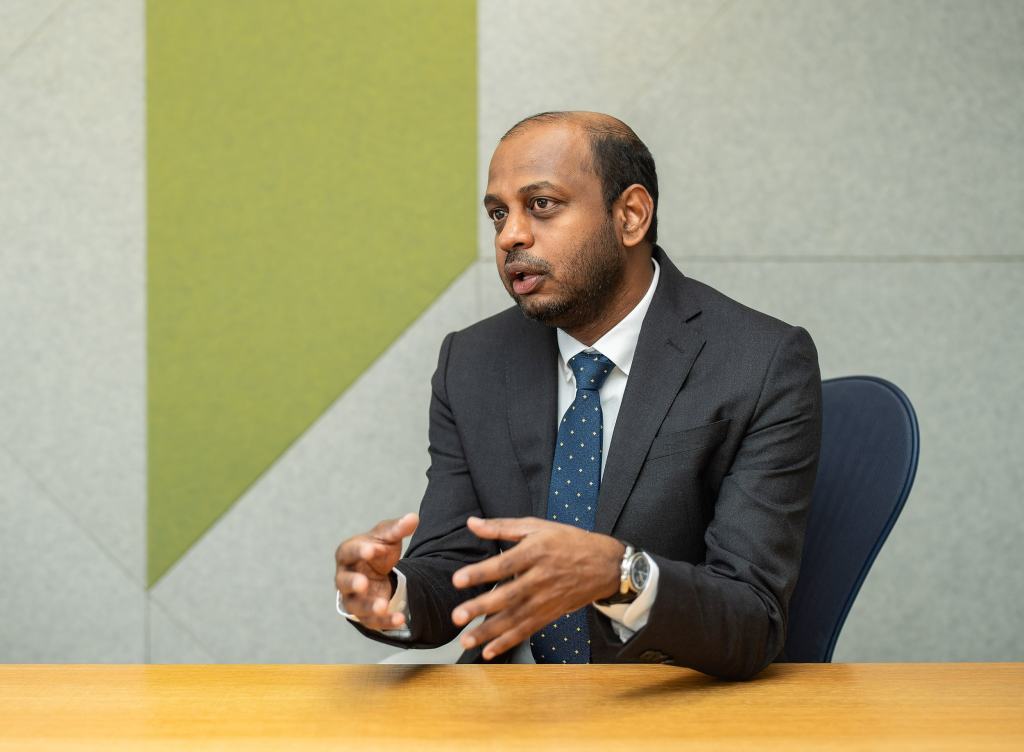
Abhijit Ramesh, Visa’s Vice President of Innovation, Growth, and Partnerships for the Asia-Pacific region, visited South Korea on the 26th of last month to participate in “Korea Fintech Week 2025.” He stated, “Artificial intelligence is moving past just delivering information and is becoming an ‘agent’ that makes decisions and takes actions on behalf of people. The time of ‘Agentic Commerce,’ where AI independently manages tasks related to shopping and payments, is approaching.”
Ramesh highlighted “trust” and “safety” as essential factors for Agentic Commerce. Previously, online security systems have concentrated on preventing “Bad Bots” such as DDoS attacks or malicious macros. However, for AI agents to make purchases on behalf of users, shopping centers need to confirm if these “bots” are genuine representatives and provide them with access. To tackle this issue, Visa is developing the “Trusted Agent Protocol.” This system enables AI agents to independently verify their authenticity as authorized representatives when accessing retail platforms.
Visa incorporates its own security technology, “Tokenization,” into this framework. Tokenization generates a replacement payment number (token) that takes the place of the real card number, effectively stopping data breaches. Even if an AI assistant processes payments for someone, the actual card number stays concealed. Ramesh stated, “True Agentic Commerce is realized only when systems confirm the user’s identity via biometric verification and grasp the purpose of purchases to stop AI from acquiring unwanted items.”
Major players like Mastercard are also accelerating the launch of AI-driven payment solutions. Visa is concentrating on developing an “infrastructure” that encompasses both major platforms and small retail stores, rather than establishing direct links with individual merchants. The company is partnering with AI firms including OpenAI, Perplexity, and Anthropic. Ramesh mentioned, “Our goal is to establish an ‘open ecosystem standard’ that allows everyone to join. We are reducing entry barriers so merchants can accept payments through AI agents without needing separate coding or complicated development (No-Code).” He further noted, “Just as the internet eventually adopted a single standard after multiple formats competed, the payment industry will also restructure around a standardized ecosystem.”
Visa plans to fully launch “Visa Intelligent Commerce (VIC),” a combined offering that includes these technologies, in the Korean market at the beginning of next year. VIC is an integrated system that enables AI agents to carry out tasks safely, ranging from product searches to payments. Ramesh stated, “Korea, known for its top-tier mobile infrastructure and high level of technology adoption, is the ideal market for implementing Agentic Commerce. Starting early next year, we will begin expanding pilot programs throughout Korea and the Asia-Pacific region.”
Partnerships with local companies are also gaining momentum. Visa has teamed up with LG Uplus to incorporate payment functions into the AI call assistant “ixi-O.” During a conversation, if a user asks for a restaurant booking or to buy a product, the AI manages the payment without needing the user to switch apps—a “smooth” experience. Ramesh mentioned, “With a long-term collaboration with Samsung Electronics, we are jointly developing new ideas. Samsung, through Samsung Pay, has been a key partner for Visa.”
Ramesh likened the future of AI-driven payments to an “invisible person.” “No one starts their day with the intention of ‘making a payment.’ They just want to celebrate a child’s birthday or go on a trip. Visa aims to make the payment process fade into the background, like air, so consumers don’t even realize they’re paying. The time saved will enable people to concentrate on more significant activities.”



 jasdooit
Leave a comment