
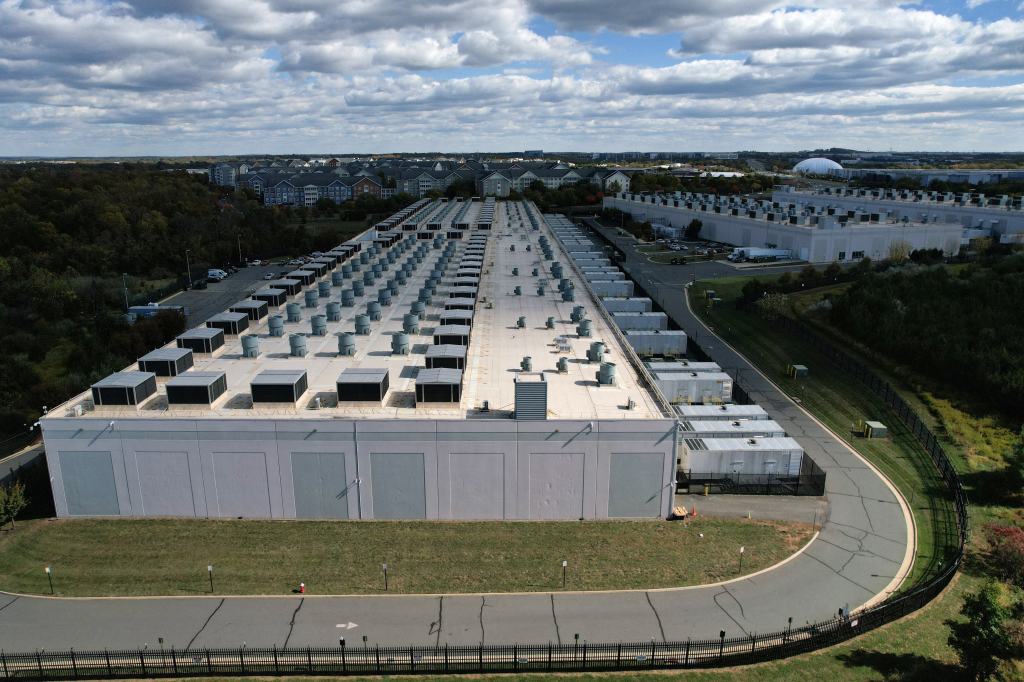
On October 20, an incident took place at a data center within the ‘US-EAST-1’ region (a collection of data centers) of Amazon Web Services (AWS) situated in northern Virginia, United States. The problem occurred while performing an update to DynamoDB, AWS’s primary database service. Consequently, error rates and delays rose in that region.
Nevertheless, the outage spread beyond the region, causing widespread impacts on numerous websites and applications across the globe. AI platform Perplexity, along with financial services such as Coinbase, Robinhood, and Venmo, were halted, while United Airlines, Roblox, and other platforms encountered problems. In the UK, government online portals, including those of the Customs Service, were also affected. Users in South Korea experienced varying degrees of inconvenience, from minor to major. The situation was worsened by AWS’s substantial presence in the global market, accounting for approximately 30%. This is a worldwide problem arising from cloud (virtual server) technology: a ‘cloud-induced digital blackout.’
A method to minimize such cloud outages has recently appeared. On the 30th of last month (local time), AWS, the leading cloud service provider globally, and Google Cloud, ranked third, introduced an ‘interconnect’ system that facilitates technical cooperation between the two companies. The two cloud providers established a ‘highway’ to enable rapid data transfer between their platforms. This could ensure that real-world IT services are not affected even if one cloud experiences downtime, as the other continues to function.
◇AWS and Google Cloud Establish a ‘Link’ Between Their Systems
The heart of the collaboration involves setting up a specialized, high-speed data transmission link between the two cloud platforms. Specifically, the companies integrated AWS’s ‘Interconnect Multi-Cloud’ and Google Cloud’s ‘Cross-Cloud Interconnect’ external network technologies to introduce a new combined network service. Significantly, the service was developed with a ‘fourfold redundancy system’ to improve reliability. In simpler terms, four ‘highways’ were established to connect the two different clouds. This enables data from one cloud to be quickly shared and transferred to the other, helping customers implement ‘multi-cloud’ strategies that operate multiple clouds at the same time. However, the service costs have not been revealed.
The worldwide cloud computing sector is controlled by a few major companies, forming an oligopoly. As reported by Statista, a leading data analytics platform, AWS, Microsoft Azure, and Google Cloud captured the majority of the market in the second quarter of this year. AWS had a 30% share, Azure 20%, and Google Cloud 13%. South Korea also shows a comparable pattern: a 2023 survey conducted by the Ministry of Science and ICT revealed that 60.1% of participating businesses utilized AWS.
However, in recent times, businesses have shown increasing interest in utilizing multiple cloud services—like AWS, Microsoft Azure, and Google Cloud. Relying heavily on one cloud service can make organizations more susceptible to disruptions during outages. Moreover, every cloud platform offers distinct advantages, encouraging companies to adopt several services for different tasks. For example, AWS, which is the global market leader, is recognized for its reliability and security, whereas Google Cloud is particularly noted for its capabilities in training AI models and conducting data analysis.
◇The Significance of Reliable Connection Increases
The platform jointly created by AWS and Google Cloud helps businesses reduce expenses and save time. Although the significance of ‘multi-cloud’ has been highlighted during previous outages, companies were reluctant because of the costs involved. Moving or duplicating data between existing cloud systems required setting up dedicated lines, which took a lot of time and money. However, with AWS and Google Cloud establishing fast connections directly, businesses no longer have to spend on routers or switches for multi-cloud configurations. The Verge, an American IT company, stated, “A few clicks in the cloud service API can now link the two, turning a weeks-long process into minutes.”
The technology sector is observing AWS and Google Cloud, key players in the cloud market, forming an alliance. Experts believe this is due to the increasing significance of cloud services during the AI surge, with the two firms announcing a partnership to maintain reliability. Reuters stated, “With AI demand rising rapidly, businesses are pouring billions into infrastructure. The new service was introduced to address the growing need for dependable ‘connectivity.’”
The two companies aim to grow their ‘multi-cloud’ partnership. As reported by The Verge, AWS plans to develop an equivalent connectivity framework with Microsoft Azure in the coming year. Furthermore, they have made the API details of this system publicly available, enabling other cloud providers or partners to join in the same manner if they choose.




 jasdooit
Leave a comment