
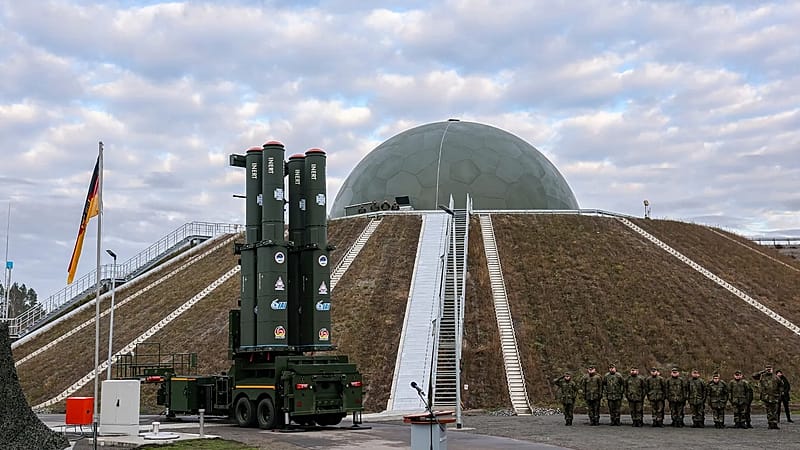
Germany unveiled on Wednesday the initial components of the advanced Arrow 3 missile defense system, which it acquired from Israel as part of its efforts to enhance aerial defenses after Russia’s full-scale invasion of Ukraine.
Arrow 3 is intended to counter long-range ballistic missiles. The initial component of the system was established at the Schönewalde base located south of Berlin, with additional locations planned.
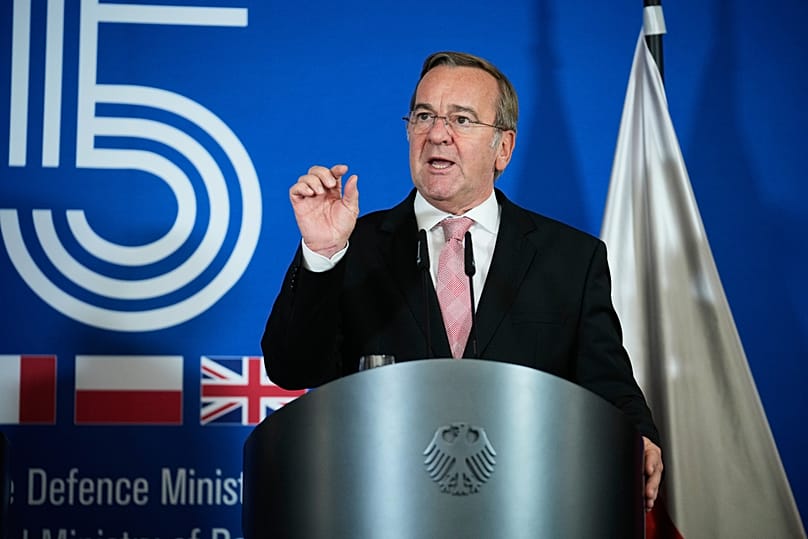
Defense Minister Boris Pistorius stated that the new system enables Germany to, for the first time, gain early-warning and protection against long-range ballistic missiles.
“Thanks to this distinctive strategic ability, which sets us apart from our European allies, we are maintaining our key position at the center of Europe,” Pistorius stated in a declaration.
So we are safeguarding not only ourselves but also our partners.
In September 2023, Germany and Israel finalized an agreement with Berlin agreeing to purchase the system, shortly after Israel received US approval for the transaction.
That was necessary because the system was created together with the United States.
Pistorius estimated the project’s overall cost to be €3.8 billion. Spokesperson Mitko Müller stated that the plan involves implementing additional components gradually.
Germany seeks to incorporate the system into broader NATO and European air defense initiatives.
Israel has traditionally depended on a complex missile defense system, such as the Arrow, to safeguard its communities from rocket attacks by militants in Gaza and Lebanon, as well as from rebels in Yemen and Iran in recent times.
German authorities recently cautioned that they anticipate Russiamight be prepared to strike NATO in 2029.
Foreign Minister Johann Wadephul mentioned that recent intelligence evaluations indicate that Moscow is considering the possibility of a future strike against the EU and NATO.
“Our intelligence agencies are issuing urgent alerts: by 2029, Russia is at least considering the possibility of launching a war against NATO,” stated a Foreign Ministry announcement.
“We must prevent additional Russian aggression, in collaboration with our partners and allies,” the statement further noted.
Suspected hybrid Russian attacks
Several European nations have reported an increase in suspected activities tied to Russia and coordinated hybrid attacks, such as cyber intrusions, acts of sabotage, and unauthorized drone and missile movements within European airspace.
Unidentified aerial vehicles have led to the shutdown of airports in the Baltic region and several Eastern European nations, along with those in Belgium and Germany. Additionally, Russian military aircraft have entered Estonian air space.

European Defence Commissioner Andrius Kubilius informed Euronews on Tuesday that Russia’s alleged provocations—such as drone violations and the recent attack on a Polish railway line—are changing warfare doctrines.
From a technical perspective, what we have observed is that our detection abilities are insufficient, and we lack an economical method to neutralize drones.
Kubilius also acknowledged that the EU’s reaction to this issue is still insufficient.
It indicates that our approach to preparation and our ability to evolve our perception of contemporary warfare principles is once more insufficient.




 jasdooit
Leave a comment