

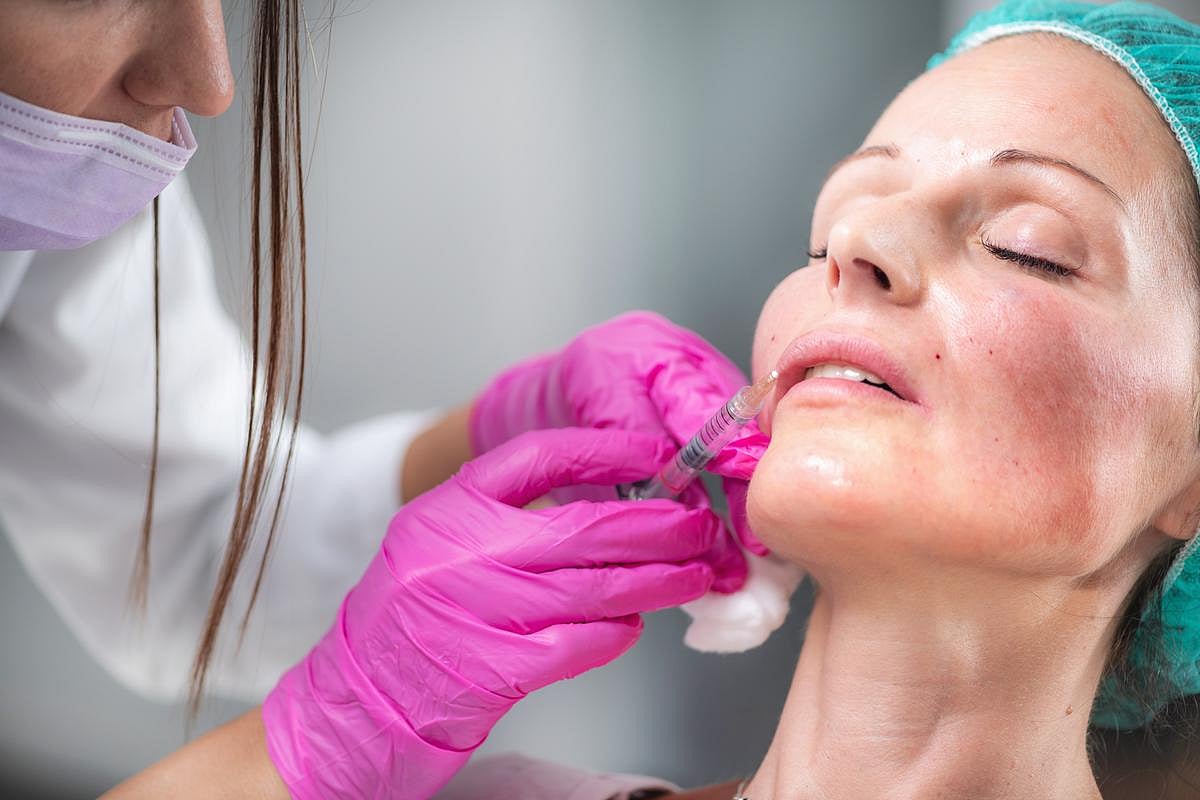
THURSDAY, Dec. 4, 2025 (News) — Ultrasound can offer important details to assist in diagnosing vascular adverse events (VAEs) linked to cosmetic fillers, such as hyaluronic acid (HA), as found in a research presentation at the Radiological Society of North America’s annual conference, which took place in Chicago from Nov. 30 to Dec. 4.
Rosa Maria Silveira Sigrist, M.D., affiliated with the University of São Paulo in Brazil, along with her team, carried out a retrospective, global study involving four radiology facilities, one dermatology center, and one plastic surgery center between May 2022 and April 2025. The aim was to determine the most common Doppler ultrasound observations in filler-related venous air embolism (VAE) cases. High-frequency color or power Doppler ultrasound was employed to evaluate patients exhibiting clinical symptoms of facial VAEs after filler injections.
In total, 93 percent of the 100 patients were women, 98 percent had undergone HA filler treatments, and 79 percent had been given hyaluronidase before the Doppler assessment. The researchers observed that the most frequent color Doppler results included no flow in perforator vessels, no flow in major vessels, compensatory flow, string sign, and elevated peak systolic velocity (42, 35, 26, 18, and 16 percent respectively). No significant link was found between hyaluronidase administration and particular Doppler observations. A moderate relationship was noted between the absence of flow in perforators and compensatory flow, while a significant connection was identified between lateral nasal artery involvement and the absence of major vessel flow.
If we are able to view the ultrasound results, we can pinpoint precisely where the blockage is occurring,” Sigrist stated. “Instead of spreading hyaluronidase throughout the area, we can perform targeted injections that require less hyaluronidase and lead to improved treatment outcomes.




 jasdooit
Leave a comment