
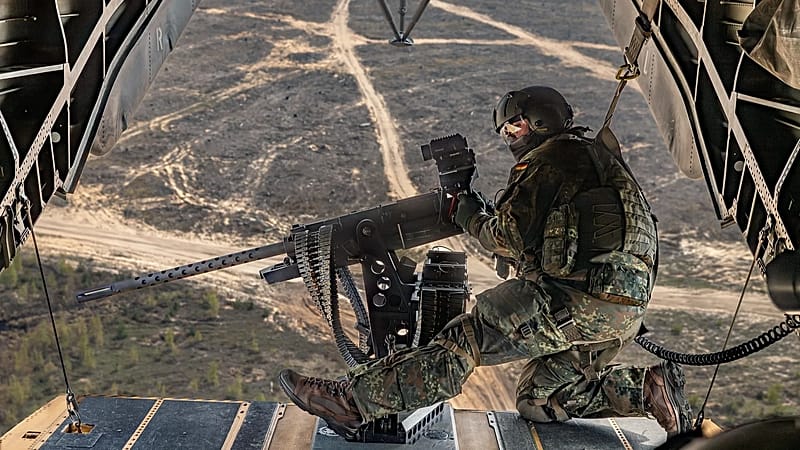
Without an end to Russia’sfull-scale invasion of Ukrainein view, there is increasing pressure on Germany to reform its defense sector.
Phrases like “military preparedness” have been frequently mentioned, alongside demands for the German armed forces (Bundeswehr) to develop into the most powerful conventional army in Europe, a notion that was nearly impossible to imagine just a few years back.
The extreme demands made by Russia in its conflict with Ukraine, along with the slow reduction of American backing for NATO, act as a continuous reminder for Europeans, who are now more compelled to assume responsibility for their own safety.
To be able to defend itself—and thus engage in warfare—as swiftly as possible, the German government intends to raise the defense budget to nearly €153 billion by 2029.
The year 2029 is often mentioned as a key benchmark. By that time,defence spendingis projected to account for approximately 3.5 percent of gross domestic product (GDP), with the Bundeswehr anticipated to be “combat-ready,” given the possibility of a Russian assault on NATO territory during that period.
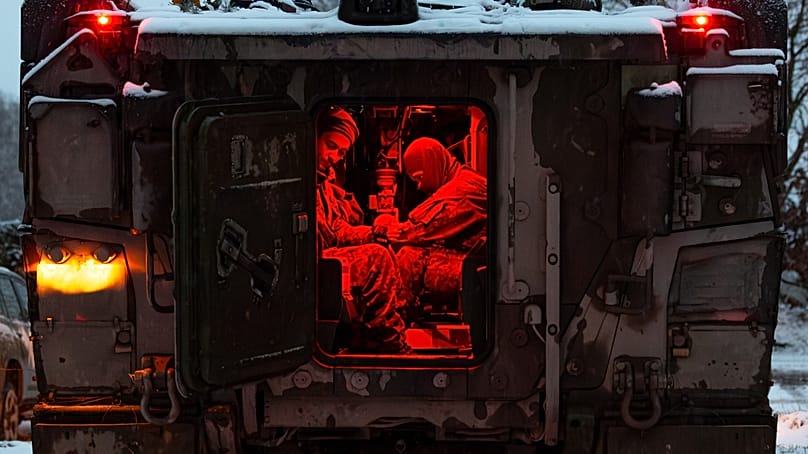
At the “Zeitenwende on Tour” event series organized by theMunich Security ConferenceBy the end of November, Carsten Breuer, the Inspector General of the Bundeswehr, stated that “the year wasn’t just fabricated,” but rather stems from “thorough analysis.”
That doesn’t imply that Russia will certainly launch an attack, but it will be in a position to do so.
Why 2029?
A caution that Russia might initiate an attack in 2029 originates from a 2023 Joint Threat Assessment-NATO document, indicating that within three to five years, Russia could be capable of conducting a major conflict.
Studies conducted by the German public broadcaster WDR reveal that the evaluation utilized reconnaissance satellites to monitor Russia’s present actions, such as manufacturing and personnel acquisition, solely based on intelligence information.
In 2023, the report stated that Russia had the potential to assemble a force of 1.5 million soldiers, completely armed, within five years—by 2028—and execute such an offensive, according to security expert Professor Dr. Carlo Masala in a recent podcast.
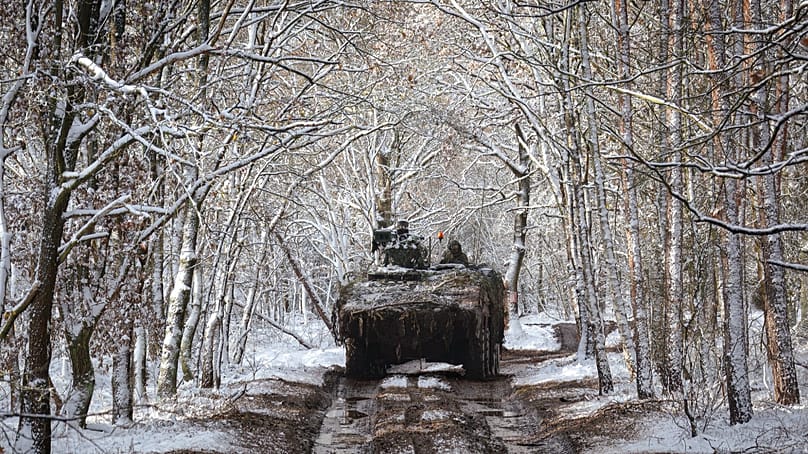
In 2024, Defence Minister Boris Pistorius and the Inspector General of the Bundeswehr, Carsten Breuer, released the report,” Masala stated, noting that they clearly aimed to avoid causing public concern “by not directly mentioning 2028 in 2024.
Both the German Armed Forces (Bundeswehr) and the Federal Intelligence Service (BND) quickly recognized that an outdated analysis had been utilized. Nevertheless, no correction was implemented. As reported by WDR, the Ministry of Defence internally resolved to “phrase the statement more thoughtfully” moving forward and to employ the broader term “by the end of the decade” instead.
Some interactions between Germany and the United States
The United States possesses the biggest military force globally. This is mainly because of its massive budget, cutting-edge technology, and the scale of its navy and air force. Even though some other nations have larger numbers of troops, they are outmatched by the USA’s worldwide influence and significant defense expenditures.
So far, Germany has depended on the established transatlantic relationship and global order. In an interview with The Atlantic, Dr. Christian Freuding, Chief of Staff of the German Army, mentioned that he previously had constant access to U.S. defense officials “around the clock,” but that communication has now “completely stopped.”
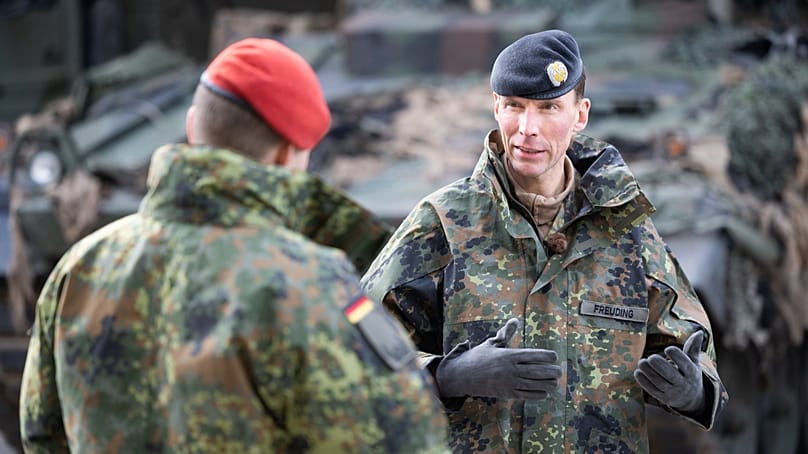
To grasp American perspectives, Freuding mentioned that he now depends on the German embassy in Washington, where “there is someone who attempts to locate someone within the Pentagon.”
A representative from the Ministry of Defence explained that this communication issue took place during the shift between the Biden and Trump administrations. Currently, it is reported that there are no longer any communication problems, as shown by the cooperation among Germany, NATO, and the US concerning the funding of PURL packages for Ukraine.
Nonetheless, Europe is no longer the primary focus for the United States: just recently, the US envoy to NATO expressed a desire to witness Germany assuming the NATO leadership position from the US in the future. Analysts interpret this as an additional indication that Washington might eventually step back from the alliance.
Equipping and personnel of the German Armed Forces
To prevent a possible Russian assault on NATO territory, the German armed forces need to achieve “combat readiness” by 2029. This involves substantially enhancing and updating the military, both in terms of manpower and technology.
The German Armed Forces currently has a range of 181,000 to 182,000 active personnel and is officially planned to increase to around 203,000.
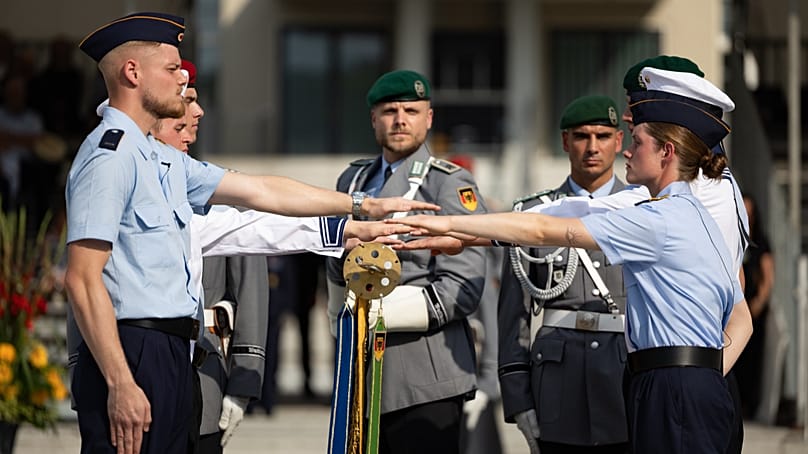
In order to accomplish this, the government led by Chancellor Friedrich Merz has revived the option of voluntary military service. Individuals born in 2008 or later will get a letter from the Bundeswehr encouraging them to sign up, although only males are required to reply.
Although the reinstated military serviceInitially, the service will remain optional, but specific goals have been set for the increase in personnel within the Bundeswehr. If this number is not achieved, the Bundestag may choose to introduce mandatory military service.


 jasdooit
Leave a comment