
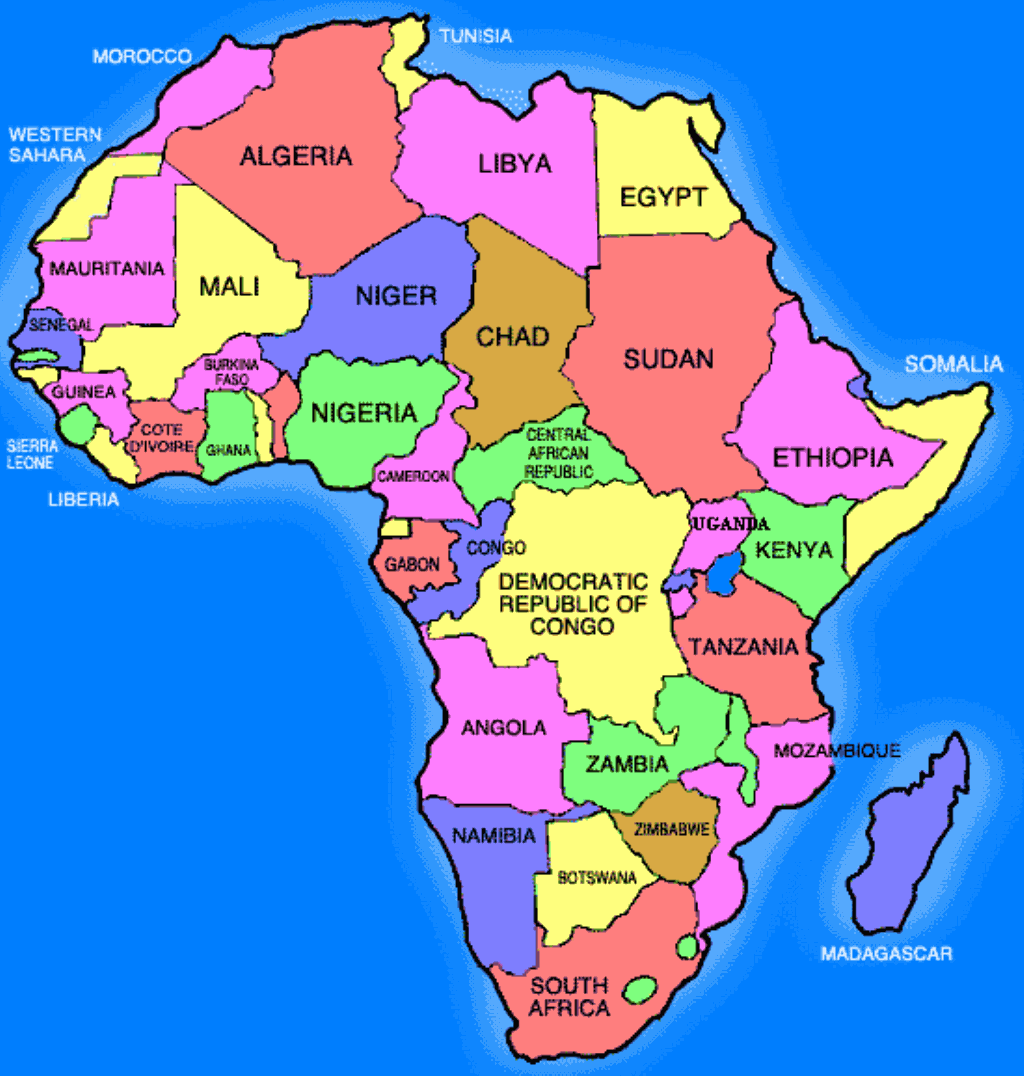
Ghana has achieved notable progress in promoting a digital strategy, yet much of this has come at the cost of its own independence, depending on Western firms and systems.
A fresh competition, fought over information
Africa is once more the focus of a worldwide competition. This time, it’s not about rubber, gold, or oil, but about data. Each mobile transaction, social media update, satellite image, and biometric registration contributes to the digital empires of Silicon Valley, Shenzhen, and other influential hubs. The trend is eerily similar: Africa provides the basic resources, yet the wealth generated moves elsewhere.
The risks have increased significantly. Data is more than just a new form of oil; it represents memory, intelligence, and authority. It influences how governments provide services, how businesses develop offerings, and how communities envision the future. If Africa does not take intentional action, the digital age may mirror the economic and political marginalization of the colonial period, but this time embedded in algorithms and cloud systems rather than shipping agreements and military force.
Ghana, a country that once inspired Pan African freedom under Kwame Nkrumah, holds a special place to end this pattern. The decisions we make in the coming decade will shape whether Africa continues to be a testing area and source of data or transforms into a self-governing creator of artificial intelligence. The issue goes beyond access—it’s about authority: who controls the cables, who manages the clouds, and who establishes the guidelines that will shape the Fourth Industrial Revolution.
The digital imperialism we cannot overlook
Throughout the world, leading nations are competing to develop artificial intelligence according to their own priorities. The European Union has completed itsAI Act, a comprehensive approach for promoting “trustworthy AI.” The United States has introduced itsAI Action Planto ensure technological supremacy and enhance national resilience. China, promoting its vision of a common future, is developing an AI environment based onsovereignty and strategic autonomy.
In the meantime, Africa, which is home to 1.4 billion individuals and possesses one of the most extensive digital footprints globally, is largely missing from these decision-making forums. Our involvement in global AI governance continues to be restricted, passive, and significantly influenced by outside interests.
Ghana’s own situation highlights how vulnerable our digital infrastructure still is. TheMarch 2024 incident involving three submarine cables(WACS, MainOne, and ACE) caused a near-blackout across West and Central Africa, disrupting banks, hospitals, telecoms, and public services. Even Accra’s advanced data centers, constructedwith international investment and Huawei technology, could not provide protection. Our digital economy still relies greatly on Amazon Web Services and Microsoft Azure, putting essential data at risk.under U.S. and other international jurisdictions(World Bank Digital Economy Report, 2024)
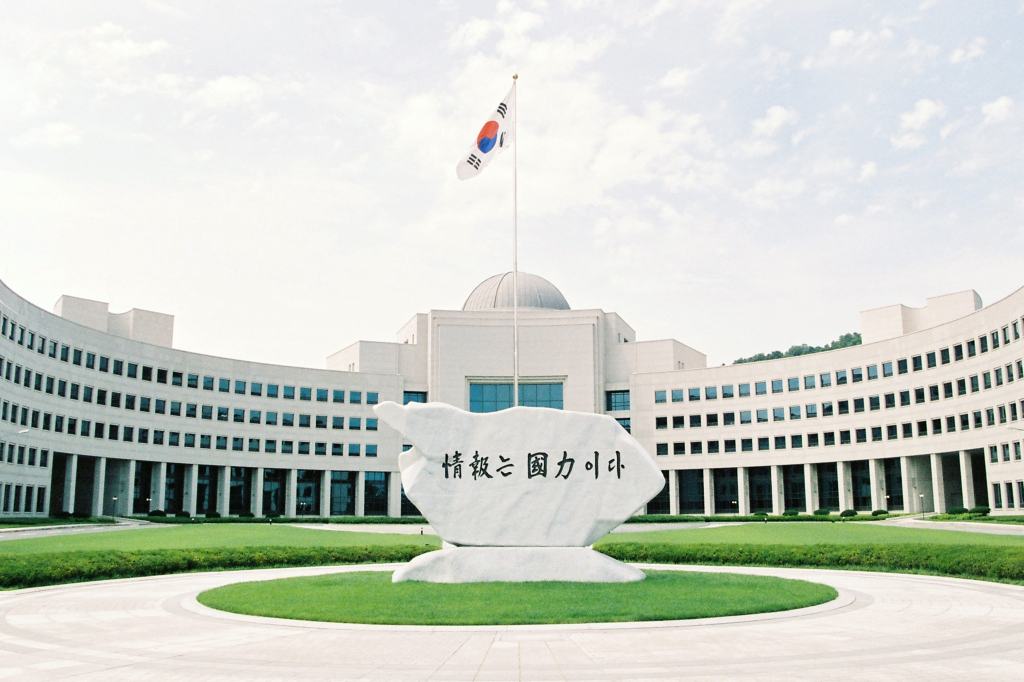
In a remarkable worldwide similarity, South Korea experienced a devastating data center fire in late September 2025, which destroyed a battery system within the National Information Resources Service (NIRS) data center located in Daejeon. The fire is said to have erased858 terabytes of official information, some of which seems lost forever, as officials did not have sufficient backups. The event, which disrupted public services and revealed the fragility of centralized data storage even in developed countries, highlights why countries cannot tolerate poor infrastructure or reliance on external sources in this area.
Here’s how digital colonialism appears: systems located on African land but managed from other regions. Being close yet lacking control. Having access but not true independence. The power outage was more than a technical issue; it served as a strategic alert regarding how reliance can bring entire economies to a standstill in a moment.
To prevent becoming a long-term digital dependency area, Ghana and Africa as a whole need to reconsider their strategies regarding ownership, infrastructure, and management. Digital sovereignty today goes beyond simply being connected; it involves having control over the entire system: cables, satellites, servers, software, legal structures, and the international standards that influence them.
Ghana’s digital aspirations: hope and vulnerability
For its part, Ghana has not remained inactive. TheDigital Ghana Agendahas increased broadband availability, enhanced cyber protection measures, and launched theData Protection Act (2012), one of the continent’s first efforts to control personal information. TheGhana Digital Acceleration Projectseeks to enhance access to digital technologies and update the regulatory framework.
Most ambitiously, Ghana’s National AI Strategy (2023-2033) sets a vision to train people in artificial intelligence abilities, encourage the ethical application of AI in critical areas such as agriculture, health, finance, and education, and establish Ghana as a leading center for responsible and inclusive AI across the continent. Grassroots innovation is also gaining momentum: theGhana NLP Projectdevelops open-source language models in Twi, Ewe, Ga, and Dagbani, supporting cultural preservation and creating AI that truly communicates in Ghana’s languages. These initiatives demonstrate that independent innovation is achievable when African technologists take the lead.
However, these achievements remain vulnerable as they are closely linked to external influences. Google’s AI Research Center in Accra creates helpful tools, such as flood prediction models and local language processing, yet it operates on proprietary systems subject to US regulations. Starlink’s growth throughout the continent enhances connectivity but transfers control of internet routing and data management to a private, foreign-owned satellite network, managed by billionaire Elon Musk. Even the attention-gettingA $1 billion AI and technology hub, backed by the UAE, located in Ghana’s Free Zonesmay function beyond the country’s complete regulatory control, establishing zones of advancement separate from national supervision.
This reliance leads to a risky contradiction: Ghana is pushing forward its digital plans while simultaneously strengthening structural dependence. Aspiration without independence may deepen a new type of economic subjugation, where Africa powers the global AI industry but lacks control or benefits from it.
To alter its direction, Ghana needs more than just constructing infrastructure; it must also own and manage it. Simply keeping data within the country is not enough if servers are managed by foreign companies and cloud services are governed by external regulations. Real independence involves investing in African-owned satellites, varied submarine cable routes, and cloud systems that are under local control. It also requires technical expertise: engineers, cybersecurity specialists, and data scientists who can sustain and protect this infrastructure.
Minerals of Africa, data of Africa: a common fight
The digital revolution is taking root in African land. The Democratic Republic of Congo (DRC), the country where I was born, provides approximately70% of the world’s cobalt, a essential data for AI servers, mobile devices, and electric cars(USGS, 2025). Along with cobalt, there is coltan, copper, and lithium. These minerals are crucial for batteries, chips, and the extensive cloud infrastructure that supports current algorithms. They form the foundation of everything from electric buses to the GPUs used in training large language models.
However, for many years, this mineral wealth has not led to prosperity or self-rule. Rather, it has driven war economies, corporate greed, and environmental destruction. Global supply chains transport Congolese cobalt through intricate systems of middlemen, frequently hiding child labor, hazardous mining practices, and violent land seizures. Reports such as “The Struggle of the Congolese for Their Own Resources” ffrom the Tricontinental: Institute for Social Research document how foreign corporations and geopolitical interests continue to dominate extraction, while Congolesecommunities continue to suffer from poverty and forced migration.
This past holds significant importance for Africa’s digital future. As the global economy transitions from natural resources to data, the pattern of exploitation might shift from mines to servers. If Africa cannot secure fairness in cobalt and lithium, how can it do so with data, a more abstract and easily taken resource? Data, similar to minerals, is taken under the promise of advancement, yet frequently results in reliance and weakened power.
We are already witnessing the outlines of this digital race in Africa. Huge volumes of user-created data, mobile transaction records, and biometric details fuel the artificial intelligence systems of Silicon Valley and Shenzhen. Even if the data is stored physically in Accra or Lagos, its management is frequently linked to American or Chinese legal systems through platforms such as Amazon Web Services and Microsoft Azure.
The impacts are significant. Without control of both physical supply chains (minerals) and digital supply chains (data), Africa faces the possibility of becoming the resource hub of the Fourth Industrial Revolution, similar to its role in the first. A fair AI future cannot be constructed on the suffering of Congolese miners orthe unseen work of African data annotators. It necessitates a basic shift away from exploitative economic models, one that connects the fairness of resource distribution with digital self-governance.
For Ghana, this involves moving past mere connectivity to focus on ownership and management. Similar to how the DRC’s cobalt has fueled global technologies without benefiting Congolese people, Ghana should not end up merely supplying data and expertise to international AI giants. Independence requires more than just cables and cloud storage; it necessitates control over the entire infrastructure system, ranging from satellites to legal authority, along with the ability to determine the conditions under which Africa’s digital resources are utilized.
A genuinely decolonial perspective links these struggles: from mines to models. It argues that the minerals powering GPUs and batteries should be extracted responsibly and provide advantages to African communities, while the data used to train these GPUs should be managed according to African laws and principles. It links environmental justice in Congo’s copper and cobalt regions with algorithmic fairness and balanced AI growth throughout Africa. It views sovereignty as a spectrum, encompassing both physical and digital realms, as well as material and virtual aspects.
Ghana’s journey towards AI self-reliance
Early, broad regulation can hinder a developing AI industry before it has a chance to grow. Countries that currently excel in artificial intelligence, particularly China and the United States, did not start with extensive AI laws; they first established robust industries and developed regulations based on real-world experience. China’s 2022action taken against the ride-hailing company Didiregarding data security breaches is a notable example: rather than establishing regulations in a general way, it applied a specific case to clarify and implement rules that align with its rapidly expanding environment.
Ghana needs to pay attention and implement a strategic approach: establish first, then regulate based on data.
This implies reinforcing the foundation of the digital economy, extending submarine and land-based networks, funding African-owned satellites, and fosteringsovereign cloud and data centresTo maintain authority over essential infrastructure. It also involves upholding the current Data Protection Act (2012) while encouraging the development of an indigenous AI sector prior to implementing broad AI laws. Ghana can gain insights from other nations by employing real-world case studies and pilot initiatives to develop regulations that align with local conditions instead of adopting foreign models. Meanwhile, the country should focus on building local language data sets, support community-led AI efforts, and promote Ghanaian-owned startups so that innovation is based on local culture and requirements.
But developing capabilities within the country is just one aspect of the equation. Ghana needs to also secure a position where global AI standards and power structures are being established. Cooperation with theBRICS Artificial Intelligence Center in Shanghaiprovides a crucial chance: Ghanaian researchers and startups might gain access to high-level computing facilities, participate in collaborative research initiatives, and jointly create tools that are suited to African conditions. Even more significantly, it would allow Ghana to have a say in defining the ethical and technical standards influencing AI’s development, ensuring that the Global South contributes to setting the guidelines instead of just following those established elsewhere. TheStatement on Inclusive and Sustainable AI from BRICS in July 2025offers a solid base for this vision, in line with Ghana’s long-term sovereignty plan.
International collaborations should also be handled with clear strategy: Ghana must insist ontechnology sharing, local intellectual property rights, and joint investmentto prevent the recurrence of previous extractive practices.
By merging manufacturing strength with policy impact and actively influencing global AI standards, Ghana can transcend its role as a mere technology user. It can take the lead in shaping Africa’s AI landscape according to its own vision, safeguard its citizens’ data and integrity, and contribute to establishing what responsible, inclusive, and self-determined AI means for the Global South.
For decision-makers, community advocates, and the public, the message is evident: independence is not something bestowed;it is builtBy law, by cable, by algorithm. The decisions we take now will decide if Africa’s data supports foreign AI giants or fuels African-driven innovation and respect.
Kwame Nkrumah cautioned that political independence holds no real value without economic freedom. In the digital era, we should emphasize: independence is empty without control over data and artificial intelligence. Ghana has the potential and responsibility to spearhead this change across Africa.
Kambale Musavuli serves as an analyst at the Center for Research on the Congo-Kinshasa, focusing on matters related to Central and West Africa. He is also a pan-African technology and policy strategist and the founder of Aether Strategies, a consulting firm that influences AI governance and digital independence throughout Africa. Musavuli provides guidance to decision-makers in Ghana and the Democratic Republic of Congo regarding national AI strategies.
Copyright 2025 People’s Dispatch. All rights reserved. Shared by AllAfrica Global Media ().
Tagged: Ghana, ICT and Telecom, West Africa, Economy, Business and Finance
Provided by SyndiGate Media Inc.Syndigate.info).



 jasdooit
Leave a comment