
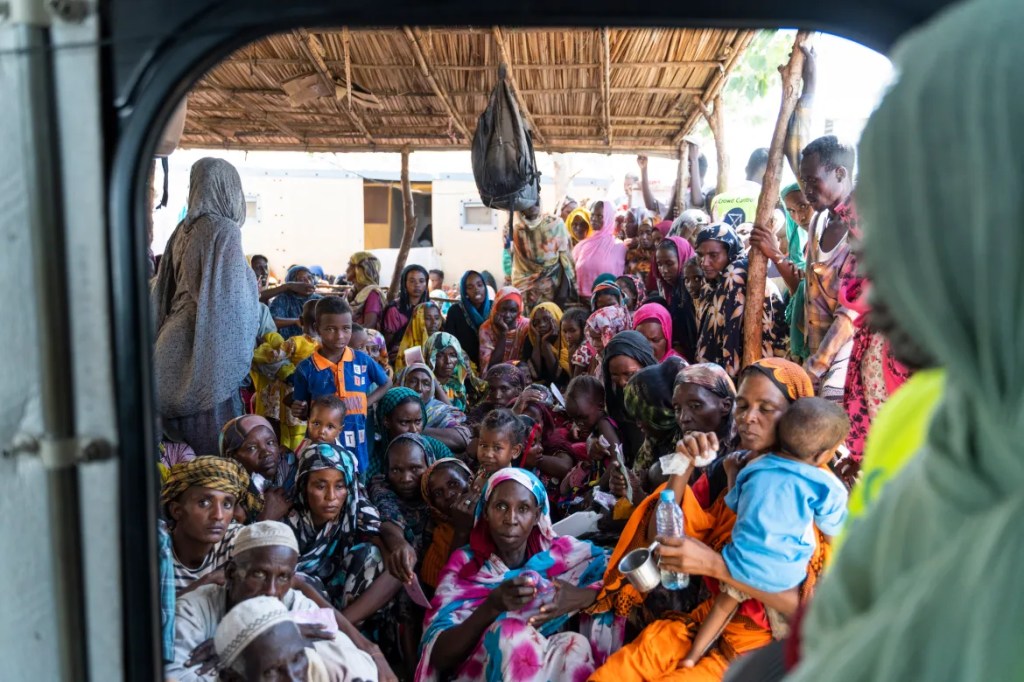
As the globe gets ready to commemorateHuman Rights DayOn 10 December, the United Nations is cautioning that conflict-ridden Sudan is facing what may be the most severe human rights crisis of our era.
Clashes broke out among opposing military forces in April 2023 after the collapse of the move toward democratic governance, which had begun following the removal of long-time former President Omar al-Bashir four years prior.
The Sudanese military government’s forces have been engaged in conflict with the former allied fighters of the Rapid Support Forces (RSF) militia over control of the large nation, where over 12 million individuals have been displaced.
Numerous people have crossed the border, marking the biggest displacement crisis globally.
In a detailed conversation with UN News, the UN Office of the High Commissioner for Human Rights’ (OHCHR) The top official in Sudan, Li Fung, describes the extent of the ongoing violations, the pressing need for responsibility, and explains why the bravery of Sudanese communities continues to be a crucial source of hope.
This conversation has been condensed for brevity and understanding.
UN News: On the occasion of Human Rights Day, how would you describe the present state of human rights in Sudan?
Li Fung:It continues to be very serious. The situation is primarily a human rights and protection emergency caused by two and a half years of conflict and extensive breaches of international humanitarian law and international human rights law throughout the nation.
This has led to the world’s biggest humanitarian crisis, widespread displacement, and alarming rates of food insecurity.
The magnitude and harshness of the abuses we keep recording highlight a situation that has devastated the lives of millions, leaving numerous Sudanese without the fundamental safeguards to which every person is entitled.
The severe effects of the conflict on ordinary people are difficult to describe. Towns turned into ruins, families separated in a single night, and residents compelled to face impossible decisions merely to stay alive.
However, in this context, the OHCHR remains alongside the people of Sudan, to observe and record abuses, to promote measures aimed at safeguarding human rights, and to assist the UN and relief efforts.
On the occasion of Human Rights Day, our message is straightforward: the human rights of the people of Sudan must be protected. All involved parties should adhere to their responsibilities under international law, safeguard civilians, and guarantee accountability for any breaches. The citizens of Sudan are entitled to peace, justice, and complete respect for their fundamental human dignity.
UN News: A lot of people in Sudan are worried that the current abuses will not face consequences. What systems for accountability are in place now, and what part can the OHCHR take in providing justice to those affected in Sudan?
Li Fung:Accountability continues to be one of the most pressing issues in Sudan, yet, despite the difficulties of the present circumstances, there are several available mechanisms.
The OHCHR, especially our national office in Sudan, plays a crucial role in promoting accountability. We are still recording and confirming breaches of international law under very difficult circumstances, from the standpoint of maintaining the events that have taken place on the ground, providing a voice to survivors, victims, and witnesses, and ensuring this contributes to accountability mechanisms.
We also provide updates to the High Commissioner [Volker Türk], who in turn reports to theHuman Rights Council, which ensures that the situation in Sudan stays on the global agenda. Additionally, we work with survivors, we promote their rights, their participation, and we assist initiatives aimed at rebuilding and reinforcing legal institutions that can provide justice.
At the global level, there are also various significant frameworks, including theInternational Criminal Court[ICC], entrusted with the responsibility of examining international offenses.
Additionally, the ICC has set up an international, independent fact-finding mission regarding Sudan, whose function complements our role as a country office, and they are recording the violations, examining accountability, and looking into possible international crimes that may have occurred.
However, amid all these global initiatives, it is crucial to emphasize local responsibility; this is why we are collaborating with various rule of law organizations to assess capabilities in promoting accountability and justice for the people of Sudan.
UN News: As everyone is aware, access to the impacted regions in Sudan, particularly in Darfur, is severely restricted. In what ways can the global community effectively assist in recording human rights abuses in these locations?
Li Fung:Regarding the reaction to the crisis in Sudan, the backing from the global community is essential in various aspects. Initially, financing the human rights efforts, the humanitarian action needs funds to address the urgent requirements and the concerns of the people in Sudan.
Secondly, political engagement. Countries have a crucial role in maintaining international law, leveraging their influence to advocate for dialogue, peace, achieve a ceasefire, effectively stop the flow of weapons, and promote accountability and justice for the people of Sudan.
Recording the violations on the ground is essential for all these initiatives, as it truly provides insight into the response to humanitarian needs, the priorities of the population, and helps promote the protection of civilians through specific, quantifiable actions.
UN News: This isn’t the first instance of human rights abuses in Sudan – and many believe this stems from years of being allowed to act without consequences. What specific steps should the global community take to ultimately end this harmful pattern of impunity?
Li Fung:Impunity fuels ongoing cycles of violence and breaches of rights. Tangible steps can be implemented, such as backing all initiatives aimed at pursuing responsibility, endorsing investigations, tracking, and recording events, which will result in accountability procedures that genuinely advocate for the safety of civilians and for inquiry.
It is also essential to incorporate responsibility along the route to peace in Sudan, as well as to promote the inclusion of every voice from the Sudanese population throughout the nation, in order to attain a lasting, peaceful future for Sudan.
UN News: In the end, is there any hope for improvement in the human rights situation?
Li Fung:Indeed, although we witness great hardship and the extent of ongoing violations that we keep recording, there is hope, which primarily stems from the Sudanese people themselves.
Despite significant difficulties, Sudanese human rights activists, local aid volunteers, and community organizations and networks keep showing remarkable bravery and determination.
Their perseverance and efforts to aid their own communities highlight the critical importance of ongoing international support, more robust protective measures, and unhindered humanitarian access. Their resolve, even in cities affected by conflict, serves as a strong reminder that the basis for a fair and lasting future remains intact.
I believe there is also optimism in the renewed focus on the circumstances in Sudan. It is regrettable that, although numerous warnings were issued regarding the dangers of crimes and extensive breaches, it was only after these events took place that global attention began to be directed towards Sudan. However, we must now take advantage of this opportunity. We will remain by the side of the people of Sudan.
Copyright 2025 United Nations News Service. All rights reserved. Distributed by AllAfrica Global Media ().
Tagged: Conflict, Peace and Security, International Organizations and Africa, Sudan, Human Rights, External Relations, East Africa
Provided by SyndiGate Media Inc.Syndigate.info).


 jasdooit
Leave a comment