
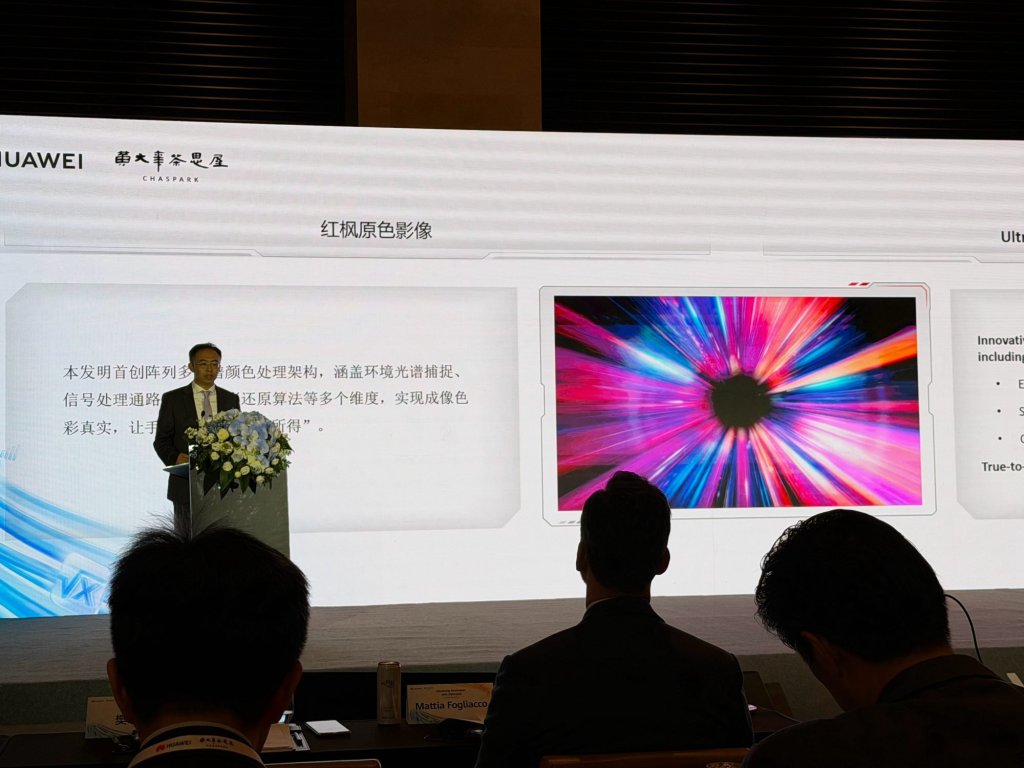
Ren’s gentle critique of the US approach to AI highlights the reasoning behind Huawei’s own AI initiatives.
The United States and China are engaged inartificial intelligencein “different directions,” with the split being mirrored in the approaches that governments and businesses are taking, as stated by the founder of one of the world’s leading technology investment firms.
The United States is concentrating on supercomputing capabilities and extensive models in its ambitious quest for artificial general intelligence (AGI) and artificial superintelligence (ASI), whereas China has taken a more down-to-earth approach, applying AI to address practical issues in development, statedHuawei Technologies‘ founder Ren Zhengfei.
“The United States is pursuing AGI and ASI to find solutions to inquiries such as ‘What defines humanity?’ and ‘What lies ahead for society?’ They are attempting to address the entire issue simultaneously, yet it requires time for [humanity] to fully understand what the problem truly is,” stated in a transcript from Ren’s speech delivered on November 14 at the International Collegiate Programming Contest, which was made public on Friday.
Are you curious about the most significant issues and developments from across the globe? Find the solutions withSCMP Knowledge, our latest platform offering handpicked content including explainers, FAQs, analyses, and infographics, presented by our acclaimed team.
Ren’s gentle critique of the US approach to AI highlights the strategy underpinning Huawei’s own AI investments, as the Shenzhen-based firm, which has one of the world’s biggest research and development budgets, develops its own alternatives to Nvidia’s highly sought-after AI chips. This strategic difference also accounts for why China is gaining users and developers through open-source large language models, while American tech companies are investing hundreds of billions of dollars in creating increasingly larger models.
The 81-year-old entrepreneur stated, ‘China is concentrating on how to accomplish tasks [using AI] to generate value and address development challenges.’
China’s focus on artificial intelligence involves “safe cities, enhancements in public education and healthcare, automated mining, and cement factories…and allowing coal miners to go to work in suits and ties,” according to Ren. Huawei has led the way in applying remotely operated mining equipment andhighly automated minesin China, linked by its5G telecommunications infrastructure.
AI applications should be the main priority for developing nations such as Indonesia, Ren mentioned to a student from that country during the renowned international coding competition for university students.
The most critical concern [for Indonesia] is not about striving for global leadership in computing capabilities or extensive models, but instead to concentrate on practical uses,” Ren stated. “Indonesia possesses numerous ports, and there is an immediate need for AI to streamline shipping and port activities.
Artificial intelligence played a significant role for Huawei, and the company would concentrate on communication technology products, including radio, optical, core networks, and data transmission solutions, Ren stated.
In the future, the understanding and management of AI will involve transmitting data over thousands of miles, making it essential to develop a high-performance network,” Ren stated. “Computing power without a network is akin to an information silo; isolated AI cannot attain genuine intelligence.
Ren stated that Huawei would concentrate on addressing existing challenges within various industries, reflecting the practical stance of China’s AI advancement. “Our company’s research will center around the next three to five years, particularly focusing on the implementation of AI models, big data, and extensive computing capabilities in the industrial, agricultural, and technological fields,” Ren mentioned.
The use of industrial artificial intelligence has become a central approach for Huawei as the company seeks new paths following its placement on a blacklist by Washington, which restricts its access to advanced American technology.
In the meantime, Ren, who continues to be the unquestioned head of the Chinese tech company despite not being engaged in daily activities, expressed his admiration for American technology and advocated for openness.
“The technological advancements developed by America are advantageous for the world, and we should back their progress,” Ren stated. “China needs to be more open… and avoid closing our borders and isolating ourselves,” Ren said.
More Articles from SCMP
Is the Philippines at risk of experiencing another political crisis sparked by the military?
Malaysia faces demands to clarify the police shooting of three individuals as public anger grows
Fire in Hong Kong: dead Indonesian maid found huddled with patient praised as selfless
This piece was first published in the South China Morning Post (www.scmp.com), a top news outlet covering China and Asia.
Copyright (c) 2025. South China Morning Post Publishers Ltd. All rights reserved.



 jasdooit
Leave a comment