
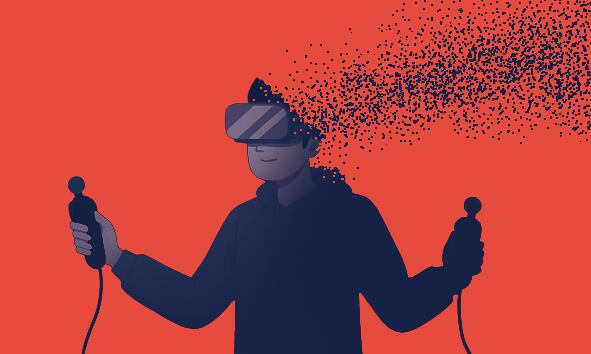
The term “metaverse,” introduced in Neal Stephenson’s 1992 book *Snow Crash*, describes a “digital universe (Universe) that goes beyond reality (Meta).” It represents a utopian space where individuals can become heroes or billionaires just by using goggles. This science-fiction idea captured interest because of the COVID-19 pandemic. With non-face-to-face communication becoming standard, investment in the metaverse increased globally. Microsoft purchased the game company Blizzard for 80 trillion South Korean won, while Disney created a “Metaverse Business Division,” announcing intentions to transition its theme parks into the virtual world. It appeared as though the era of a “digital Columbus” had started.
▶The surge in the metaverse captured widespread excitement. Investments amounting to trillions of won poured in merely because firms asserted they were involved in the metaverse sector, despite lacking sustainable revenue strategies, causing stock values to multiply by several times. Individuals traded virtual properties for actual currency, and certain metaverses even facilitated the buying and selling of land on the Moon and Mars. The height of this excitement occurred when Mark Zuckerberg renamed the company from “Facebook” to “Meta,” pledging to reorganize all operations around the metaverse.
▶ After four years, Meta’s performance review was bleak. In this time, it incurred operational losses amounting to $70 billion (around 103 trillion South Korean won). The general public made fun of the situation, saying, “If it’s enjoyable, it’s a game; if not, it’s the metaverse.” The shortcomings of bulky, confusing headsets and basic avatars were held responsible. In the end, Meta declared a 30% reduction in its metaverse division’s budget for next year and started reorganizing.
▶If drafting a “metaverse failure report,” the opening sentence would be: “Expectations exceeded the available technology.” The concept was unclear, and the offerings were insufficient. At first, NFTs and virtual land drew investment, but the question “What can you actually do there?” remained unresolved. Meanwhile, global attention turned to ChatGPT and artificial intelligence, which appeared set to outperform humans. The metaverse has not yet been declared dead. Just as Amazon and Google endured the early 2000s dot-com crash and reshaped the world, revolutionary technology might still be on the horizon. This is why Meta, even as it reduces its operations, continues to refuse to give up on augmented reality (AR) smart glasses.
▶It took more than 400 years for humanity’s dream of flight—ranging from Leonardo da Vinci’s concepts to the Wright brothers’ aircraft—to become a reality. Artificial intelligence, which was once mocked as unattainable for many years, is now sweeping across the globe. Struggles do not always mean we should abandon our goals. The metaverse has come to a standstill, not because the vision is lost, but because the technology hasn’t yet matched human hopes. This is the market’s harsh reminder that seeds cannot be planted in winter.




 jasdooit
Leave a comment