
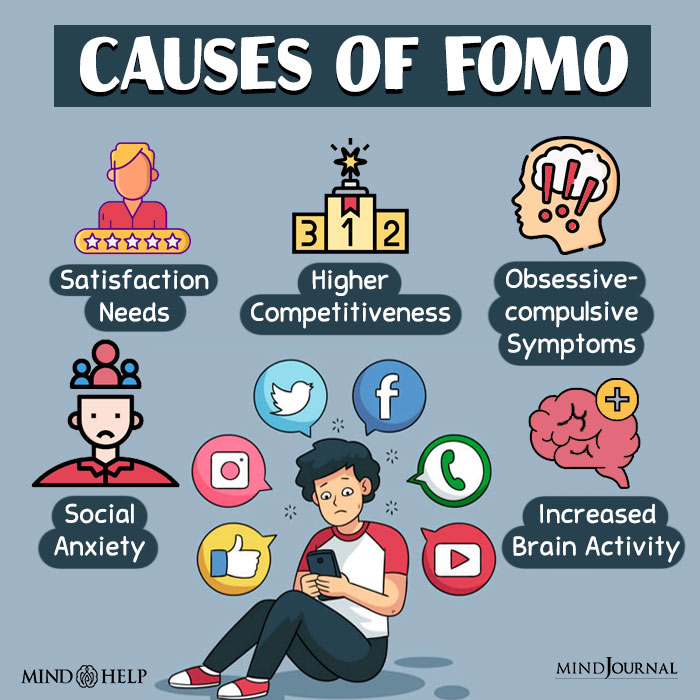
Has anyone else observed how the idea of “conversation” has evolved?
Nowadays, making eye contact is uncommon as individuals constantly look at their gadgets. Even more problematic is when the “discussion” centers around a social media update. In such cases, it’s not genuine conversation – it’s more like a display and explanation. I strive to remain courteous, yet I feel annoyed internally when a phone is placed in front of me and I’m made to view something “engaging.”
Don’t misunderstand me, I do the same thing. I actually caught myself doing it recently. Here I was, annoyed by others doing to me what I had done to them. It was quite eye-opening.
I was raised in the 70s and 80s. My parents didn’t closely monitor our activities or set up social gatherings. The only rule was to be back home before the streetlights turned on. After that, we learned to handle things on our own.
We communicated with one another, had disagreements, addressed our own issues, created strategies, and came up with imaginative—occasionally risky—games.
As technology has advanced, I believe humanity has taken a step back. We are so engrossed in our gadgets that we’re missing the true essence of life. Growing up without a mobile phone meant I read all the Bobby Brewster books, all the Enid Blyton’s Famous Five and Secret Seven stories, all the adventures by Franklin W. Dixon featuring the Hardy Boys, and many others.
Nowadays, spending an hour or two reading a book is seen as dull or impractical. Who still has the patience—or the skill—to concentrate for that extended period?
As stated by psychiatrist and addiction specialist Dr. Anna Lembke from Stanford University, digital media is altering our reward mechanisms. She suggests that smartphones can activate the same dopamine (pleasure) pathways associated with conventional addictions, leading to “habit cycles” that cause us to check our devices automatically—and experience unease when we are unable to do so.
Honestly, how often do you believe you glance at your phone each day?
A research study discovered that individuals unlock their phones between 50 and 100 times within a day. This implies that every 10 to 20 minutes, due to FOMO (fear of missing out), you likely glance at your device.
That’s an addiction.
I struggle to accept this, and I feel quite embarrassed that I constantly check my phone. I received my first mobile phone in my early 20s, and later in my late 40s, I was introduced to smartphones. Still, it has become firmly attached to my hand.
And having lived most of my life without it… realizing how swiftly and thoroughly it can alter my actions, causes red flags and alarm bells to ring in my mind!
Is it truly an issue, or are we simply being overly concerned? After all, these devices have brought the world to our fingertips, and today’s young people have more information available to them than we did when we were their age, even though we had access to extensive libraries, and they, as some studies suggest, aren’t heavy readers.
Here’s the situation: certain studies indicate that smartphones could be harming memory and efficiency.
A research paper from Singapore Management University revealed that although overall screen usage is significant, regularly checking the phone is a more accurate indicator of daily memory errors and focus issues.
In other words, the more frequently you reach for your phone to check it briefly, the greater the chance that your focus is gradually being eroded.
Many people boast about their ability to multitask, yet this concept doesn’t truly exist. What we’re actually doing is distributing our attention capacity. Each time we access a device, our mental focus gets disrupted. Decades ago (well before the era of smartphones), computer scientist Gerald Weinberg cautioned that frequent task-switching can significantly reduce efficiency – in certain situations, by up to 80%.
Hmmm… that makes me curious. The days seemed much longer when I was a child, and now time is flying by like a jet at supersonic speed.
Perhaps this relates to the fact that very few of us are fully engaged in the present moment.
Provided by SyndiGate Media Inc.Syndigate.info).




 jasdooit
Leave a comment