
The Arts Council England has faced allegations of neglecting artistic quality in favor of administrative procedures, following a critical report that suggested it was focused on ‘transforming society’ instead of promoting outstanding art.
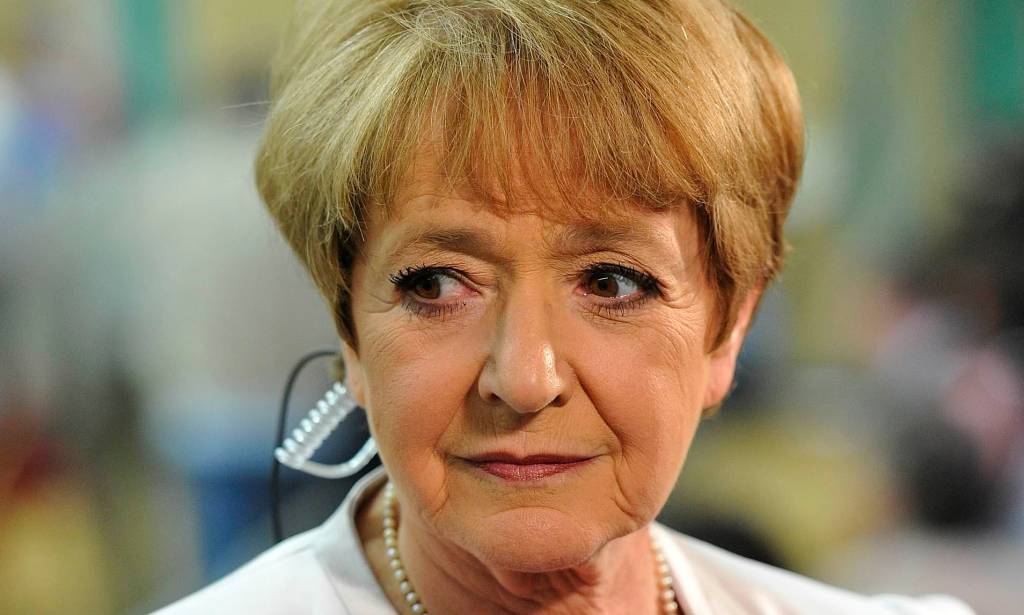
The watchdog, which allocates over £450 million annually in public funds, faced criticism in a report by Baroness Hodge, the ex-Labour culture minister, who was tasked with reviewing how the organization disperses its finances.
Baroness Hodge stated that she believed the initiative caused organizations to feel compelled to “check all the ACE boxes” in order to obtain funding, and recommended replacing the strategy with “a new, less rigid” approach.
Her critique stated that the organization had strayed from its original mission, with signs indicating that art had taken a backseat.
Eyewitnesses reported to the review that Arts Council England (ACE) was “attempting to reshape society instead of supporting outstanding art,” with excellence consistently overlooked.
According to its present financial guidelines, cultural institutions need to show endorsement of ‘diversity’ in order to be eligible for government funding – a requirement that opponents argue has fostered a focus on following rules rather than encouraging innovation.
Those guidelines have permeated the industry, resulting in several contentious rulings by organizations supported by ACE funding.
The critique mentioned that pheasants were referred to as ‘queer’ in an LGBT guide created by the Hastings Queer History Collective, while the English Touring Opera removed 14 white musicians in an effort to boost diversity.

Both groups are supported by the Arts Council.
Baroness Hodge’s review indicated that ACE was ‘approaching cultural access in an instrumental manner and had reduced the emphasis placed on achieving artistic excellence. Art and quality were pushed aside’.
It was also mentioned that numerous individuals in the field believed that excellence had been ‘diminished,’ with ACE showing greater focus on organizations ‘fulfilling its administrative objectives, rather than showcasing artistic creativity.’
Arts organizations stated that they felt forced to “check boxes” in order to obtain financial support, as bureaucratic procedures have become more and more central to their interactions with funders.
The document pointed out persistent dissatisfaction with red tape.
This year, the renowned Wigmore Hall declined £344,000 in Arts Council support, choosing to forgo the funds instead of complying with what it described as “burdensome” administrative conditions.
Several organizations attributed the significant administrative workload to ACE’s main financial initiative, Let’s Create, which was launched in 2020 and scheduled to continue until 2030.
Baroness Hodge suggested replacing it with a “new, less directive approach,” along with a streamlined financial system that eliminates multiple levels of red tape.
The report emphasizes that although ACE should remain, the Government needs to reinforce the principle of independence ‘to guarantee that arts funding is shielded from political influence’.
Baroness Hodge stated: ‘There have been efforts to increase political influence over ACE decisions in recent years, and this must come to an end.’
The Arts Council should stay independent of political influence. This is important. It helps safeguard artistic freedom, prevents creativity from being suppressed, and keeps public confidence intact.
Interference in politics, even from individuals with good intentions, might result in political favoritism or, at worst, suppression of speech.
The assessment also stated that funding decisions should be transferred as much as possible to the regional level, to minimize central oversight and enhance adaptability.
Culture Secretary Lisa Nandy expressed approval of the results, stating that the report “encourages us to improve.”
She stated: “This review emphasizes the advantages of Arts Council England’s efforts, yet it also urges us to improve.”
It outlines suggestions to enhance assistance for artists, engage communities more efficiently, and guarantee that creativity is available to everyone. The Government will now review these proposals.
The head of Arts Council England, Darren Henley, acknowledged the criticisms, stating that the review was “clear” regarding the necessity for reform.
He stated: “Today marks a significant day for artists and cultural institutions.”
The Baroness Hodge’s report is very clear: regarding the significant contribution that creative professionals, arts organizations, museums, and libraries make to our nation, as well as the necessary adjustments that Arts Council England must implement to support them more effectively.
We desire for individuals to invest less time on our forms and more on their imaginative tasks. Our objective in the coming months is to get to work and achieve this.
The Society of London Theatre (SOLT) and UK Theatre’s joint chief executive, Claire Walker, stated: ‘We support Baroness Hodge’s report and the opportunity to develop a more straightforward, unified, and strategically focused method for public funding in the cultural sector.’
We are pleased that the review has acknowledged the significance of Arts Council England’s role as an independent, autonomous entity, enabling the creation of art within a sphere free from political influence.
Elaine Bedell, the head of the Southbank Centre, stated: ‘We enthusiastically accept Baroness Hodge’s report.’
We strongly endorse her suggestion to maintain the Arts Council and to reinforce the principle of independence to ensure arts funding remains free from political influence.
- Why was Dame Mary Archer removed from the urgent Arts Council review, even though there were high hopes for her to restore its image?
- Can struggling arts charities endure the criticism after their contentious effort to ‘cancel’ Kate Forbes due to safety concerns?
- Can artistic education endure the ‘disgusting’ policies, as per Matt Smith’s courageous claims against the Conservatives?
- Did Scotland’s missteps in decision-making, such as funding explicit artistic performances and overlooking ‘Storm Witch’, signal a cultural crisis within the arts industry?
- Was Speech Debelle’s intense tribunal confrontation a harmful defamation or a last-ditch effort for racial justice at Arts Council England?



 jasdooit
Leave a comment