
By Stephen Asante
Accra, Dec. 17, GNA – Mr. Ahmed Nantogmah, Chief Operations Officer of the Ghana Chamber of Mines, has urged a reassessment of the Minerals and Mining Act, 2006 (Act 703), to foster sustainability within the mining sector.
He stated, ‘The Chamber’s stance on the Act review is to back changes that boost community advantages and social acceptance, while promoting a legal system that maintains Ghana’s competitiveness for sustainable mining investments.’
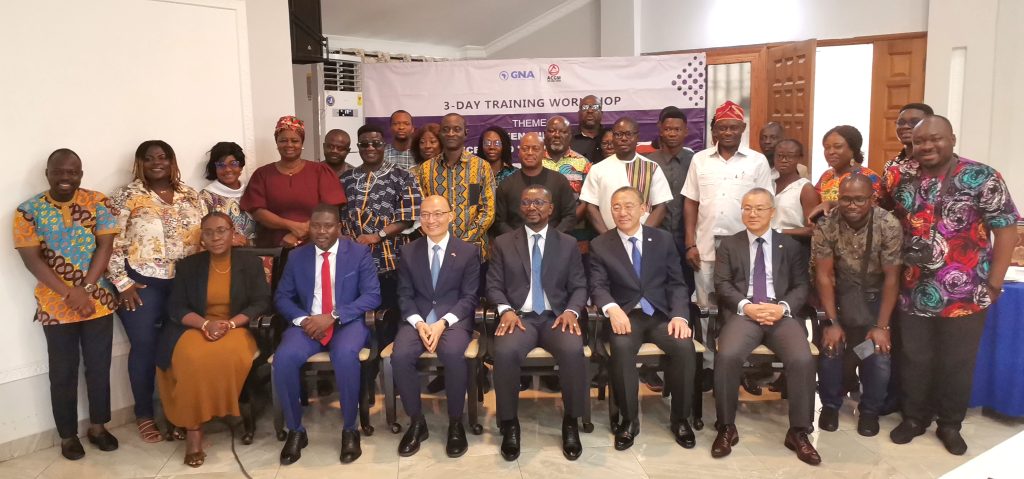
Mr. Nantogmah spoke during the presentation of a paper titled “Community Relations and Conflict Resolution in Ghana’s Mining Industry” at a three-day training seminar on sustainable mining for selected journalists held in Peduase, Eastern Region.
The initiative, coordinated by the Ghana News Agency and backed by China-Ghana Mining LBG, sought to familiarize attendees with eco-friendly mining methods and enhance their journalistic skills.
The topic was “Sustainable Mining: Optimal Methods and Ethical Extraction.”
His talk included community engagement, Social Responsibility Agreements, handling disputes, managing post-conflict situations, the Environment and Social Affairs Committee, Chamber initiatives, and the media’s role.
The Committee called for greater dialogue, cooperation, and adaptability when examining the Minerals and Mining Act.
It mentioned that suggested changes, especially those impacting the nature of mining leases, needed thorough evaluation.
It suggested keeping the existing lease arrangement, stating that shortening the term from 30 years to 15 years with a single 10-year extension would hinder investors’ capacity to recover their investment and might promote high-grading, decrease exploration efforts, and weaken the viability of marginal deposits.
Regarding Community Development Agreements, Mr Nantogmah stated that these agreements need to be practical, well-organized, and in line with project finances to guarantee genuine and long-lasting community advantages without compromising operational efficiency.
He observed that continuous corporate social investment and persistent legal changes were altering the way mineral riches were distributed to local communities.
The difficulty, Mr Nantogmah pointed out, was making sure that systems were put in place in a manner that communities considered just, open, and beneficial.
He mentioned that it is crucial for the Government to collaborate with interested parties in creating a Minerals Revenue Management Act, aiming to enhance transparency, responsibility, and fair utilization of mineral income.
Mr. Nantogmah stated that the future of eco-friendly mining in Ghana appears encouraging, driven by ongoing initiatives from the Government, non-governmental organizations, and mining firms.
He recommended that the media focus on showcasing positive examples, assist in resolving conflicts within mining areas, and guarantee truthful coverage, noting that cooperation among involved parties would lead to sustainable mining that supports both the environment and nearby communities.
GNA
Edited by Kenneth Sackey
Provided by SyndiGate Media Inc.Syndigate.info).



 jasdooit
Leave a comment