
- MORE: Space organization initiates its biggest planetary protection exercise as an interstellar object nears Earth
NASAhas disclosed surprising new information following a break in communication with aMarsspace probe just under two weeks following its close approach to interstellar object 3I/ATLAS.
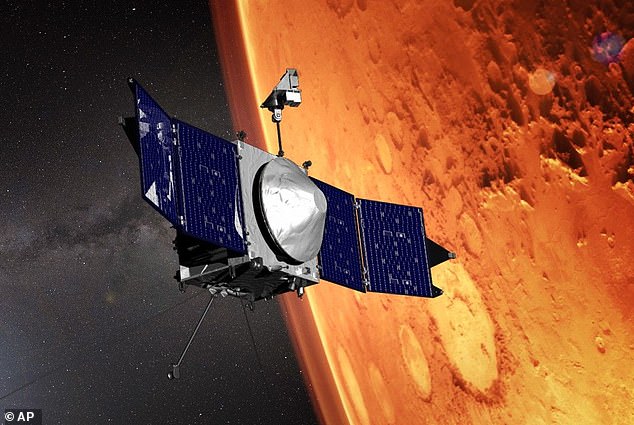
On Monday, the space organization announced that the MAVEN spacecraft stopped functioning on December 4 as it was studying the enigmatic object that NASA has classified as a comet.
MAVEN has been circling Mars since 2014 and has acted as a communication link for human-made rovers investigating the planet’s surface.
As per the U.S. space organization, the probe veered behind Mars while monitoring the interstellar object, then abruptly ceased sending signals and began spinning in an odd fashion as it came back into sight from Earth’s perspective.
NASA stated that whatever occurred to MAVEN on the far side of the planet has also resulted in a change to the probe’s orbit around Mars.
Nevertheless, lacking direct data from the spacecraft, NASA has had to examine pieces of tracking information to determine what has gone wrong. They will not be certain about how MAVEN’s orbit has altered until it resumes communication.
MAVEN was approximately 18 million miles from 3I/ATLAS in October when it supposedly captured a set of images as the alleged comet traveled past the Red Planet – photos that faced significant backlash due to their low quality.
Although the NASA spacecraft has experienced small technical problems before, this marks the first instance in ten years where something might have caused the probe to go offline and interfere with its trajectory.

The event has already sparked numerous wild theories on social media suggesting the communication blackout is somehow connected to 3I/ATLAS making its nearest approach to Earth on Friday.
Although the current issues with MAVEN are not connected to 3I/ATLAS, NASA has faced significant public backlash after images captured near Mars turned out to be unclear and lacked precision, leading to allegations that the genuine photographs were being concealed.
“Either NASA is deceiving the public and isn’t sharing the pictures because they are aware of what they show, or the entity controlling 3I/ATLAS disabled MAVEN. In either case, NASA is being dishonest,” a social media user on X asserted without providing evidence.
“Is there still anyone who trusts NASA? Like, is there someone out there who genuinely believes that MAVEN had a malfunction and that NASA isn’t secretly holding back the data to prevent any new 3I/ATLAS images of UFOs from being released to the public?” another X user claimed.
Harvard Professor Avi Loeb mentioned that NASA had previously shared some of the images captured by MAVEN during its close approach to 3/ATLAS in October. It remains unclear how many pictures of the object were still pending transmission when the probe stopped functioning.
Although some have suggested that the interstellar object might have affected MAVEN, causing it to deviate from its orbit, 3I/ATLAS was not close to the spacecraft at the time of the malfunction.
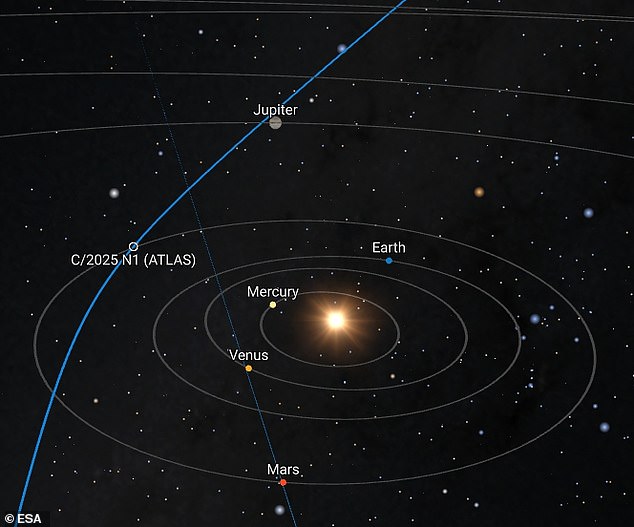
On December 19, 3I/ATLAS will come within 170 million miles of Earth, marking its nearest approach to our planet during its traversal of the solar system.
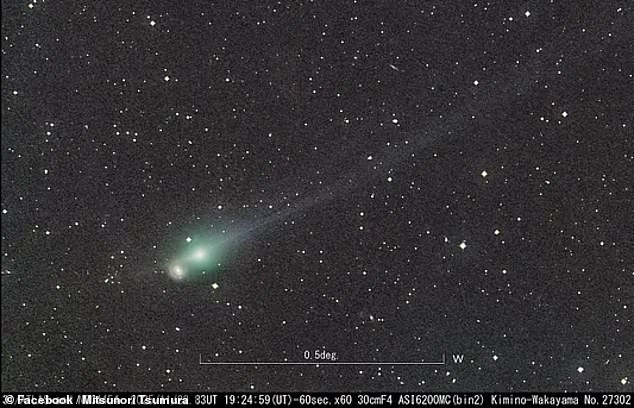
Even without MAVEN online to monitor the object, Loeb mentioned that the suspected comet will be near enough for amateur astronomers to observe and capture images using standard telescopes, stating that any supposed cover-up will not be feasible in just a few days.
It’s not the responsibility of NASA. There are hundreds of observatories worldwide that will monitor it,the instructor clarified to NEWSMAX.
Loeb mentioned that December 19 also marks a new moon, indicating there will be no additional light to interfere with the pictures of 3I/ATLAS.
At the same time, more than 23 countries in Europe are closely monitoring the interstellar visitor as part of the biggest planetary defense exercise ever conducted.
There is an excessive number of telescopes that can prevent access to that information.
Loeb, who leads the Galileo Project, a team focused on searching for alien life, stated that scientists should be able to determine if the object has a gaseous cometary tail or if the streams of material observed exiting the comet are actually thrusters from a spaceship.
The Harvard-based physicist maintains that there are numerous elements related to 3I/ATLAS that researchers have not yet clarified, making it premature to classify the object as a typical comet.
These have involved a comet’s tail, pointing in the opposite direction from the sun, referred to as an anti-tail, indicating that the stream is likely exhaust from an engine propelling the object through space.
In total, Loeb has recorded more than a dozen different ‘anomalies’ in 3I/ATLAS, occurring simultaneously, which the scientist claimed would be extremely unlikely if it were a natural comet.
Both NASA and the European Space Agency (ESA) have rejected this theory, stating that 3I/ATLAS is a comet originating from a far-off solar system, made up of a distinct combination of chemical elements.
- Is NASA’s recent interstellar finding, 3I/ATLAS, the nearest contact with extraterrestrial machinery, or merely a luminous comet traveling across the cosmos?
- Is 3I/ATLAS merely a comet or a massive alien spacecraft? Scientists are wondering about its strange light and unusual trajectory near Mars!
- Harvard versus critics: Is the enigmatic 3I/ATLAS a product of extraterrestrial origin or a terrestrial comet? Explore the controversy captivating researchers!
- Will the interstellar object 3I/ATLAS turn out to be a technological wonder or just break apart like a regular comet when captured by the European Space Agency’s cameras?
- Is the enigmatic interstellar object 3I/ATLAS a harmless comet or a threatening UFO that poses a danger to Earth?




 jasdooit
Leave a comment