
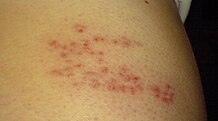
The herpes zoster virus invades spinal nerves, hiding within them until the individual’s immunity weakens, at which point it emerges onto the skin, causing vesicular lesions and severe pain accompanied by an inflammatory response. The rash typically appears in a band-like pattern on one side of the body, hence the name “herpes zoster” (帶狀, meaning “band-shaped”).
After entering the body, the virus stays inactive in nerve ganglia for a lifetime and may reactivate without symptoms, raising questions about its potential association with dementia. Recently, a group of researchers from the University of Oxford in the UK released a comprehensive study in *Nature Medicine* that found a link between shingles and the occurrence of dementia.
The research examined electronic health records of 100 million Americans aged 50 and above who did not have dementia. Scientists followed the participants for about 9 years, keeping track of shingles cases, vaccination history, and the onset of dementia. The findings indicated that people who had two or more shingles episodes were 7–9% more likely to develop dementia than those with just one episode.
Both live and recombinant protein-based vaccines for herpes zoster were found to decrease the occurrence of shingles and also reduce the risk of dementia by 27–30%. Receiving two doses provided a more significant level of protection against dementia compared to a single dose. The benefits in preventing dementia remained noticeable for about a decade following vaccination.
The varicella-zoster virus, along with the herpes simplex virus, is considered a type of pathogen that affects nerves. After entering the nerves, it is believed to reactivate dormant herpes simplex virus, leading to increased levels of beta-amyloid and hyperphosphorylated tau proteins associated with dementia. The vaccine against varicella-zoster provides a double advantage: it protects against both illnesses—a perfect example of “killing two birds with one stone.”

 jasdooit
Leave a comment