
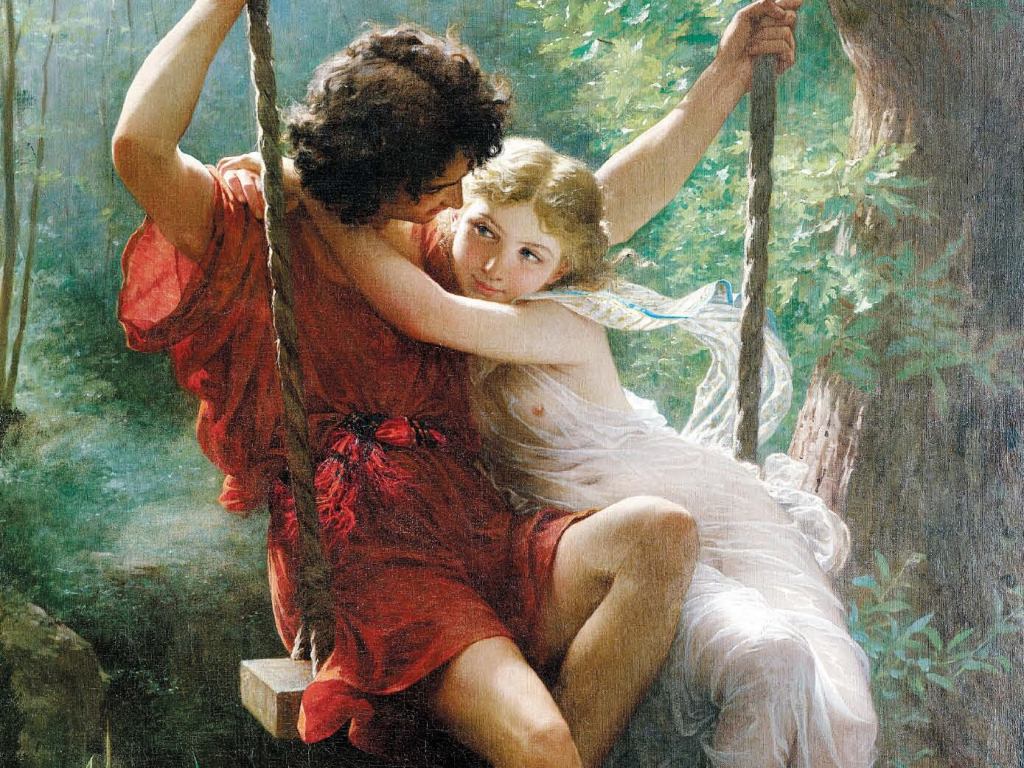
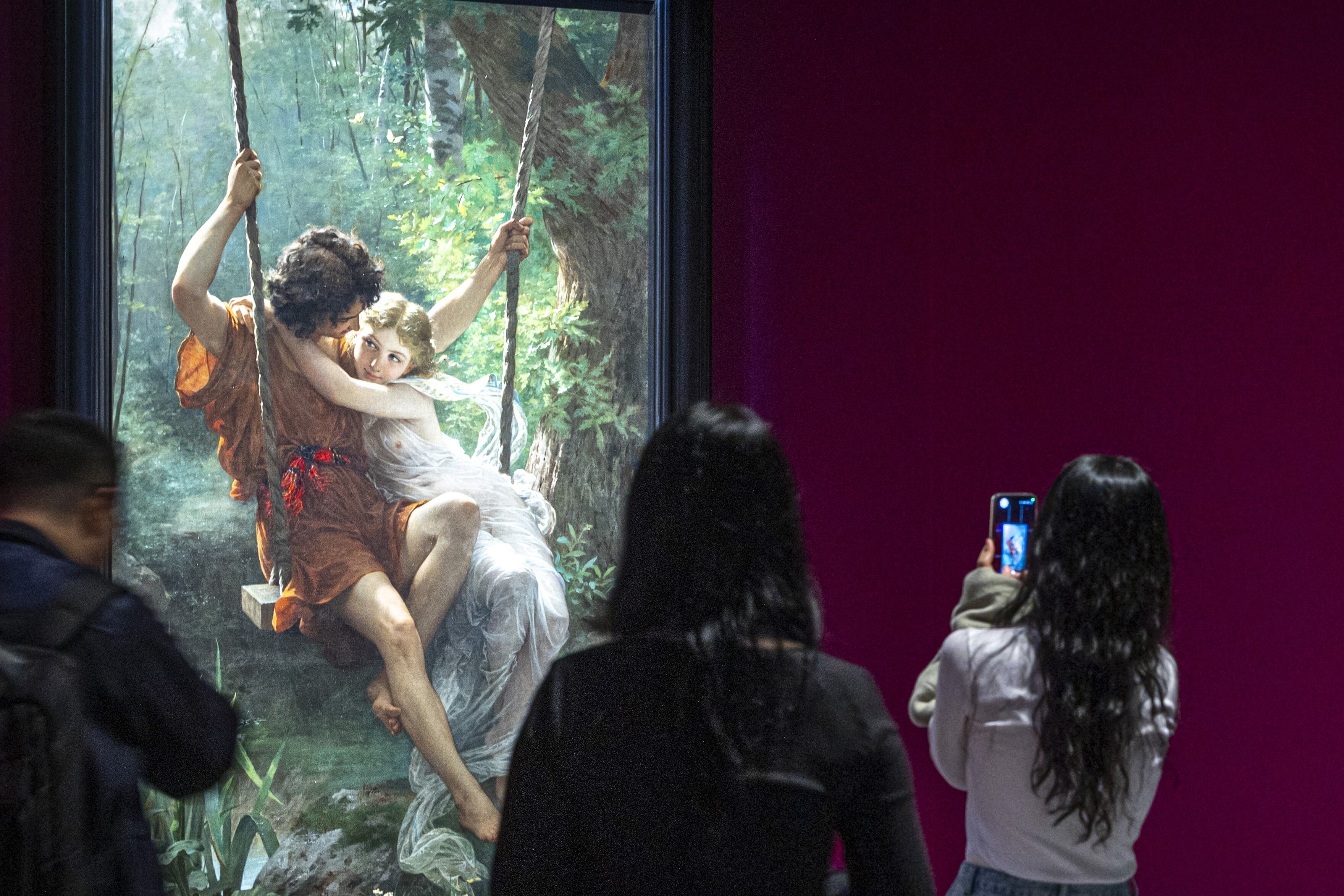
The past holds a certain beauty, and the future shines with promise. Even sorrowful recollections often transform into beautiful echoes as time moves forward. This is why the past is so captivating. Pierre Auguste Ko’s *Springtime*, created in 1873, captures this essence of beauty. The depiction of these young lovers evokes deep yearning, similar to the memory of innocent first love, and it was immediately praised upon its release. There would have been no one who could resist the romantic love unfolding within a mythical setting.
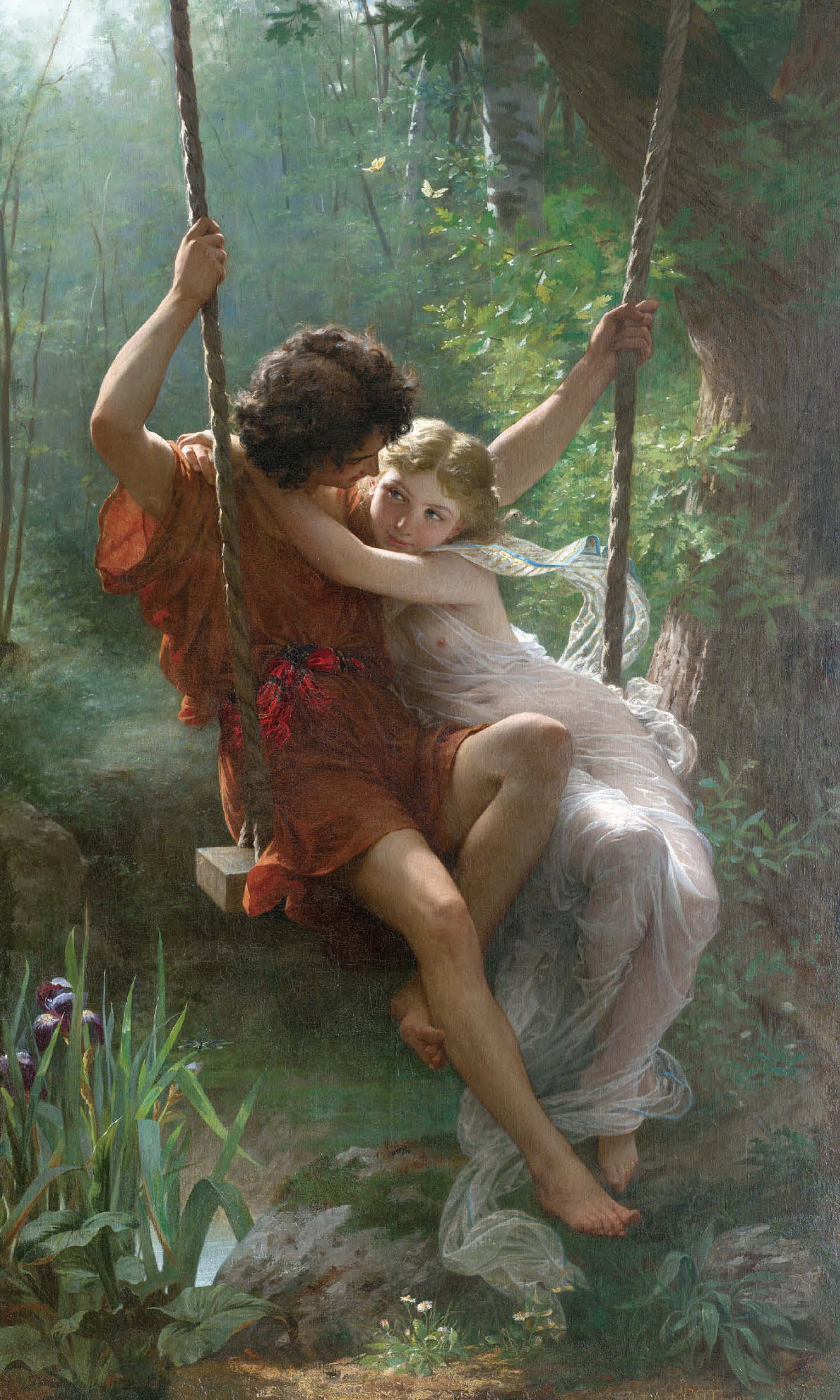
What is intriguing is the fact that this painting was created during the period when Impressionism was beginning to take shape. Monet created his renowned *Impression, Sunrise* in 1872, and the first Impressionist exhibition occurred in 1874. At this exact time, when these pioneers were promoting a new style and developing a fresh artistic language under the banner of innovation, they were opening up a “wonderful new world.” In contrast, Ko painted a “beautiful paradise” using a traditional classical technique. Therefore, this artwork fundamentally differs from most pieces showcased in the *From Impressionism to Early Modernism* exhibition. It evokes a feeling of nostalgia for the “past” among artists who were envisioning the “future.”
Although there is a temporal distance between the future and the past, another characteristic that distinguishes this painting from the other pieces in the exhibition is its expression of deeply personal emotions. The artists showcased in this exhibition, ranging from Impressionism to Neo-Impressionism, Post-Impressionism, Symbolism, Nabis, and Fauvism, were largely aware of the “grand narrative” of the era’s spirit and the history of art in their artistic endeavors. They envisioned a “beautiful future,” and within this grand movement, something as private and emotional as this artwork appeared excessively insignificant or outdated. This is why this painting remained in a “lost state” for a period.
This artwork, which had been on display at the Brooklyn Museum for a while, disappeared for approximately 40 years after 1938, making the initial praise and recognition irrelevant. When art dealer Joan Michelman found the painting in a rundown hotel in Pennsylvania in 1980, it was covered in dirt and had graffiti sprayed on it. It was nearly discarded, overshadowed by the development of the major narrative of modern art. However, in today’s time, which embraces “postmodernism” and has moved away from that grand narrative, this piece has become one of the most cherished works among visitors to the Metropolitan Museum of Art. This is because people have once again come to deeply understand that art serves not only the “wonderful future” and grand ideals but also the “beautiful past” and personal emotions, and it is now an era where such awareness can be freely expressed. Perhaps the real beginning of all art does not lie in grand ideas like history, time, and the future, but rather in beautiful and nostalgic memories and small, private feelings—just as the arrival and departure of spring seasons always brings about sentimentality and inspires poetry.


 jasdooit
Leave a comment