
Too large to collapse. The traditional group is the most reliable.
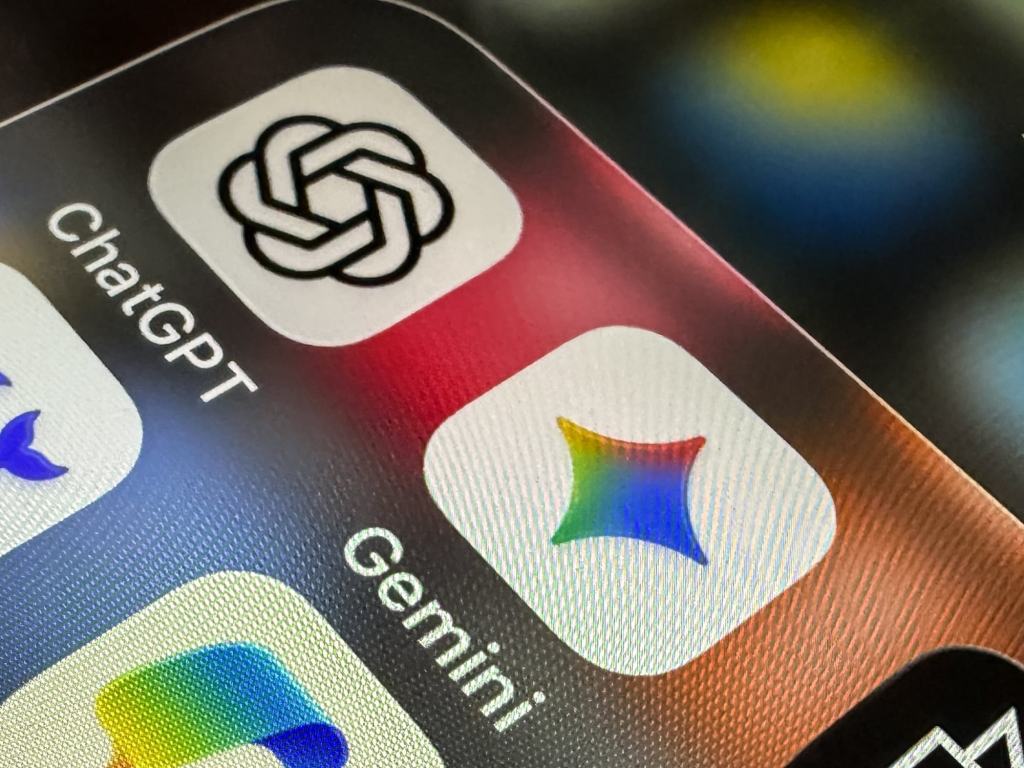
A new story is gaining traction in the technology sector. Although OpenAI’s weekly active users for ChatGPT have hit 800 million, the company has had difficulty overcoming its losses. Nevertheless, its profitability has recently increased significantly, and artificial intelligence (AI) experts who previously left Google are coming back. While the AI market has entered a “Warring States period” with many competitors, analysts believe the industry is moving towards a duopoly between OpenAI and Google. A source in the tech field stated, “Despite past challenges, there is agreement that these two are unmatched. Companies that once led the field have spent years enhancing efficiency, and their advantages are re-emerging, resulting in a consolidation within the AI industry.”
◇Enhancing Computational Efficiency at OpenAI
A U.S.-based technology-focused media platform, The Information, reported on the 21st (local time) that OpenAI has made substantial progress in enhancing its “computing margin” for paid offerings this year. Computing margin is a measure derived by subtracting the costs of running models from the revenue generated via paid services for both businesses and individuals. Serving as an indicator of real profitability, OpenAI’s computing margin stood at 35% in January 2024. It then increased to 52% by the end of 2024 and jumped to 70% in October of this year.
At present, ChatGPT, the AI chatbot developed by OpenAI, has 800 million weekly active users. Nevertheless, the majority of these users are on the free tier. Just 5%—approximately 35 million individuals—opt for the $20-per-month “Plus” plan or the $200-per-month “Pro” plan. Although OpenAI is still not profitable overall, its paid offerings are evidently bringing in revenue. According to The Information, “OpenAI’s paid accounts enjoy higher computing margins compared to Anthropic, although Anthropic is more efficient in terms of overall server costs, including free services.”
The success of paid subscriptions enhances OpenAI’s prospects. The company is pushing free users to upgrade by restricting the number of questions they can pose. As more people become paid subscribers, OpenAI’s earnings will increase. OpenAI forecasts that by 2030, ChatGPT’s weekly active users (WAU) will hit around 2.6 billion, with paid subscribers rising to 220 million. At this pace, OpenAI is anticipated to achieve profitability.
OpenAI is consistently striving to lower computational expenses. It has reportedly begun preliminary discussions with Amazon for an investment of at least $10 billion, with intentions to utilize Amazon’s chips. By expanding its supplier base and adopting more affordable alternatives to Nvidia GPUs, OpenAI seeks to minimize expenses. Additionally, the company is said to be considering the development of its own AI chips in the future.

◇Google Welcoming Back Employees
Google is also reestablishing its competitive advantage. Its newly launched AI model, Gemini 3, has shown strong capabilities, and several engineers who left this year are coming back. As reported by CNBC, approximately 20% of AI engineers recruited by Google this year are “boomerang employees”—individuals who previously left or were let go but have now returned. A Google representative mentioned, “The number of AI researchers transitioning from leading rivals to Google has risen compared to 2024. Engineers are choosing to work here to keep advancing innovative products.”
This year, AI firms have adopted a “NBA-style” approach to talent acquisition. Meta allocated hundreds of billions of South Korean won to lure top AI experts. Several engineers from Google, OpenAI, and Apple moved to other companies for better pay. However, some have since returned to Google, missing its work environment and research atmosphere. John Casey, Google’s head of compensation, stated, “AI engineers are drawn to Google’s substantial financial resources and strong computing infrastructure, which are crucial for advanced AI development.”

On the other hand, Meta, which invested hundreds of billions of South Korean won to recruit “AI superstars,” is encountering a different situation. As reported by the Financial Times (FT), Alexander Wang, Meta’s head of AI, who was brought on by CEO Mark Zuckerberg, recently voiced his discontent with Zuckerberg’s management style. He reportedly mentioned to friends, “Mark Zuckerberg’s excessive control over AI projects is stifling.” Tijmen Blankevoort, an AI researcher who departed from Meta this summer, commented, “Changing goals and inconsistent task assignments hinder the development of experience or tangible results.”
The technology sector expects a direct competition between OpenAI and Google for leadership in the AI market. A representative from the tech industry stated, “OpenAI, having received approval for a viable business model, and Google, enhancing its technical expertise through the return of top professionals, are set to dominate the market.”



 jasdooit
Leave a comment