
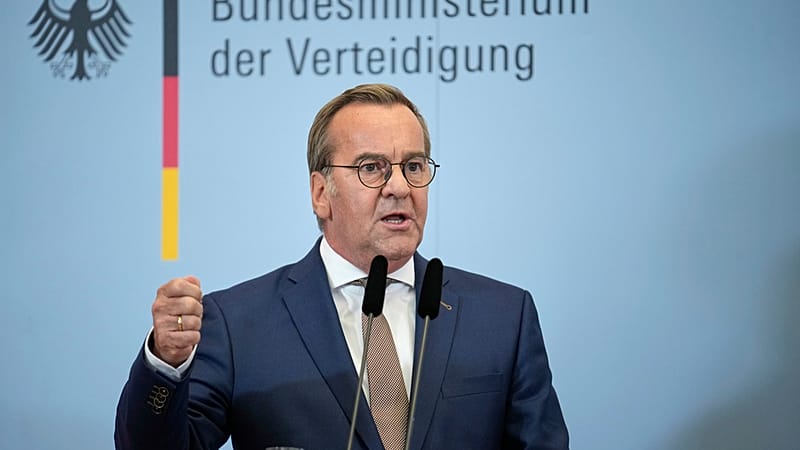
A top German airborne unit is reportedly being probed due to claims of sexual misconduct, antisemitism, far-right extremist behavior, violent ceremonies, and substance abuse, according to German Defence Minister Boris Pistorius, who called the events “deeply troubling.”
Hundreds of soldiers are under investigation for various alleged wrongdoings, as reported by German media.
The dispute initially surfaced in June when two female service members submitted a report to the Parliamentary Commissioner for the Military.
The Military Counterintelligence Service (MAD), the military judicial system, and the public prosecution are currently looking into the issue, with particular attention given to the 26th Parachute Regiment located in the southwestern town of Zweibruecken.
Multiple soldiers have already been let go after the investigation, and the regiment’s leader has been substituted, reported German publication Frankfurter Allgemeine Zeitung (FAZ) on Monday.
Internal records obtained by FAZ indicate that inappropriate conduct was either overlooked or managed internally over many years. This encompassed the use of far-right slogans, anti-Semitic remarks, heavy alcohol consumption, and drug use, according to the newspaper.
Female troops have spoken about experiencing sexual violence, offensive comments, and an environment where raising concerns was viewed as a lack of commitment. In certain fighting units, women were reportedly perceived not as comrades but as sources of disturbance.
Individuals who stood up for themselves faced the possibility of being excluded or transferred, whereas those accused of wrongdoing frequently stayed within the group, as reported by FAZ.
Some ceremonies, referred to as “maintaining customs,” also sparked legal issues. One included forcefully fastening the paratrooper badge, enabling every individual to hit the pin until it penetrated the skin and caused bleeding. Soldiers reportedly went through the process to fit in, while those who declined were subjected to bullying.
The German defense ministry has stated that these actions are “completely unacceptable” and qualify as criminal offenses according to the German Military Criminal Code.
“Let me be perfectly clear, the offenses under discussion are right-wing extremism and inappropriate sexual behavior,” said Kenneth Harms, a spokesperson for the defense ministry, in a statement.
“Neither option is acceptable within the German Armed Forces, and it is therefore essential to conduct a thorough investigation of the incidents. Anyone found guilty of misconduct or even criminal acts, or who, as a superior, turned a blind eye or allowed such behavior, will be handled appropriately,” he added.
Pistorius describes the accusations as “extremely troubling”
Pistorius stated that the accusations contradict the fundamental principles of the military, as reported by the German news agency dpa.
He stated that it was intolerable that the misconduct “was apparently not recognized right away and therefore not addressed firmly. That should not occur again.”
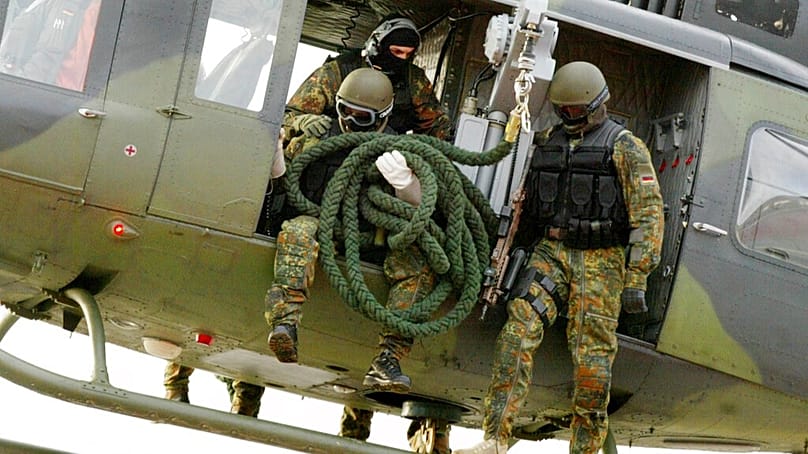
Pistorius commended Army Inspector Lieutenant General Dr Christian Freuding for swiftly taking action to stop additional misconduct. The steps will be incorporated into an “Airborne Forces action plan” and put into effect immediately.
He mentioned that the current emphasis should be on thoroughly investigating all incidents, penalizing verified cases, and rebuilding confidence in the unit’s leadership.
The defense minister also emphasized that extremism, sexual misconduct, or drug use have no place within the German military, and urged the creation of an environment where wrongdoing can be reported without fear, intimidation, or misplaced loyalty.
Problems in elite units
This is not the first controversy to affect a German military unit.
Similar problems have arisen within the Special Forces Command (KSK) located in the southern town of Calw. Its organization is similar to that of the paratroopers: small, isolated units, high physical and mental pressures, a strong feeling of superiority — and an environment where allegiance to the team frequently takes precedence over official regulations.
The MAD discovered that warning signals at the KSK had been overlooked for many years. As per the Bundestag, from 2017 to 2021, the service looked into approximately 50 instances of potential right-wing extremism within the unit. The investigation led to multiple dismissals, reassignments of staff, and the ultimate dissolution of a company.
A notable case in 2020 centered around Philipp S., a master sergeant from the KSK’s second unit, who accumulated firearms, explosives, and far-right materials at his residence. Authorities confiscated an AK-47, approximately two kilograms of explosives, and additional items.
No proof of political intent was discovered by the courts; he was found guilty only for violating firearm regulations and was given a suspended sentence.
The second company of the KSK was dissolved as part of reform efforts following investigations that uncovered extreme views and a harmful leadership environment, as stated in the final report by former Inspector General Eberhard Zorn.
Recent yearly reports from the MAD indicate that far-right extremism continues to be a significant concern within the Bundeswehr. In 2024, a total of 1,159 suspected extremist cases were examined, including 216 new cases confirmed to be associated with right-wing extremism.
Why is the system taking so long to respond?
According to Section 10 of the Soldiers Act, leaders of the German Armed Forces are required to promptly report any extremist actions, criminal activities, or significant violations of duty. Commanders at the company and battalion level are supposed to record unusual behavior, assist in inquiries, and, in cases of severe accusations, consult military disciplinary attorneys or civilian prosecutors.
Military officers and enlisted personnel are tasked with leading by example, overseeing soldiers, and ensuring their well-being. All commands must be legal, and their behavior outside of duty should never damage the unit’s credibility.
However, reports from the Bundeswehr Centre for Military History and Social Sciences show that in certain high-stress elite units, red flags have been overlooked for years—frequently because of worries about operational effectiveness or the unit’s image.
Military personnel who neglect their responsibilities may encounter termination, reduction in rank, or separation from service, yet in reality, such actions are delayed, necessitating undeniable proof of poor leadership before any steps are taken.


 jasdooit
Leave a comment