
A court has decided that the termination of a university professor due to claims of fabricating international academic qualifications was unfair.
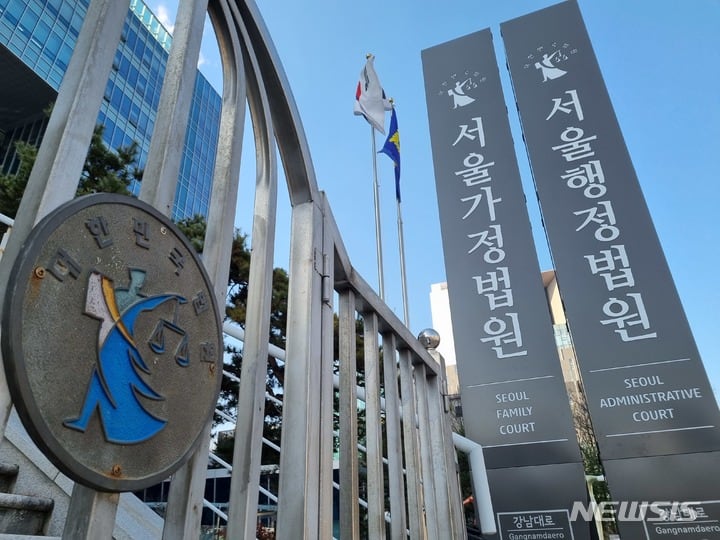
The 5th Administrative Division of the Seoul Administrative Court (led by Presiding Judge Lee Jeong-won) stated on the 18th that it has ruled in favor of the defendant in a legal case initiated by Hongik Academy, an educational institution, which aimed to overturn a decision made by the Teacher Appeals Committee.
Hongik University first appointed Mr. A as a full-time faculty member during the first semester of 2020 and subsequently officially promoted him to the position of associate professor. Nevertheless, in August 2023, the university terminated his employment, stating that he had misrepresented his international academic qualifications, asserting around 15 years of experience as a full-time faculty member at a foreign institution, which he did not actually have.
Mr. A asked the Teacher Appeals Committee to reassess his dismissal. In January of the subsequent year, the committee chose to reverse the decision. The committee pointed out that although the foreign university where Mr. A was employed did not have official roles corresponding to South Korea’s assistant or associate professor positions, the position he held served as an essential stage in becoming a full professor at that institution. Hence, it determined that it was challenging to consider his role as not equivalent to that of a full-time faculty member.
As a reply, Hongik Academy initiated an administrative lawsuit aimed at overturning the committee’s decision. Nevertheless, the court rejected the academy’s petition, considering the committee’s ruling to be justified.
The court noted that because of variations between the foreign university’s and South Korea’s faculty structures, it was not possible to clearly determine whether Mr. A’s position was full-time or part-time. The court clarified, “The faculty systems, roles, and definitions differ between foreign universities and South Korea, which makes it difficult to conclusively categorize Mr. A’s position as either a full-time or part-time faculty member according to South Korean criteria.” It further mentioned, “Mr. A could have reasonably believed his experience was comparable to that of an assistant or associate professor in South Korea, thereby qualifying him as a full-time faculty member.”
Furthermore, the court decided that there was no proof suggesting Mr. A’s academic accomplishments or qualifications were below the standards typically required for a full-time faculty member, and it was also not possible to definitively show that the details in his self-introduction were untrue.


 jasdooit
Leave a comment