
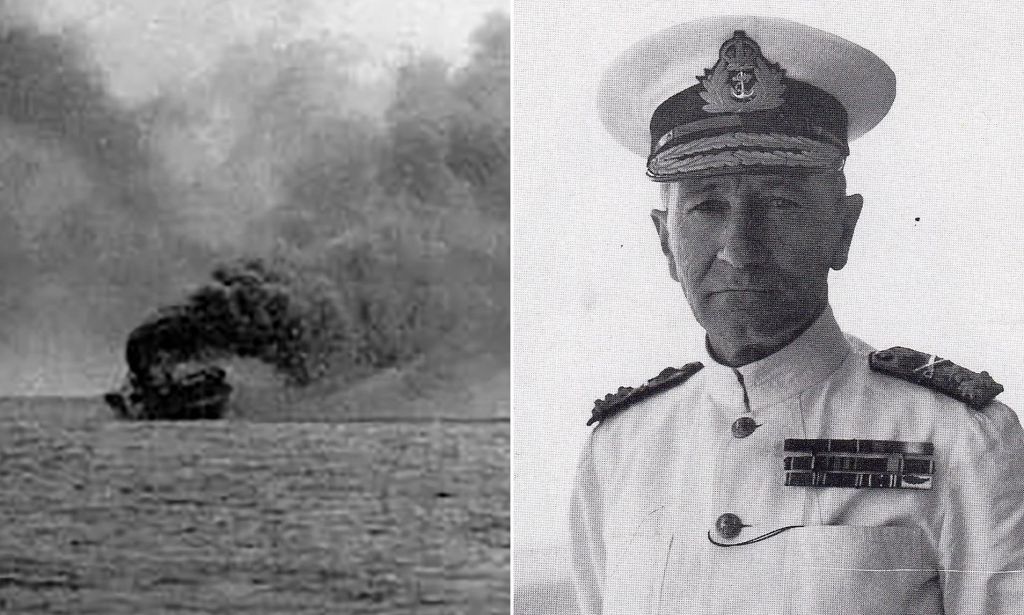
The tale of how a Royal Navy admiral abandoned 900 men in distress to rescue the Norwegianroyal family has been revealed.
The emotional journey of Sir John Cunningham aboard the cruiser HMS Devonshire came to light following the successful sale of his remarkable collection of 22 medals for £20,000.
The ship’s commander was heading to England in June 1940, assigned the duty of rescuing King Haakon VII and other important individuals as their country had been occupied by Nazi forces.
Nevertheless, circumstances changed unexpectedly when Sir John got a distress call from the aircraft carrier HMS Glorious – which had come under attack by a German battleship.
The Devonshire, which was also transporting Norway’s gold reserves, was within 50 miles of Glorious and was the sole vessel to receive the distress call.
However, Sir John had to disregard the signal and continue his journey, as he was given strict instructions to keep radio silence and ensure the safe arrival of the Norwegian VIPs in England.
Although 900 men left the sinking Devonshire, only 40 made it through.
The survivors were rescued in inflatable boats by a Norwegian ship heading towards the Faroe Islands two days later on June 10, 1940.
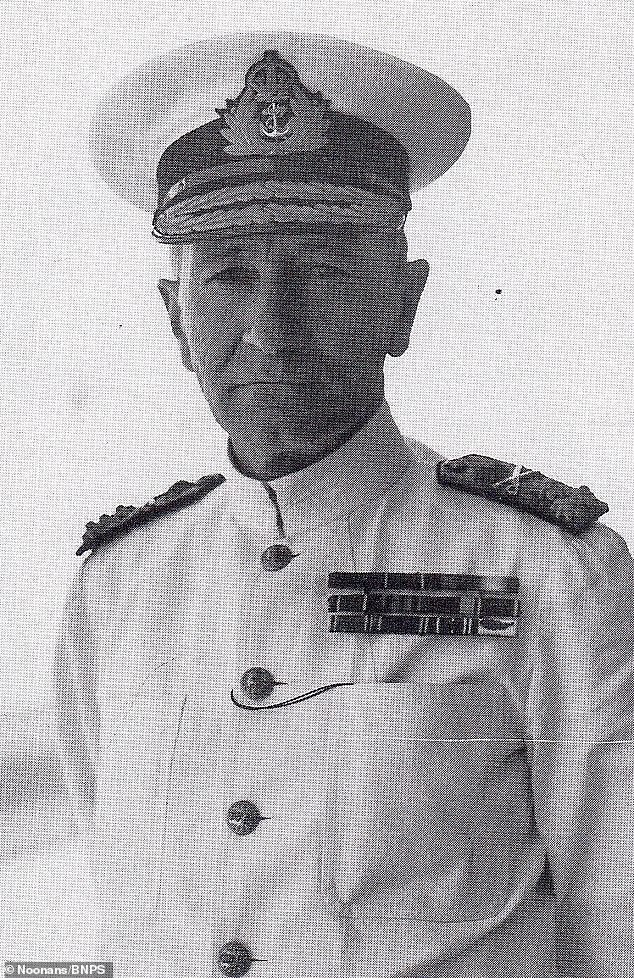
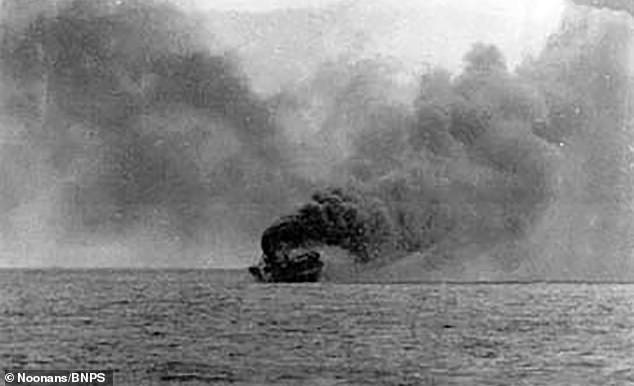
The Admiralty remained unaware of the sinking until 48 hours later, when it was announced via German radio.
The inability to carry out a rescue was a source of shame for the Royal Navy and prompted inquiries in the House of Commons.
It became clear later that Sir John had little option but to silence the distress call.
He presented the message to King Haakon, who inquired about his instructions. Sir John is reported to have answered, “to ensure your safe passage to England.”
The monarch later stated: ‘I understood this was not to Admiral Cunningham’s satisfaction.’
Although there was a tragedy, the event did not affect Sir John’s professional life.
In 1943, he was assigned responsibility for all Allied vessels in the Mediterranean and directed the amphibious assaults at Anzio, Italy, and Southern France.
He served as First Sea Lord in 1946 and later held the position of Admiral of the Fleet in 1948 prior to his retirement.
He was present at the coronation of Queen Elizabeth II in 1953.
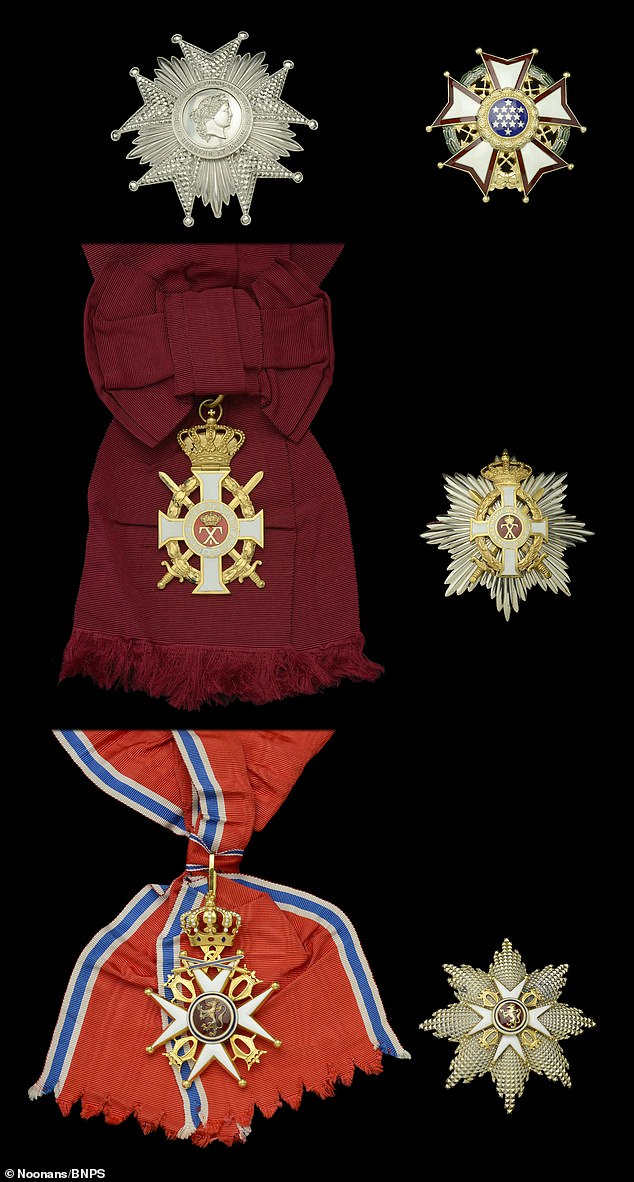
The heartbreaking story has now come to light following the sale of Sir John’s remarkable collection of 22 medals at auction for £20,000.
They feature the Most Honorable Order of the Bath, G.C.B., and the Royal Victorian Order.
The medals caused a competitive auction, with an American private collector exceeding the £12,000 to £16,000 forecast.
They were included in the legendary coin collection of the late James Risk.
Mr. Risk was an American naval officer and expert in coins who was asked by Queen Elizabeth II to organize the different honors, awards, and medals within the Royal Collection that had been moved for protection during World War Two.
Nimrod Dix, the deputy chairman of auction house Noonans located in Mayfair, stated: ‘Admiral of the Fleet Sir John H. D. Cunningham had a lengthy and diverse career within the navy.’
Nevertheless, it was following his promotion in August 1943 to the rank of Admiral and his appointment as commander of all Allied shipping in the Mediterranean Sea that he became involved in crucial events of World War II.
In this position, he was responsible for the amphibious missions in Anzio, Italy, and Southern France. He stayed in the Mediterranean Sea until the war concluded.
He stated, “This extensive collection of medals indicated the high level of his rank and the significant contributions he made during World War II.”
They were included in over 200 lots from the collection of the late James C Risk C.V.O, F.S.A.
Sir John came into the world in British Guiana in 1885 and entered the navy as a trainee in 1900.
He was stationed on HMS Russell in the Mediterranean during World War I and lived through her destruction by a mine in April 1916.
Following the war, he worked on the doomed battlecruiser HMS Hood as her navigation officer.
In 1924, he was elevated to the rank of captain and served on the staff at the Royal Naval College in Greenwich.
He acted as a naval assistant to King George V prior to being elevated to the rank of Rear Admiral.
At the beginning of World War Two, Sir John led a cruiser squadron and was dispatched north to assist in the Norwegian campaign.
On the night of May 1, 1940, he commanded a group of 15 vessels that transported 5,700 Allied soldiers out of Namsos, close to Trondheim, after the German invasion.
Shortly after the Devonshire departed Tromso on June 8, the Norwegian royal ship HMS Glorious was attacked.
In August 1941, his son Richard, who held the rank of lieutenant in the Royal Navy, died when the submarine P33 was destroyed in the Mediterranean.
Sir John passed away at the age of 77 in 1962.



 jasdooit
Leave a comment