
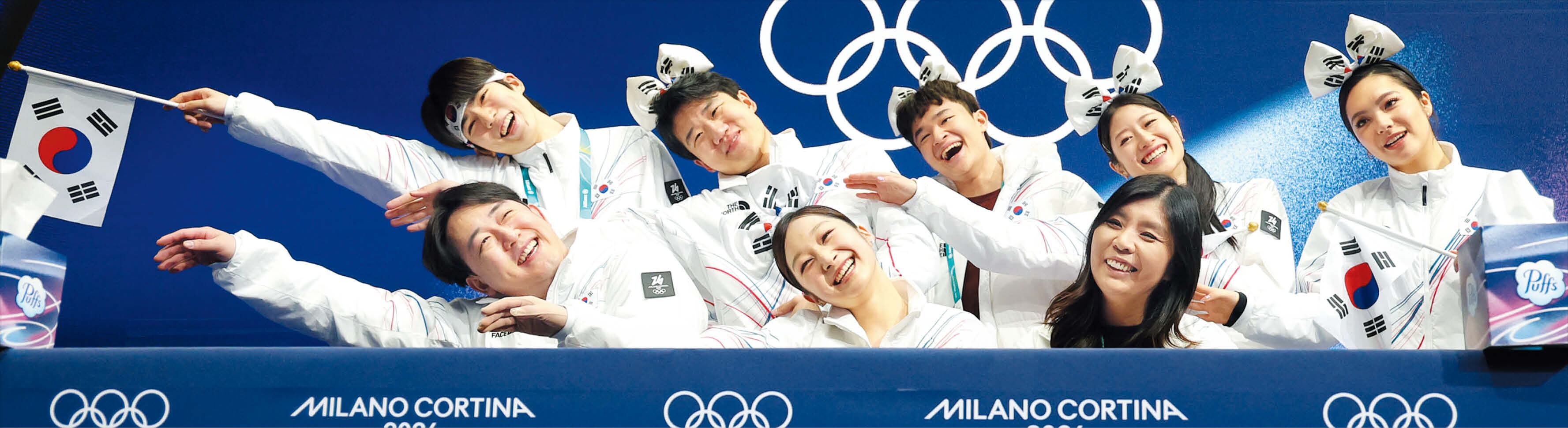
The 2026 Milan Cortina Winter Olympics, a worldwide celebration set against a snowy and icy setting, officially commenced at 8 p.m. local time (4 a.m. on the 7th, Korean time) on the 6th. Hosted at Italy’s biggest stadium, the 80,000-seat San Siro Stadium, the opening ceremony highlighted the theme of “harmony” by connecting in real time with the co-host city Cortina. Exciting performances by global pop star Mariah Carey and Italian tenor Andrea Bocelli captured attention. The South Korean team entered 22nd, led by figure skater Cha Jun-hwan and speed skater Park Ji-woo, who acted as co-flag bearers. Kirsty Coventry, vice president of the International Olympic Committee (IOC), remarked, “The Olympic opening ceremony, where athletes from every country come together regardless of region or religion, is the most symbolic representation of ‘mutual respect.’”
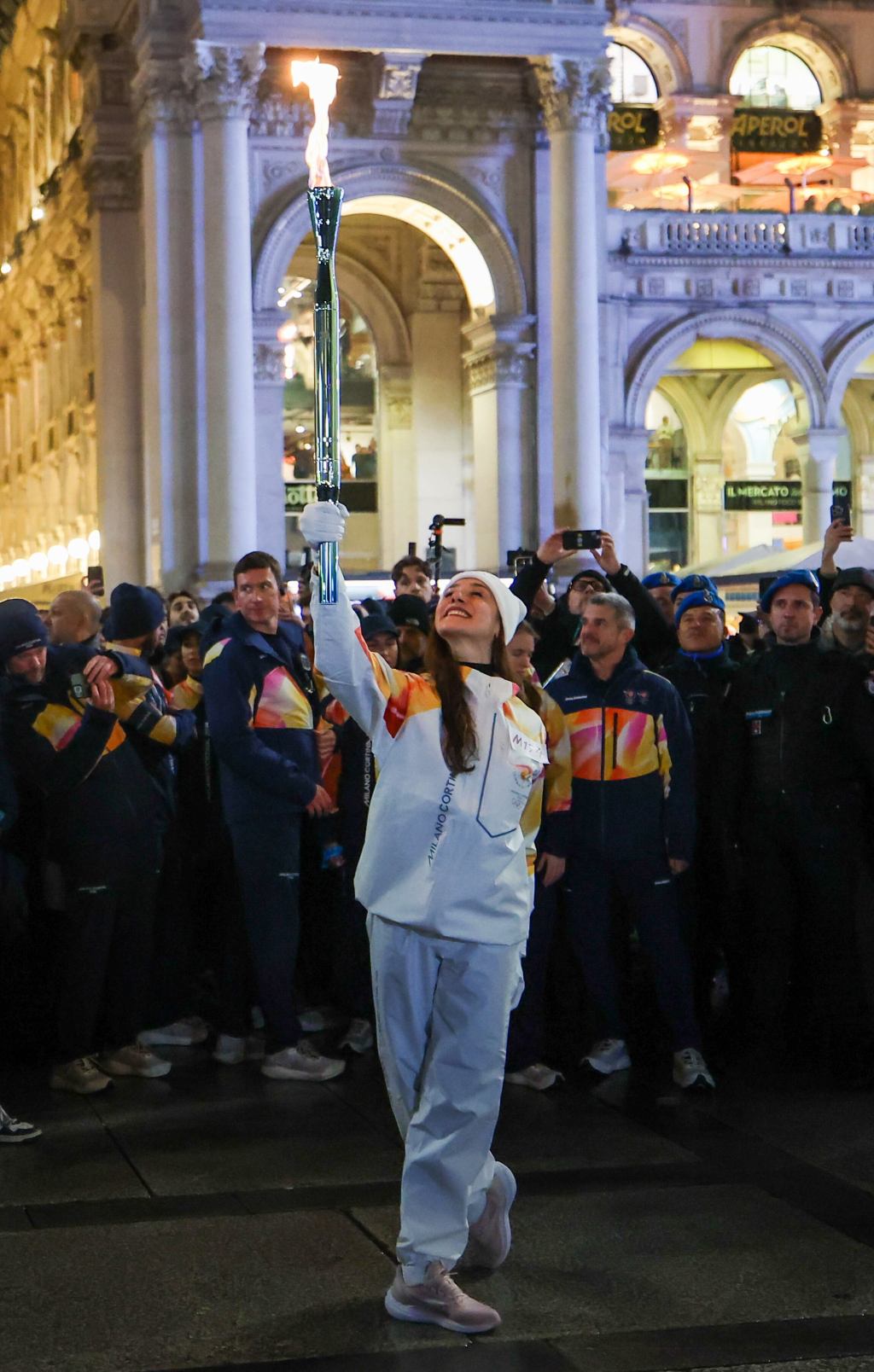
The Olympic spirit started to build a day before, around 8:45 p.m. on the 5th, at Piazza del Duomo (Cathedral Square), known as the “heart of Milan.” Even with heavy rain, Nicoletta Mani, a prima ballerina assoluta from La Scala—the internationally acclaimed opera house—elegantly lifted the Olympic torch in a “demi-pointe” position. Thousands of locals, who had gathered near the cathedral two hours earlier, applauded while their phone lights flashed.
Mani passed the torch to the cauldron positioned in front of the Duomo as “Fantasia Italiana,” the Olympic theme song, was played, and she conveyed her feelings. “It is an honor to represent this moment where sports, dance, and music come together as the world turns its attention to Italian culture,” she stated. Thanks to a special burner, the flame remained bright throughout the night despite the winter rain. The torch then traveled along Viale Pierli, Sempione Boulevard, and the Darsena Canal area before reaching San Siro Stadium the following day.
On the day the Olympic flame lit up the Duomo, Milan was filled with enthusiasm. Many restaurants on the ground floor near the square had closed down, while shops and terraces on higher floors that offered views of the square were crowded. People also gathered in nearby areas such as Milan University, San Babila, and Quadrilatero della Moda, often causing the streets to become congested. On Via Senato, next to the Duomo, fans waved banners that said “Grazie Luca” (Thank You, Luca) in support of Luca Salci, a La Scala baritone who performed at the recent IOC Congress opening ceremony, as they waited for the torch to arrive.
Amid the large gatherings and increased focus, small disruptions took place. Close to Milan University, community organizations and student demonstrators gathered to protest against carbon emissions and environmental damage. In Duomo square, a group believed to be anti-war activists attempted to express their stance by displaying Palestinian flags. The torch relay faced a delay of approximately one hour and thirty minutes due to the mix of onlookers and protesters in the poor weather conditions.
The security around Sempione Park was especially strict, as a unique torch cauldron—designed to look like a sphere hanging within an arch, drawing inspiration from Leonardo da Vinci’s creations—was placed there. Close by, the Fabrica del Vapore, a versatile art venue, organized a dinner for world leaders attending the Milan Olympics. Guests included Italian President Sergio Mattarella, U.S. Vice President J.D. Vance, Secretary of State Marco Rubio, Prince Albert II of Monaco, and King Willem-Alexander of the Netherlands. President Mattarella stated, “The Olympics are not just a sporting event but a platform through which all governments across the globe encourage each other—a truth that has been confirmed once more.”
 jasdooit
Leave a comment