
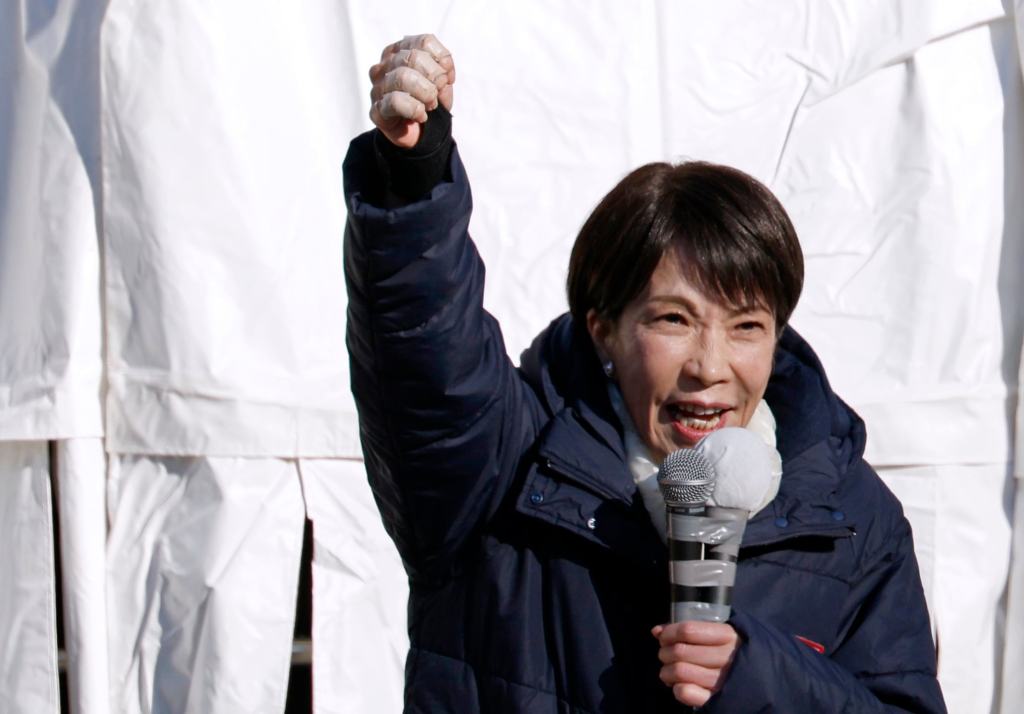
North Korea condemned Japan for increasing avenues for the import and export of military hardware, such as the signing of the “Agreement on the Transfer of Defense Equipment and Technology” with Canada. It did not reference the recent decisive win by the Liberal Democratic Party (LDP), headed by Prime Minister Sanae Takaichi, in the lower house general election.
The Rodong Sinmun, the publication of the Workers’ Party, published an article titled “Plotting to Expand Military Alliances Aimed at Perfecting War Capabilities” on the 11th, which stated, “The completion of different military agreements among nations, the exchange of military equipment, supplies, and information, and the joint performance of military training can only occur within military alliance frameworks,” and further noted, “It is accurate to say that Japan has formed de facto military alliance connections with key NATO member countries and several regional nations.”
It also stated, “As a former warring country, Japan is not allowed to have a military,” and asserted, “Therefore, the creation of a military alliance is a boundary that cannot be violated.”
Previously, on the 28th of last month, the Japanese Ministry of Foreign Affairs reported that Ambassador to Canada, Kenji Yamanouchi, and Canadian Defense Minister David McGuinty met in Ottawa, Canada, and signed the “Agreement between the Government of Japan and the Government of Canada concerning the Transfer of Defense Equipment and Technology.” In a press statement, the Japanese Ministry of Foreign Affairs mentioned, “This agreement is expected to enhance collaboration between Japan and Canada in the area of defense equipment and technology, and it is believed that this will help maintain and strengthen the production and technological base of Japan’s defense industry, thereby contributing to Japan’s security.”
Japan and Canada have already enhanced their collaboration in the security domain by signing the Acquisition and Cross-Servicing Agreement (ACSA), enabling the Self-Defense Forces and the Canadian military to provide each other with supplies and services, as well as the Security Information Protection Agreement, which facilitates the sharing of confidential information. In June of the previous year, former Prime Minister Shigeru Ishiba met with Canadian Prime Minister Mark Carney and agreed to bolster bilateral security cooperation, including the early conclusion of a defense equipment transfer agreement.
In the meantime, the Rodong Sinmun did not report on the landslide win of the LDP, led by Prime Minister Takaichi, which obtained more seats than needed to introduce a constitutional amendment in this article. The LDP included the constitutional provision regarding the Self-Defense Forces as part of its election promise. As Prime Minister Takaichi also mentioned during a press conference following the general election, “We will also take on the challenge of amending the constitution,” leading to expectations that discussions on constitutional reform in Japan will intensify.


 jasdooit
Leave a comment