
A technology firm located in the coastal city of Hartlepool has been identified as a provider of parts used inRussian weaponry being launched against Ukraine.
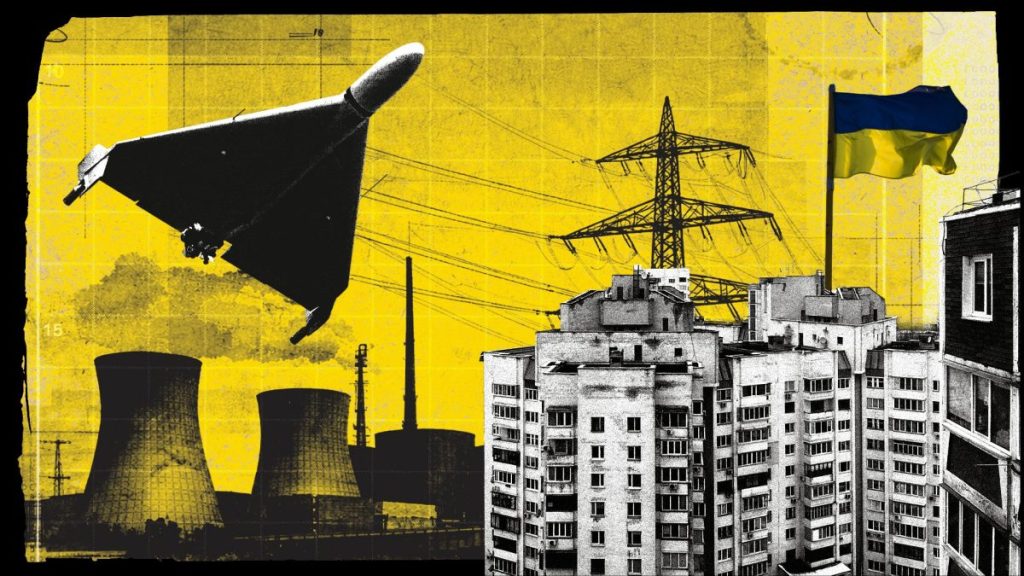
A product developed by Isocom Components 2004, which is owned by one of Britain’s leading private equity companies, is being utilized by Moscow to construct its deadlyGeran-2 drones, as stated by the Ukrainian military intelligence.
Russia has significantly boosted the manufacturing of these Iranian-made “suicide” weapons in recent months as part of its efforts to break Ukrainian spirit byfocusing on power and warming systemsin winter, temperatures can drop to as low as –24°C.
The identification of the Teesside-produced part is the most recent indication ofThe ability of Moscow to overcome various sanctions and limitationsimplemented to cut off its access to Western-manufactured goods for its military industry.
An examination of missile fragments and seized equipment reveals that items manufactured by 10 British firms have been identified in 24 distinct Russian weapon systems since the beginning of the Ukraine conflict four years ago this month.
The uptick in drone production comes amid evidence that Iran, which initially supplied the blueprints for the Geran drones and sent specialists to assist in establishing a factory in Russia as part of a $1.75bn (£1.3bn) agreement, is also supporting the Russian government in obtaining Western parts necessary to produce its powerful drones.
As per a Ukrainian intelligence report, Russia is expected to soon produce 1,000 drones daily, including long-range attack variants like the Geran series.
A Western intelligence official revealedThe i Paper:The Russians have established not only a production center for their drones but also a supply network stretching from Texas to England, with the Iranians playing a major role.
Ukrainian President Volodymyr Zelensky recently announced new restrictions targeting almost 70 people and 65 organizations, including a digital currency platform, which he claimed were involved in funding and supplying weapon components to Russia. He stated, “Without foreign parts, such manufacturing would not be feasible.”
Components made in Britain include everything from amateur computers to radar equipment
British-made or developed devices have played a significant role in the inventory of parts found in downed missiles and drones targeting Kyiv and other cities, as identified by Ukrainian forces.
So far, 41 products created or designed by companies based in the UK or having a significant presence in Britain have been highlighted. Equipment fromhobbyist computersradar components have been listed together with parts from many other nations such as the United States, Germany, Switzerland, and Ireland.
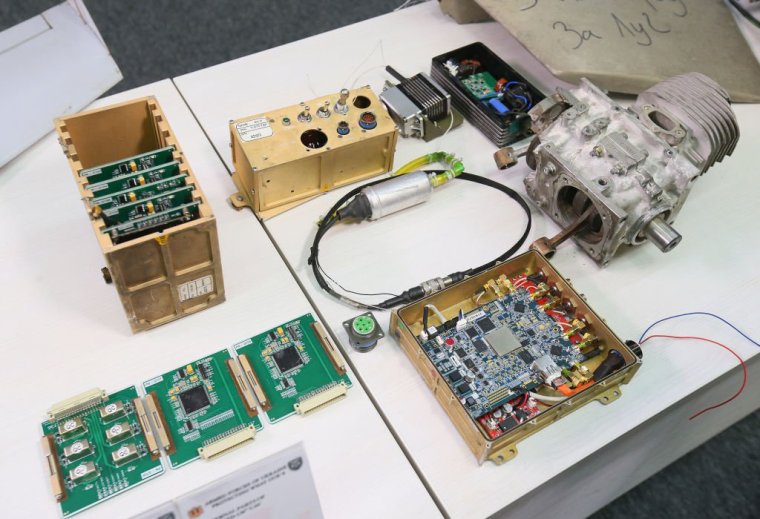
A formal record of parts gathered by Ukraine’s defense intelligence, which includes information regularly provided to Western governments and monitoring organizations, recently highlighted a specific switching unit — referred to as an optocoupler — that it claimed was produced by Isocom Components 2004 Ltd from the remains of a Geran-2 drone.
There is no indication that the company, which was acquired in 2024 by Foresight Group—a UK-based private equity firm overseeing assets valued at £13bn—is intentionally distributing its goods to Russia or deliberately disregarding the numerous global sanctions imposed on Moscow. In fact, it is likely that the company’s products were obtained through a complex deception orchestrated by Russia, and potentially by its partners in China and Iran.
Read Next: How a UK children’s computer ‘was discovered in Russian drones targeting Ukraine’
Isocom Components 2004 stated: “We can confirm that Isocom is a manufacturer of optocouplers utilized throughout the industrial sector and functions on a global scale with a wide array of clients. We remain committed to adhering to all relevant UK export control and sanctions regulations. We do not produce or sell products designed for military specifications intended for defense, aerospace, or marine purposes.”
The Foresight Group chose not to provide a statement.
Components manufactured in the UK or intended for UK-based firms within Russian arms systems once again highlights the challenging stance of the British government as its Ukrainian ally endures severe attacks. This week, British officials stated they are striving to prevent items flagged by Ukrainians from entering Russian manufacturing processes.
Among the British elements present in Russian weaponry are Raspberry Pi devices, initially created to educate IT in schools and later adapted by Moscow to support a video-guided system, along with semiconductors utilized in radar equipment and missiles.
Geran drones: The core of the Kremlin’s effort to undermine Ukrainian spirit
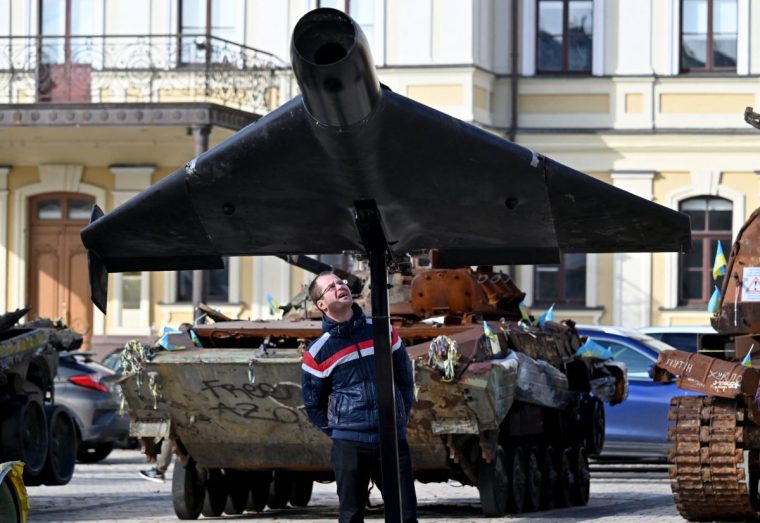
The Geran-2, developed by Iranian military engineers and derived from the Shahed-136 drone, is one of multiple advanced models being produced at a specialized manufacturing facility called the Alabuga Special Economic Zone, located approximately 600 miles east of Moscow. These Geran drones have become central to Moscow’s escalating attacks on Ukraine, focusing on damaging infrastructure, especially its power systems.
A report released last month from the Institute for Science and International Security (ISIS), a U.S. research organization, revealed that Russia deployed 54,538 drones designed in Iran during the previous year, with an average of approximately 5,300 per month in the final quarter of 2025. This marks a significant increase compared to the average of 1,644 launches each month during the five months leading up to 2024.
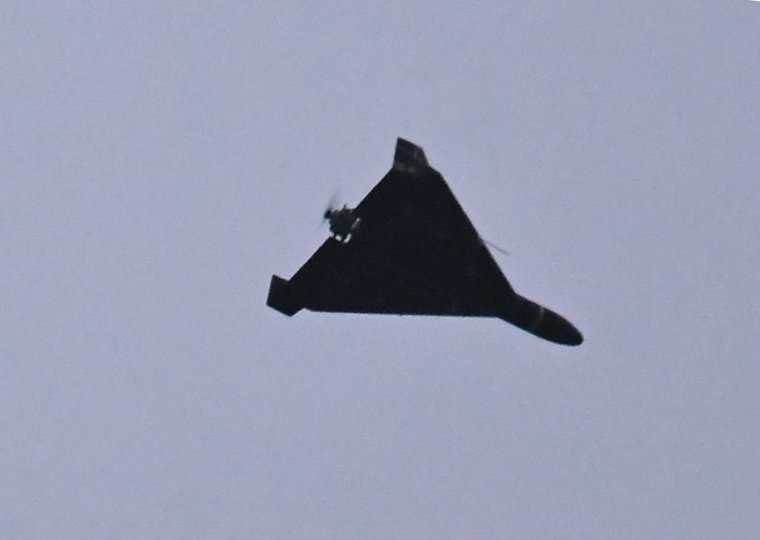
Experts claim that the Gerans, which can be purchased for as low as $20,000 (£15,000) each, form the core of a plan designed to flood Ukrainian air defenses with swarms of armed and fake drones, exhausting Ukraine’s supplies before deploying more sophisticated missiles—each costing over £1 million—to strike targets.
On certain nights, Moscow has fired 800 long-range Geran missiles at Ukraine and has mentioned a goal of deploying 2,000 of these weapons in one attack.
According to its research, ISIS stated: “The key element is the continuous deployment of numerous Shahed-type drones, which quickly drain air defense systems. By the end of 2025, Ukraine’s air defense capabilities had been greatly weakened.”
Massive deception operation conducted by Russian intelligence
Intelligence and diplomatic sources highlight that UK firms are being targeted by a complicated Russian scheme, which is supported by Iran and China.
The system employs various front companies, most of which are located in China and Eurasia, and utilizes supply routes to redirect so-called “dual-use” items—capable of being used in either civilian or military equipment—from the West into the Kremlin’s military operations.
A review of Ukrainian battlefield information indicates that Russia is currently utilizing 5,510 varieties of foreign-produced parts across 189 distinct weapon systems, including the Kinzhal hypersonic missile and the Lancet “suicide” drone.
In January, the European Union sanctioned 10 Iranian officials and businesses it claimed were supplying Moscow with drone and missile parts, including Sahara Thunder – a well-known shell company utilized by Tehran to acquire Western components sent to Russia. The United Kingdom has also previously implemented sanctions aimed at preventing Iranian efforts to acquire drone and missile parts from outside the country.
The intricate nature of today’s component supply chains, which extend from Silicon Valley and European factories to intermediaries in places like Hong Kong and Dubai, means that certain items can go through as many as a dozen different buyers and sellers across various countries before arriving at Russian manufacturing facilities, according to specialists.
Isocom Components 2004 Ltd produces hundreds of thousands of switches annually intended for use in consumer products, including those within the electric vehicle (EV) sector. Raspberry Pi, which saw almost £4 million worth of its items imported into Russia in 2023 by third-party purchasers without its awareness, has stated that it has since eliminated distributors associated with Russia and enhanced the tracking of its products.
A Western intelligence source stated: “Russia is appropriately the target of very strict sanctions, and there are indeed tight restrictions on materials that Moscow seeks to acquire.”
But if you have a product manufactured in the hundreds of thousands, or even millions, ranging from washing machines to electric vehicles, it is inherently difficult to identify cases where a few thousand units are diverted by a Hong Kong or Kazakh shell company ultimately managed by Russian intelligence.
Yes, supply chains need to be carefully watched, but there comes a point when dealing with deception from a nation-state.
Iranian weaponry networks
Experts noted that although the majority of components destined for the Alabuga weapons facilities are sourced from China, Iran plays a significant role in obtaining Western products for use in Russian arms.
The Islamic regime, which has reportedly received gold bars as payment for assisting in the establishment of the Alabuga factory, has a lengthy record of deceit in acquiring European and American technology for its own military programs – a skill it is now offering to Moscow.
Professor Amy McCauliffe, a former high-ranking CIA employee and expert in arms supply chain management, currently affiliated with the University of Notre Dame in Indiana, stated that Russia continues to depend on Western producers for drone parts such as engines, fuel pumps, antennas, and navigation equipment.
She told The ConversationTo support Russia, Iran utilizes its network of intermediaries and firms to obtain Western parts and bypass global sanctions.
It is understood by The i PaperThat Tehran has previously acquired Western technology, including certain British parts, through the use of shell companies to acquire equipment like drone engines. In some instances, it has subsequently reverse-engineered the item for use by local manufacturers and distribution to allies.
John Caves, a senior research associate with the Wisconsin Project on Nuclear Arms Control—a think tank that closely tracks Iran’s arms acquisition efforts—stated there is proof that Tehran is still seeking out Western products. However, this effort is part of a broader and intricate network where companies based in China, Turkey, and the United Arab Emirates are also supplying Iran and Russia with Western goods.
He mentioned that although Western governments have been engaged in a long-standing effort to prevent other nations from acquiring technology that could be utilized for nuclear weapons or ballistic missiles, they are now quickly trying to adjust to the emergence of “asymmetric weapons” like drones that rely on simple parts.
Caves stated: “Western governments are, for the most part, aware of the risk now, but they encounter the challenging compromises that come with attempting to regulate the export of goods that are extensively traded, whose peaceful applications are essential to the global economy.”
A representative from the government stated, “We regard it as extremely serious when items from British firms are discovered in Russian military equipment.”
We have prohibited the export of thousands of products to Russia, including all battlefield items that Ukraine has highlighted, and in collaboration with our global partners, we have introduced the strictest set of sanctions ever applied to a major economy.


 jasdooit
Leave a comment