
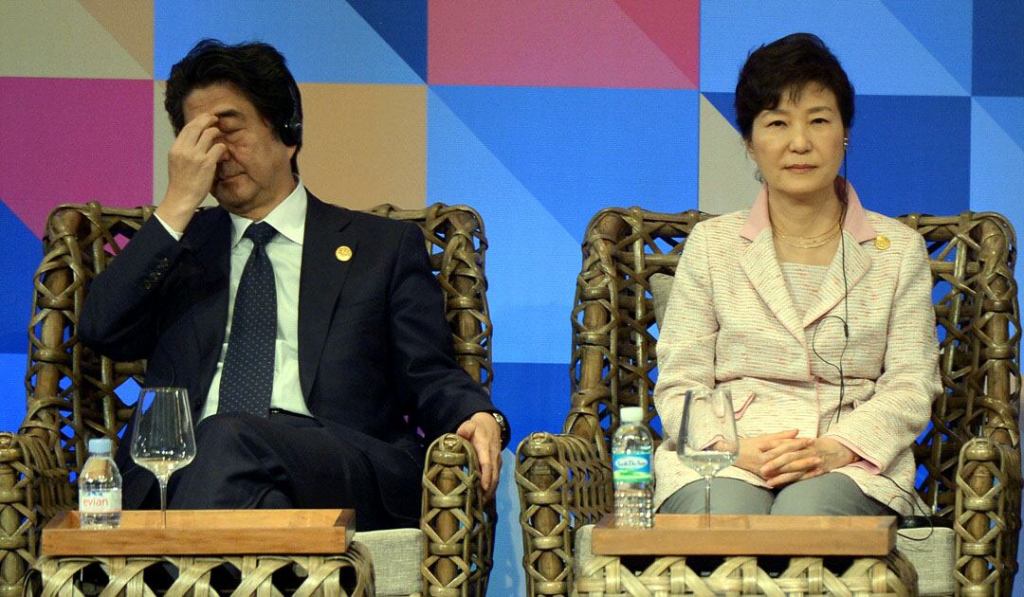
The leadership pairing of Lee Jae Myung and Sanae Takaichi in South Korea-Japan relations is the second such instance since the 2010s, after the Park Geun-hye-Shinzo Abe collaboration. Following the Liberal Democratic Party’s major win in the House of Representatives election, Takaichi is anticipated to continue as prime minister at least until the July 2028 House of Councillors election, indicating that the Lee Jae Myung-Takaichi administration might last for a considerable time. Historically, bilateral relationships established during periods of political turmoil have had a significant impact on both countries’ futures, attracting close scrutiny. In this light, examining why the Park Geun-hye-Abe relationship faced challenges from the beginning and how mistrust developed could provide valuable insights for the Lee Jae Myung-Takaichi partnership.
A Mistake in Diplomacy by Abe in December 2012
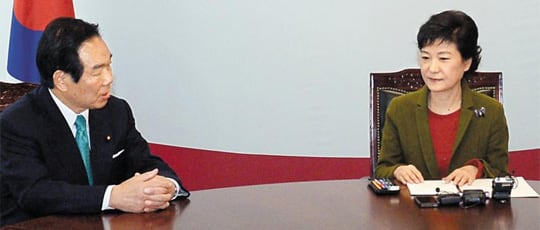
A strange event took place not long after Park Geun-hye’s win in the December 2012 presidential election. Shinzo Abe, who had recently been named president of the LDP and was set to become prime minister, had intended to send a special envoy to President-elect Park Geun-hye but quickly called it off.
At 9:30 a.m. on December 21, 2012, Abe made a statement during a press event, saying, “I will dispatch Fukushiro Nukaga, former finance minister, as a special envoy to South Korea to express my views on enhancing Japan-South Korea relations. He will deliver my personal letter.”
Nevertheless, this was an independent declaration made without previous discussion with Park’s transition team. Her team quickly voiced disappointment, saying, “Abe’s office independently announced the envoy’s deployment without any prior agreement.”
By 2:00 p.m., Kyodo News quoted a member of the Japan-Korea Parliamentarians’ Union, stating, “The envoy’s trip has been moved to the next week because of scheduling issues with South Korea (Park’s transition team).”
By 5:00 p.m., Abe altered his statement during a press conference, stating, “The envoy was sent not by the LDP but by the Japan-Korea Parliamentary Union.” Announcing and subsequently canceling the envoy’s mission during the establishment of new governments in both nations constituted an unusual violation of diplomatic procedures. This event highlighted the challenging journey ahead for relations between South Korea and Japan.
Foreboding Indications for Dual Relations
Abe’s effort to send an envoy without Park’s approval was regarded as a significant diplomatic mistake. His rushed declaration and later withdrawal were considered as worsening the relationship further. The series of events occurred in this manner: On December 20, 2012, Abe expressed his intention to send an envoy via Ambassador to South Korea Gorō Betto, who went to Park’s Saenuri Party office to offer congratulations. Abe also explored the concept with members of the Japan-Korea Parliamentarians’ Union and the Korean Residents Union in Japan.
However, Abe viewed this as a done deal, leading Sankei Shimbun to report on December 21 that Nukaga would arrive in Seoul that evening and meet Park the following day to deliver the letter. Asahi Shimbun and other outlets highlighted that the letter would focus on common strategic interests and Abe’s intention to strengthen personal trust with Park, similar to the relationship between his grandfather Kishi Nobusuke and father Abe Shinzō with Park Chung-hee.
Park’s transition team strongly disagreed, saying, “Abe’s office independently released a schedule without any previous discussion.” A team member noted, “We only gave a vague ‘we will think about it’ when Abe’s office suggested the envoy, but it seems the LDP used this as a ‘media stunt’ to challenge us.” A Ministry of Foreign Affairs official stated, “When Abe’s office showed interest in sending an envoy, we recommended aligning the timing, but the LDP independently announced the deployment.”
Park’s Warning in the Face of ‘Daughter of a Pro-Japanese Collaborator’ Criticisms
Park’s team strongly turned down the envoy, saying, “It is not the right time to meet with a Japanese representative.” They believed Abe’s administration could potentially create tension and did not feel there was a need for an early meeting. Politically, Abe’s focus on his family’s historical connections to Park Chung-hee had the potential to strengthen opposition arguments that portrayed Park as the “daughter of a pro-Japanese collaborator.”
During the 2012 presidential election, Park encountered criticism from the Democratic United Party and various civic organizations regarding her father’s military service in Manchuria, calling for more transparency about historical perspectives. Her team dismissed these as “ideological smear efforts,” which consumed a lot of resources. Emphasizing Abe’s family connection to Park Chung-hee might have politically harmed Park, as she aimed to separate herself from her father’s past.
‘Takeshima Day’ Controversy Resurfaces
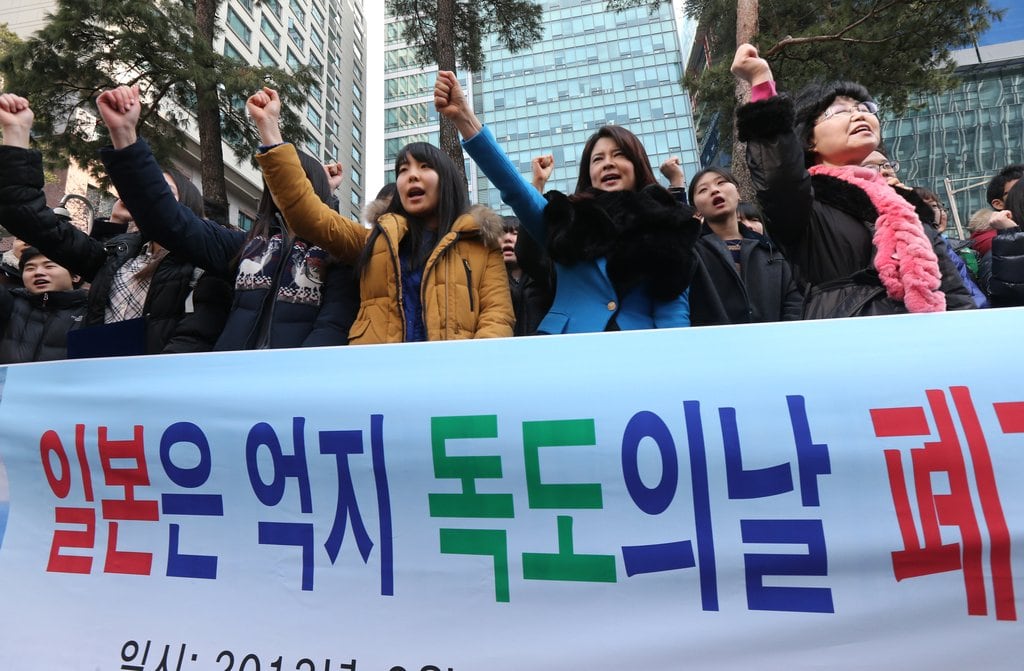
In addition, the “February 22 Takeshima Day” controversy resurfaced. During his press conference on December 26, where he announced the envoy, Abe discussed his campaign promise to elevate the event to a government-organized ceremony, saying, “It is distinct from the party’s commitment. We will assess it considering overall diplomatic situations.”
A critic stated, “Even if Abe does not host it at the governmental level, simply showing willingness to reconsider demonstrates a lack of genuine intent. Early interaction with Abe’s representative could cause severe harm to Park’s government prior to its taking office.” Doubts also emerged regarding Abe’s far-right campaign promises. Following the rejection of the envoy, Abe changed his approach, declaring, “Japan’s position that Takeshima is its territory remains firm and is recognized internationally.”
Park’s Diplomatic Meeting: ‘Trust as the Basis’
Following her initial refusal to meet Abe’s representative, Park eventually received the delegation on January 4, 2013. At the Financial Supervisory Service training center, she remarked, “With the arrival of new administrations, we should foster trust in line with public opinion and enhance friendly connections.” She further noted, “It is essential to establish positive relations early on. We need to address history, seek reconciliation, and gradually develop trust.”
This was seen as an indirect warning directed at Abe’s possible revision of the Kono Statement and the government’s support for “Takeshima Day.” When questioned about her electoral victory, Park stated, “The main factor is ‘trust’ (무신불립). Maintaining consistency and trust with the public is essential.” She expanded on this to include bilateral relations: “Trust between South Korea and Japan is equally crucial. Without it, even small matters can create political instability and cause public anxiety.”
Abe’s Challenge on ‘Takeshima Day’
Within two months of the envoy’s visit, Abe honored his promise by dispatching a senior official to the “Takeshima Day” celebration hosted by Shimane Prefecture on February 22, 2005. This action sparked strong anger. A spokesperson from the Ministry of Foreign Affairs, Cho Tae-yong, criticized, “Japan should immediately revoke the ‘Takeshima Day’ regulation and stop its unfair territorial assertions.” The ministry called in Takashi Kurai, the director of the Japanese embassy, to present an official complaint.
North Gyeongsang Province Governor Kim Kwan-yong called the action a “serious criminal act,” as demonstrations spread across the country. Park never forgot this event, which took place three days prior to her taking office. She saw the mistake made by Abe’s representative and the “Takeshima Day” provocation as personal insults, and the tension in relations continued until the December 2015 comfort women agreement, which was facilitated with the help of U.S. President Barack Obama.
Takaichi’s Decision in a Week
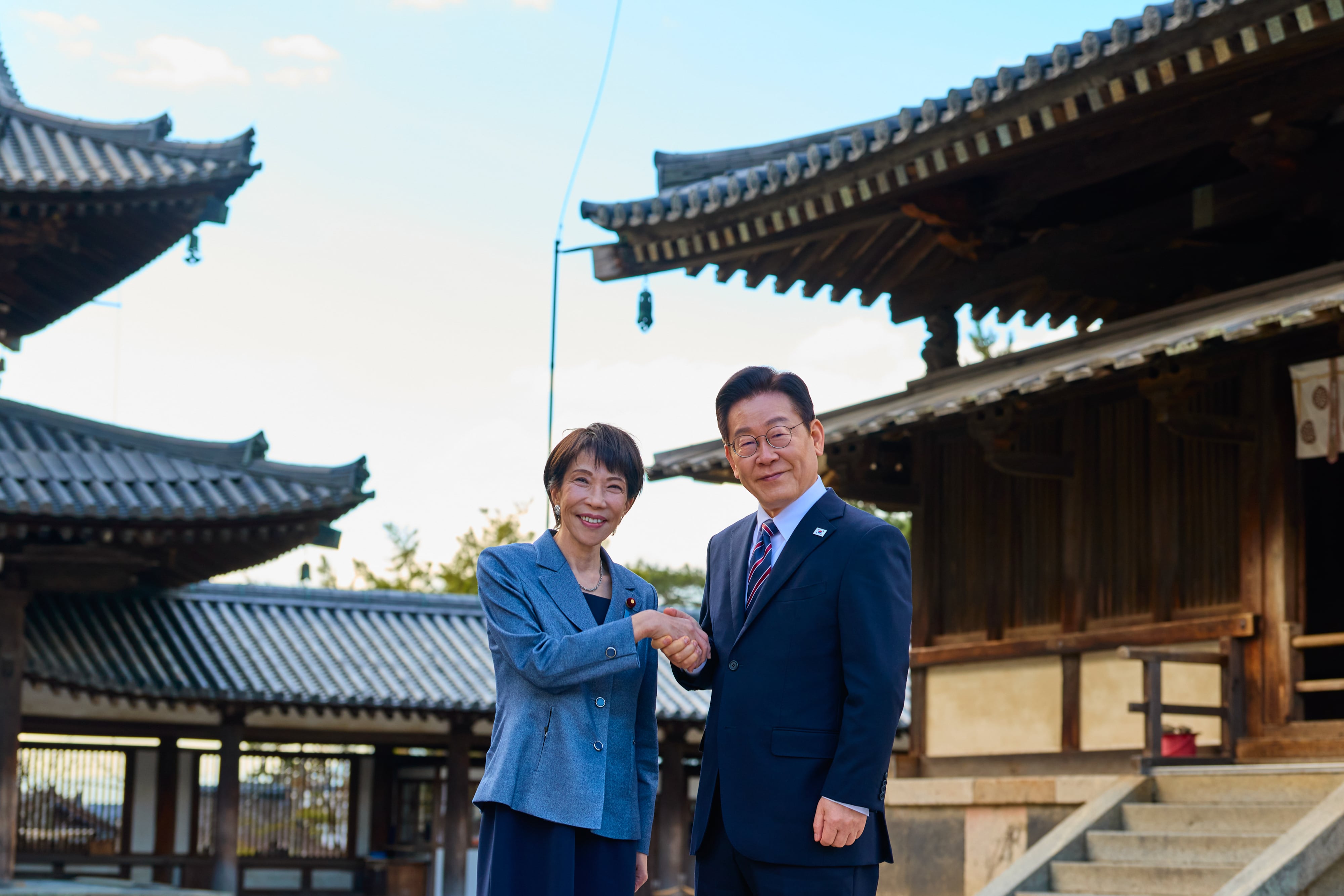
Fourteen years on, the relationship between Lee Jae Myung and Takaichi remains harmonious. Although Lee had previously condemned Japan’s release of Fukushima wastewater as a “second Pacific War” during his tenure as leader of the Democratic Party, he later supported Yoon Suk-yeol’s third-party compensation plan for forced laborers, focusing on maintaining diplomatic relations and national interests. Within this context, Lee met with Takaichi on three occasions—during the APEC summit in Gyeongju, the G20 meeting, and the Nara gathering—highlighting continuous dialogue and forward-looking collaboration.
Nevertheless, the trust between Lee and Takaichi, a conservative figure who has visited Yasukuni Shrine, has yet to be demonstrated. The upcoming “Takeshima Day” on February 22 will serve as a crucial indicator. During her campaign for LDP leadership, Takaichi remarked, “Cabinet members should participate in ‘Takeshima Day’ with pride.”
Fortunately, Kyodo News stated that Japan is contemplating delaying the participation of ministers, with officials dealing with territorial issues probably not attending. Experts believe Japan might try to prevent conflicts as tensions between China and Japan rise.
From the viewpoint of South Korea, neither “Takeshima Day” nor high-level participation from Japan is considered acceptable. Raising the envoy’s status might intensify hostilities. It is wished that Takaichi makes a wise decision, ensuring the Lee Jae Myung-Takaichi relationship does not follow the pattern set by Park Geun-hye-Abe.

 jasdooit
Leave a comment