
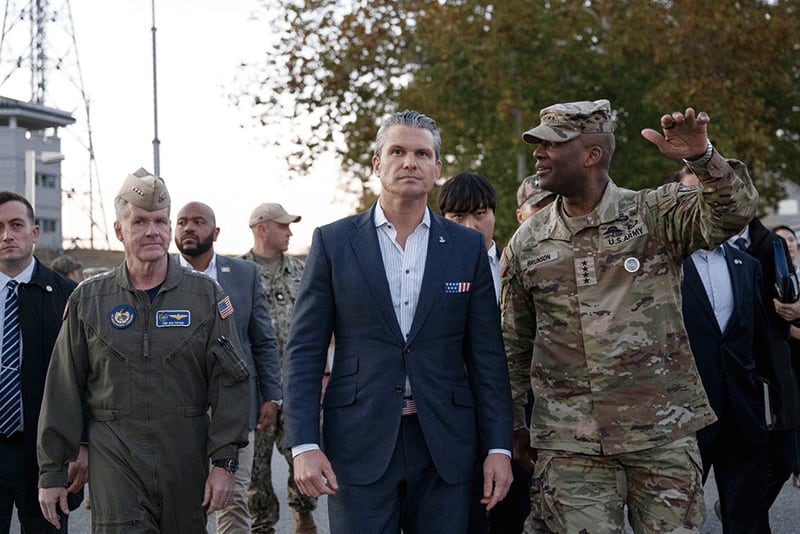
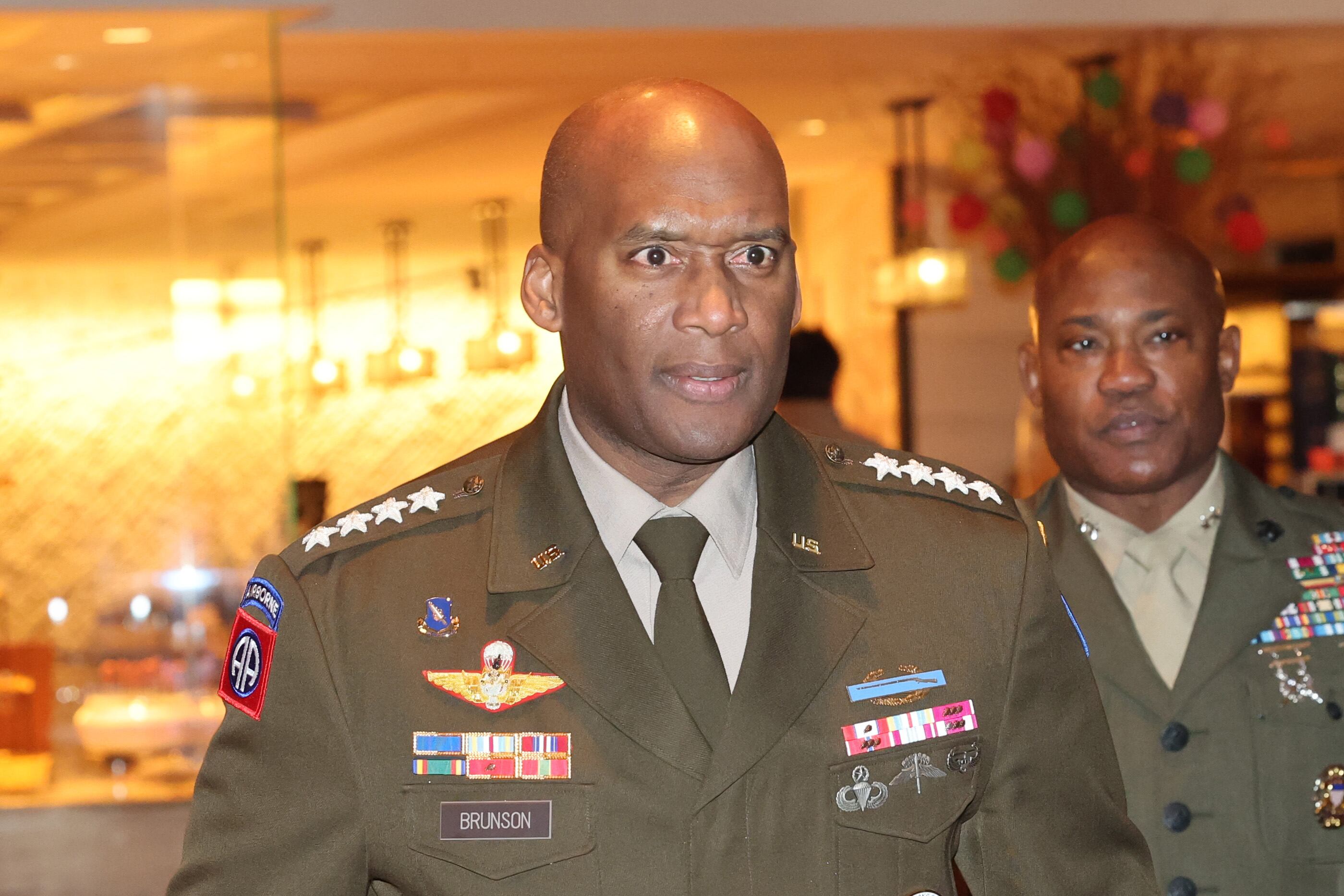
The commander of the U.S. Forces Korea (USFK), Gen. Xavier Brunson, released a statement on the evening of the 24th, approximately at 10 p.m., directly addressing the South Korean Ministry of National Defense concerning the aerial exercises in the West Sea. It was disclosed on the 26th that this action was carried out under the guidance of the U.S. Department of Defense (War Department). According to several diplomatic and security sources, “Commander Brunson’s late-night statement was not an individual opinion but a clear signal from the Trump administration,” with the addition, “We are aware that there were instructions from the leadership, including U.S. Defense Secretary Pete Hegseth.”
Previously, when South Korea’s Ministry of National Defense stated that Commander Brunson had indicated a desire to apologize about the training, he released a statement in the early hours saying, “We do not apologize for keeping our readiness stance.” Since it is common for U.S.-South Korea disputes to be handled through private discussions, there were opinions that the U.S. Forces Korea commander’s public response to the South Korean government was unusual.
This incident arose following the disclosure that on the 18th, U.S. Forces Korea’s F-16 fighter jets carried out training flights near the Chinese Air Defense Identification Zone (CADIZ), causing the Chinese military to deploy fighters, resulting in a confrontation between U.S. and Chinese aircraft. Before this, the U.S. had intended to hold a trilateral air exercise with South Korea and Japan, but in the end, only the U.S. and Japan conducted joint training in the East China Sea on the 16th and 18th. After a domestic media outlet reported that Commander Brunson had indicated his intention to apologize for the U.S.-China fighter jet encounter, the Ministry of National Defense spokesperson remarked, “We understand that there is some truth to this,” which intensified the controversy.
◇ “U.S. Alleges Chinese Influence on South Korea’s Reaction”
As per reports, the matter was promptly communicated to the U.S. mainland, with relevant updates shared through the U.S. Department of Defense’s command structure. One individual stated, “Commander Brunson’s remarks occurred in the morning in Washington, D.C. Eastern Time,” and noted, “We believe that the leadership of the U.S. Department of Defense directed him to explain their stance.” As a result, in his statement, Commander Brunson informed Defense Minister Ahn Gyu-back that the training had been previously announced, while expressing regret that the defense minister and the JCS chairman had not been timely updated on the situation. This served as an open acknowledgment that there were problems within South Korea’s command and communication system.
It was reported that the U.S. specifically sees this situation as having worsened during the response managed by the Cheong Wa Dae Office of National Security. The U.S. is monitoring the likelihood that, following China’s discussion of the matter through diplomatic means, the response level was increased based on the Office of National Security’s decision. A senior official who previously served at the Office of National Security also stated, “I believe the origin of this situation’s escalation might be China.”
A former defense minister stated, “Throughout my time in office, I was provided with daily updates from the JCS regarding the training operations of our military, U.S. forces, Chinese forces, and the Japanese Self-Defense Forces within the airspace of the Korean Peninsula,” and continued, “Our air training is organized into three distinct categories: South Korean-only exercises, U.S.-only exercises, and combined training. I wonder why the communication channels failed.”
In general, it is understood that the U.S.’s strong reaction also indicates frustration with the Lee Jae Myung government’s “Defense Ministry Purge.” The U.S. has worries regarding the extensive replacement of generals, including those who had little direct involvement in the 2024 emergency martial law situation under former President Yoon Suk-yeol. A former JCS official mentioned, “The U.S. is observing a trend where military personnel in key roles are encountering difficulties merely for following orders related to martial law, while those in less significant positions are being promoted.” There are fears that many military members who support the South Korea-U.S. alliance or possess the necessary skills have been replaced, and individuals who align with a regime focused on North Korea have taken important roles, making it challenging to conduct smooth South Korea-U.S. training. Some believe that recent visits by U.S. State Department advisor Michael Needham and others to individuals who supported the Yoon Suk-yeol government during the emergency martial law are connected to this development.


 jasdooit
Leave a comment