
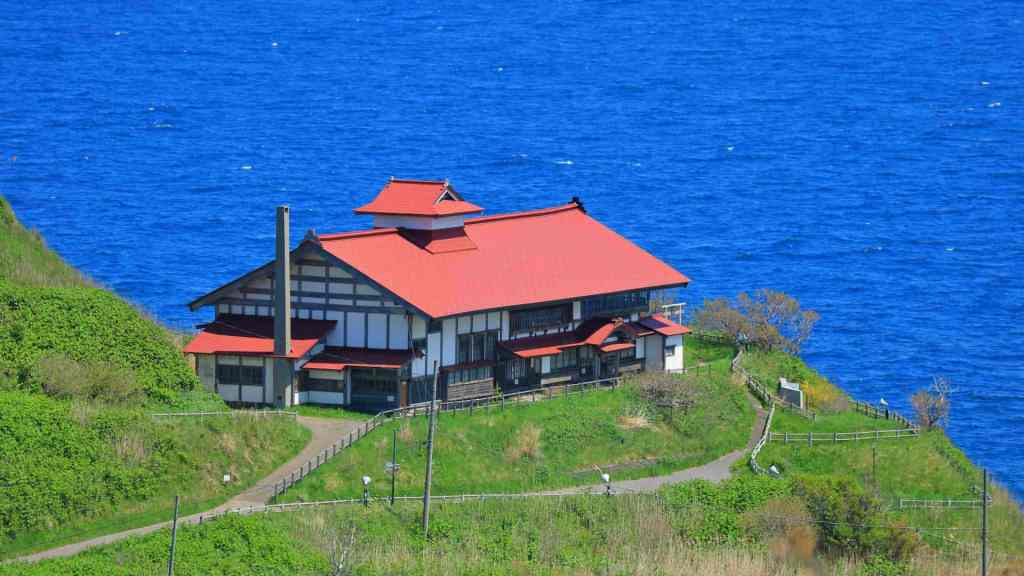
OTARU, Hokkaido — Situated atop a hill in this northern Japanese city, gazing out over the Sea of Japan, theOld Aoyama Villaserves as evidence of the wealth generated by herring fishing from the Meiji period (1868-1912) up until the Taisho period (1912-1926). Constructed by Masakichi Aoyama and his daughter Masae to host visitors, it is among the “herring mansions” that represent the luxury of that era.
The building of the villa required assembling approximately 50 skilled carpenters and artisans from Yamagata Prefecture, where the primary branch of the Aoyama family resided, and it took six and a half years to finish in 1923. The villa includes a main residence, an annex, and a storage building for documents, highlighting premium woods sourced from various parts of Japan. The refined environment is complemented by artworks from famous artists, such as Fusetsu Nakamura (1866-1943), who is recognized for designing the logo of the food company “Shinjuku Nakamuraya.”
Present owner Michio Sato, 80, acquired the empty villa roughly 40 years back and carefully restored it to its original condition. It has been open for visitors since 1989 and was recognized as a nationally registered tangible cultural asset in 2010. The villa also features in the well-known manga “Golden Kamuy.”
Sato conveyed his commitment, stating, “This cultural asset reflects the history of Hokkaido. I have a feeling of responsibility to protect it here.” He carefully examines for any damage by checking both the inside and outside every day, ensuring its conservation.
(Japanese original by Toshiki Miyama, Hokkaido Photo and Video Department)
* * *
The Japanese edition of this article was first released on March 15, 2026.
This collection delves into Japan’s remarkable architecture and the mysteries of the past. Read more articles on Retro Japan.here.





Leave a Reply