
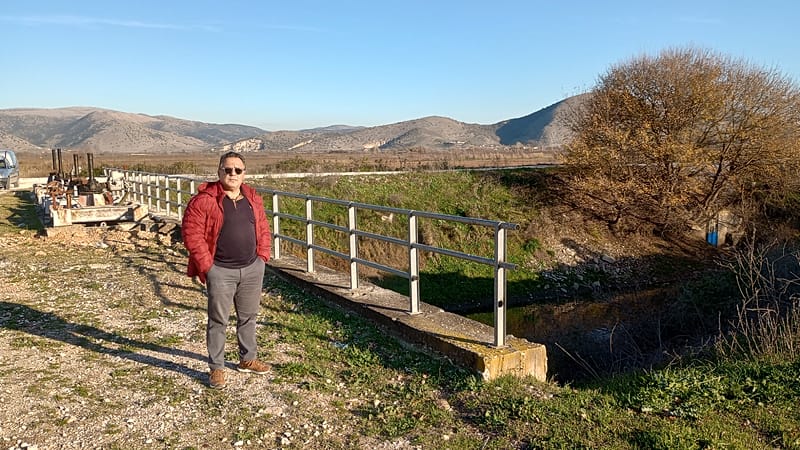
If there’s one thing that remains vivid in Vaios Giatropoulos’s mind from the worst night of his life, it’s the feeling of helplessness in his son’s eyes. “Now what, dad? We’ve lost everything,” his son had asked him, crying.
They had been on the roof of their semi-truck for nine hours as floodwaters dangerously approached their feet before they were saved. Storm Daniel, whichstruck central GreeceIn September 2023, their hometown of Palamas was left in ruins, with a disordered combination of mud, wreckage, dead livestock, and broken lives remaining in its wake.
In the end, Giatropoulos relocated with his family to a village where their house is situated on elevated land. Going back is not an option. “I don’t want to experience that feeling of fear with every raindrop. For several months, we were worried it might flood again. I even considered seeing a psychologist,” he remembers.
Nevertheless, he believes his family is lucky because they managed to find a new home close by in a short time. Many people from Palamas, he mentions, had to move to nearby towns, to Athens, or even overseas in pursuit of a better life and more arid conditions.
Millions of Europeans have been uprooted due to severe climatic conditions
Giotopoulos is part of an increasing number of Europeans: the continent’s initial climate refugees. Internal movement within countries is no longer just a theoretical topic, as more individuals are impacted by hurricanes, floods, wildfires, and dry spells.
The Geneva-based NGO Internal Displacement Monitoring Center (IDMC) estimates that approximately 413,000 people were displacedWithin the EU from 2008 to 2023. To date, 2023 has emerged as the most severe year in history, with more than 200,000 Europeans displaced internally, primarily caused by wildfires and storms.
Nevertheless, the impact differs significantly across various nations.
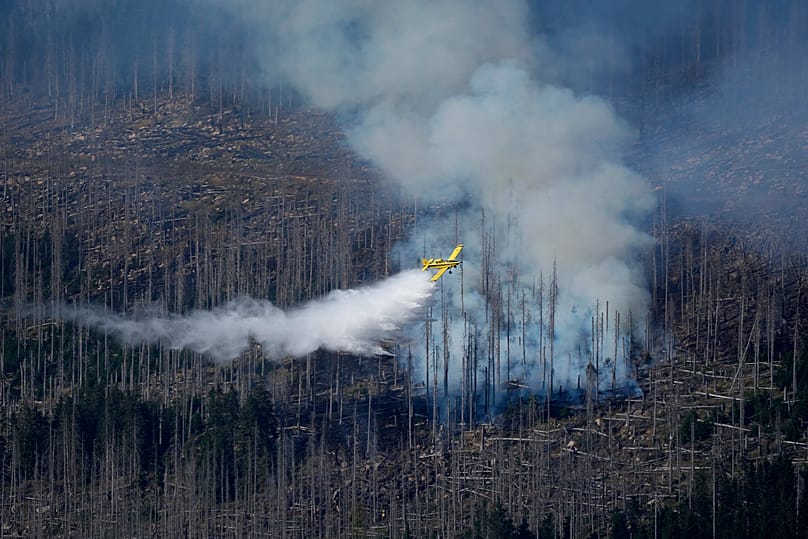
Germany is experiencing severe wildfires and flooding.
In Germany, the kind of severe weather that concerns people the most varies depending on the area.
In the northern region, a growing trend towards dry conditions has led to more frequent and intense wildfires. Last year marked Germany’s most severewildfireThe highest recorded area in hectares affected by fires. Although most residents in this area are not at risk of wildfires threatening their homes, some farmers have already started experiencing the impacts of decreasing rainfall.
In many parts of southern and western Germany, the greatest threat is not a lack of water but an excess of it.
The IDMC documented 84,000 instances of internal displacement in Germany between 2008 and 2024. Most of these (78,000) occurred due to flooding.
The devastating Floods in the Ahr Valley in 2021one of the most significant natural catastrophes in Germany’s recent past, resulting in 134 fatalities and impacting approximately 40,000 others.
Martin von Langenthal, who served as deputy head of the EU Civil Protection and Resource Management Unit for the Red Cross during the disaster response, believes that around 3,500 individuals were at least temporarily forced to leave their homes, with many residences needing significant repairs or complete reconstruction.
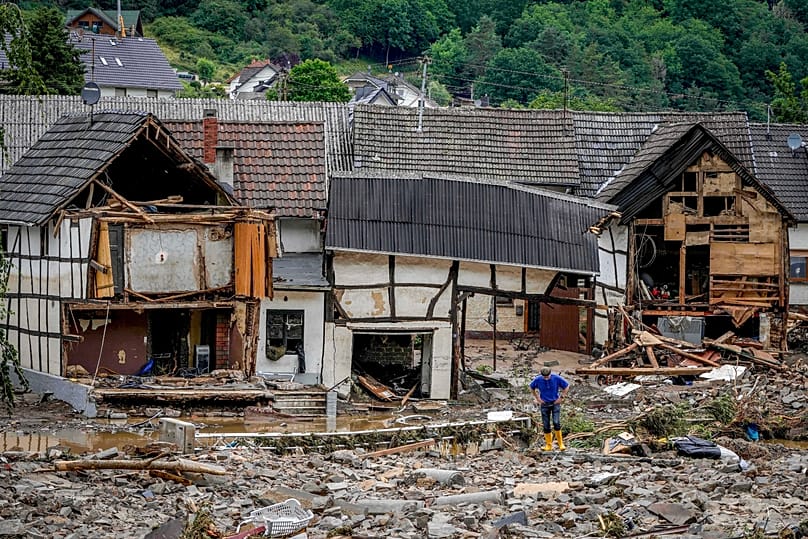
In addition to the immediate physical damage, those who survived had to deal with ongoing shortages of resources, reside in areas with damaged infrastructure such as collapsed bridges and broken sewage systems, and experience a critical shortage of necessary medical care, physicians, and medication.
A lot of people were able to return to their homes relatively quickly, but there was a significant group who could no longer live in their houses because they had been completely destroyed or were too damaged to enter,” Langenthal says. “For these individuals, container homes and similar temporary shelters were originally designed for short-term use, yet the containers were still being utilized more than two years later.
A Greek village affected by flooding divided into two parts
Because of its position in the Mediterranean, Greece is highly susceptible to climate-related disasters. The IDMCapproximates that almost 300,000 Greekshave been forced to leave their homes since 2008, with the majority because ofwildfires, storms and floods.
For instance, the village of Vlochos in Thessaly, central Greece. Located at the lowest area in the region, the village has historically been vulnerable toflooding. Elderly residents still recall with anxiety the floods of 1953 and 1994, when sections of the village were damaged.
But when Storm DanielHit in 2023, the extent of the damage was without precedent. In numerous residences, water levels reached up to two meters, rendering them uninhabitable with all furnishings ruined.
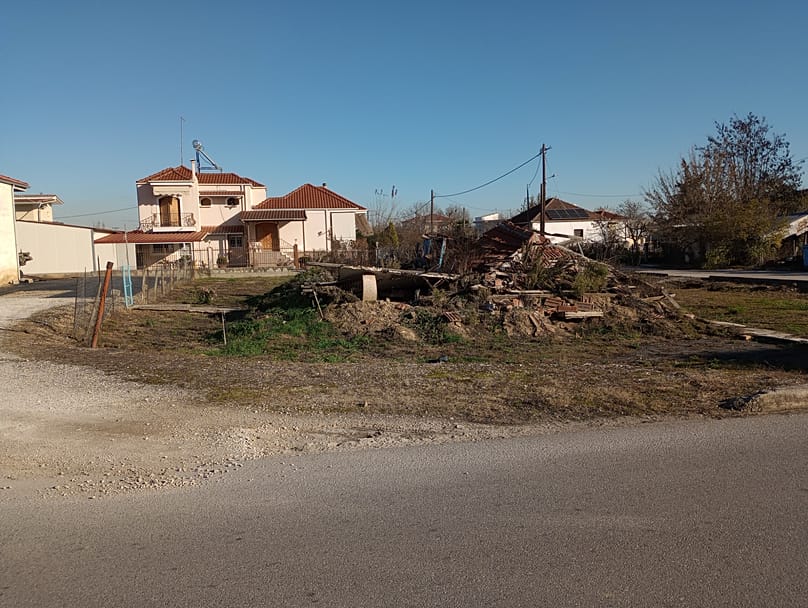
In the initial weeks after the storm, a feeling of unity was present. Younger residents assisted the elderly, and families exchanged whatever supplies they possessed, according to Vassilis Kalogiannis, the village’s mayor, who speaks with a bittersweet blend of pride and sadness.
However, this unity quickly faded as the magnitude of the catastrophe became evident, making it apparent that moving the community to higher ground could be the most effective way to avoid future calamities. The government has presented this possibility, contingent upon it being approved by a significant majority of the village’s inhabitants.
Where do we go? This is our home.
In the nearby village of Metamorphosis, approximately 95 percent of familiessupported moving in a vote, partly due to the village having been flooded several times recently.
“Many people are keen to leave, having seen the water rising to their rooftops. During rain, numerous individuals depart even when there’s no actual threat,” states Petros Kontogiannis, head of Metamorphosis.
Conditions vary only a few kilometers away in Vlochos, where residents are split – a tough situation that numerous communities throughout Europe may soon encounter asclimate change wreaks havoc.
The discussion has turned aggressive, occasionally leading to intense disputes and even physical fights. “Everyone is completely out of their minds since the storm. It’s a type of group PTSD,” mentions a local inhabitant who prefers to stay unidentified.
Numerous locals have relocated to different villages or urban areas, but continue to consider Vlochos as their hometown and advocate for the village to be moved to a location less vulnerable to flooding. “Our village is situated in an inappropriate area. It’s the lowest point in Thessaly, and since 1953, it has consistently faced risks,” explains Panagiotis Panagiotopolos, a resident who currently resides in a neighboring town. “The plan for Metamorphosis is to relocate, even though it is two meters higher than Vlochos,” he further mentions.
Not everyone is convinced that relocation is the solution, though. “Where should we go? This is our home,” says Apostolos Markis, a former police officer who wishes for the village to stay in its current location.
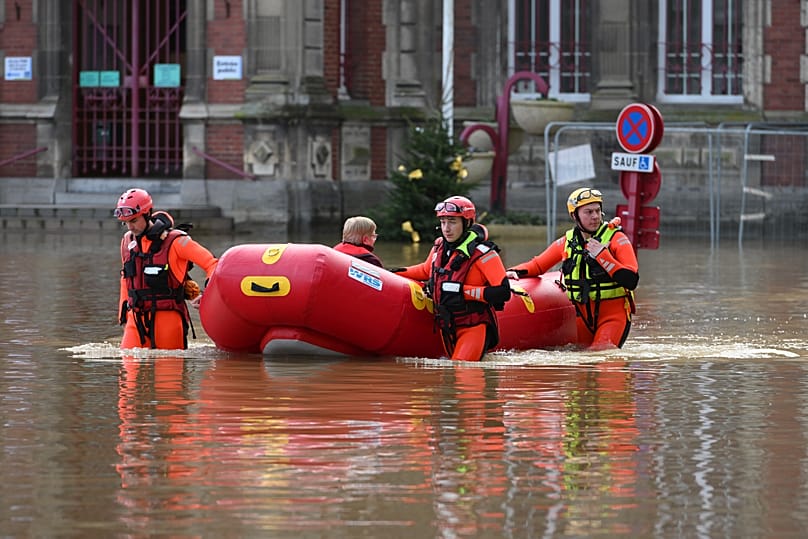
Northern France under water
Vincent Maquignon, 54, will never again see his mother’s face. The last pictures he had of her were carried away by waves of mud thatfloodedhis residence. On 2 January 2024, the father of two sons had just a short time to retrieve what he could from his home, including official papers and some personal items that he quickly took with him.
He spent 23 years residing in this home located in Blendecques, northern France. “This house symbolized our family’s journey: first steps, first tears,” he recalls with difficulty. “We had to abandon everything in the blink of an eye. There was 1.4 meters of water on the ground floor.”
It was not the first instance of flooding in his town. However, each year, the situation became more severe. Its designation as a high-risk flood area made it so.selling his houseextremely difficult. “We were stuck,” he remembers.
That frosty day signified the exit of almost800 people from Blendecques.
“We are France’s first climate refugees. My family and I relocated to a home on higher ground in a nearby town. It took us more than a year to feel secure again, but whenever it rains, people become worried,” Vincent explains.
Although northern France is experiencing more intense flooding, theSouth is burning, the coastline is eroding and Alpine glaciersare melting. Throughout the nation, most local governments encounter at least one significant natural hazard.
Around 25% of France’s population state they would contemplate relocating due to climate-related dangers in their local area, according toa recent Odoxa surveyIn 2022, approximately 45,000 individuals were forced to leave their homes because of environmental catastrophes, positioning France among the European nations most impacted by climate change. The current emphasis is moving from questioning if people will relocate to considering the magnitude of such displacement.
A landmass in motion
Should some of the most severe projections from climate scientists come true, Europe is anticipated to be 2.5°C hotter than pre-industrial times by 2050. This would result in the southern regions enduring extended periods of drought and more regular extreme heat events, while central and western parts of Europe could see increased rainfall and a greater likelihood of floods.
Similar to Giatropoulos in Greece and Maquignon in France, millions will need to relocate within their own countries to find jobs and improved access to public services, or to live in a more secure environment.
In the years ahead, we will see an increasing number of internal climate migrants,” states Pavlos Baltas, a demographer at Greece’s National Centre for Social Research. “When individuals can no longer reside in a particular location, they will relocate.



Leave a Reply