
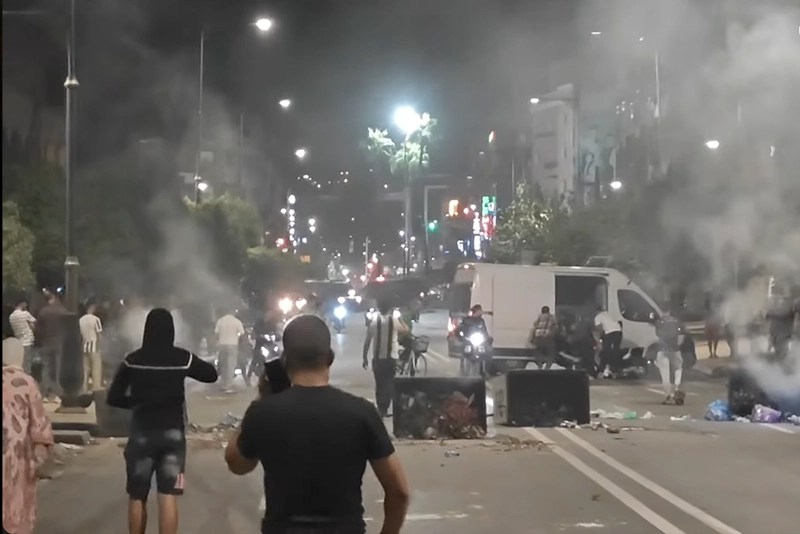
A sudden increase in “disturbing” videos showing ongoing assaults on commercial drivers has sparked a nationwide discussion about road safety and the legal safeguards provided to the transportation industry.
The commotion comes after a series of violent events, particularly the attack on a truck driver in Kenitra, the unfortunate death of a taxi driver in Casablanca after an assault, and recent video showing a truck driver being thrown stones in Laouamra. For those working in the industry, these are no longer considered “isolated incidents” but a concerning trend that endangers the safety of drivers, passengers, and the country’s transportation system.
Monitoring and prevention mechanisms
From a legal perspective, the existing system already makes violence a criminal offense with substantial prison penalties. Nevertheless, certain activists believe that the specific dangers encountered by drivers in open public areas necessitate a distinct legal classification.
Abbas El Ouardi, a Public Law professor at Mohammed V University in Rabat, advises caution when it comes to “specialized laws.” He cautions that establishing a distinct criminal code exclusively for drivers might contradict the concept of “equality before the law” and result in occupational discrimination.
Alternatively, El Ouardi proposes that the best strategy involves preventive actions, noting that “the answer is not legal distinctions, but a thorough protection framework.” This entails increasing CCTV presence on key roadways, upgrading in-vehicle alert systems to enable early identification of threats, and creating specific hotlines for drivers to guarantee quick security response in critical situations.
Technological protection
The Democratic Transport Union is advocating for a digital transformation in public transportation. Samir Faraby, the union’s secretary general, states that by 2026, the lack of surveillance systems in buses, taxis, and trucks is “unacceptable.”
“Installing cameras in vehicles is no longer a complicated technical decision; it is a straightforward and effective way to prevent violence,” Faraby said. He advocated for the creation of a central monitoring center where security agencies can monitor public transport activity in real time, enabling prompt action.
The risks are even greater for those who transport delicate items like fuel and gas. Faraby mentioned that assaults on these drivers present a “double danger,” as any disruption to dangerous materials could result in a major disaster.
Socio-economic conditions
In addition to security hardware, the union highlights a more profound “state of congestion” in the industry. Faraby connected increasing tensions, such as disputes among professionals, to growing pressure caused by rising fuel prices and falling earnings.
“Social and professional instability has a direct effect on the mental health of drivers,” Faraby stated.
The post Severe attacks and stone-throwing events cause concern regarding roads in Morocco appeared first on English – Morocco News.



 jasdooit
Leave a comment