
I have recently given the go-ahead for the renewal of my team’s AI tokens to assist with coding and product development. For a small company like ours, AI has now become essential.
Previously, transforming a product concept into a physical item required one to two weeks. Today, it can be accomplished in just a few hours through “vibe coding,” where artificial intelligence assists in generating code from spoken or written directions.
In just a few years since its creation, AI has introduced significant convenience. Whether it’s writing or coding, individuals can now complete tasks more quickly, efficiently, and with a higher standard of quality. However, this raises a commonly asked question: Is AI diminishing creativity?
The query appears logical, yet it misidentifies the issue. No machine is taking away human creativity. If something is being diminished, it isn’t due to harmful technology; it’s because of how individuals rely on ease and simplicity.
Artificial intelligence does not suppress creativity by making decisions on our behalf. Instead, it performs a more nuanced role. It guides individuals directly to a nearly optimal outcome, thereby eliminating the progression of thought—the process through which ideas are formed, evaluated, diverge, and are restructured.
 |
|
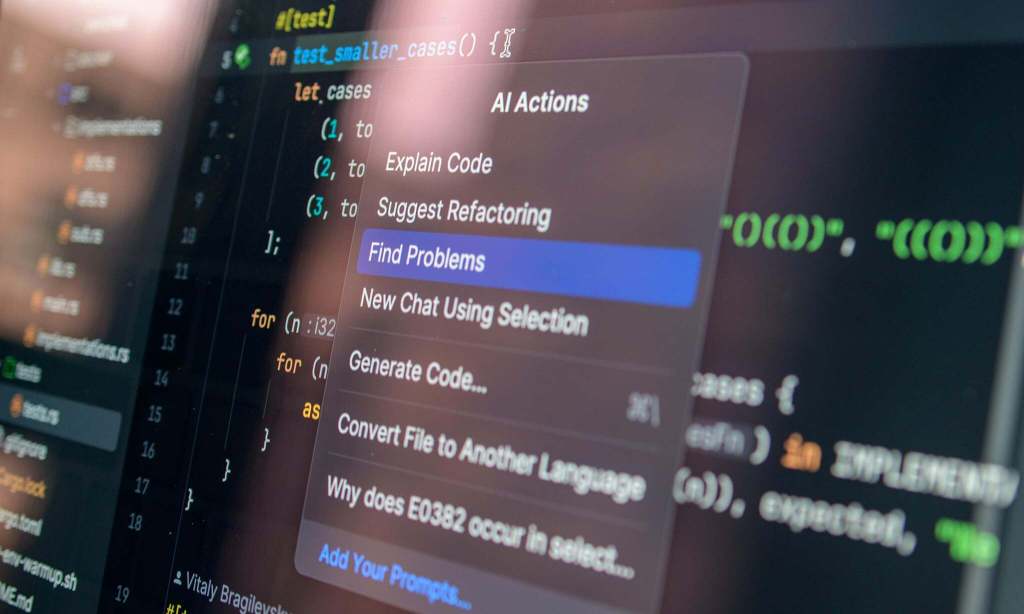
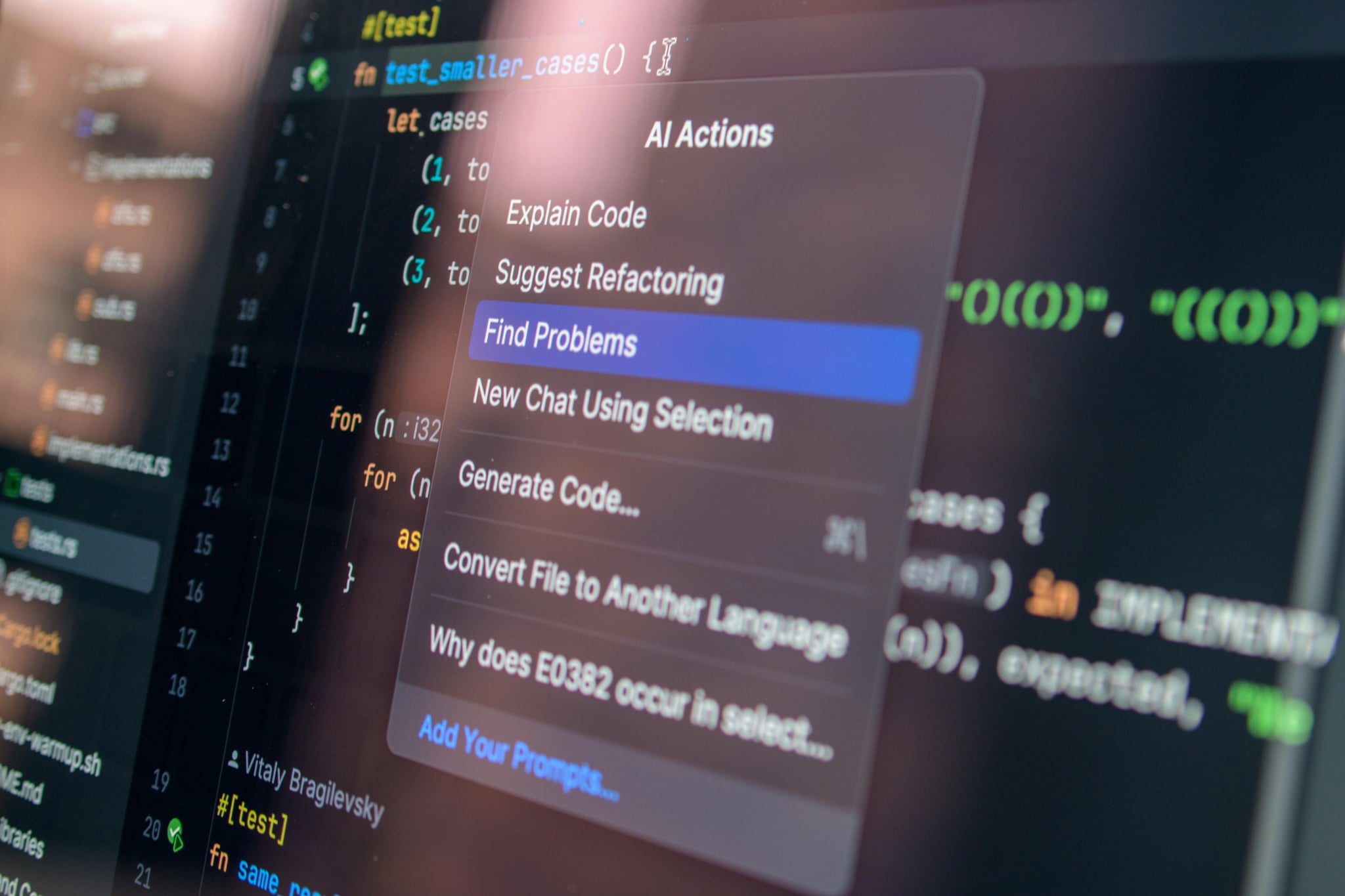
A developer is writing code with the assistance of artificial intelligence. Image from Pexels |
In written form, this occurs almost instantly. Artificial intelligence is capable of generating smooth, grammatically correct, and logically coherent paragraphs. Authors now begin from a more elevated starting point than ever before. However, as they no longer face challenges with sentence construction, another element diminishes: A feeling for the significance of words.
Previously, every draft and revision enabled writers to enhance accuracy and sharpen their ideas. When this process is lost, the skill diminishes. They may still create decent text, but they lose the capacity to express exactly what they intend, and even the ability to instruct AI to do so. As expressive skills decrease, the foundation of each request becomes unclear.
The emergence of vibe coding reflects a comparable trend in software development. Following the initial enthusiasm for speed, developers are now overwhelmed by numerous “best” versions generated by AI. Each one functions effectively and appears optimal based on the provided request. However, the true constraint isn’t the AI’s capacity to resolve issues, but rather the clarity of the request itself. When engineers stop constructing logic from scratch—a process that once required them to grasp systems at a fundamental level—their skill in articulating problems accurately starts to diminish.
Artificial intelligence can broaden the range of responses, but not the range of inquiries. A developer can create numerous “accurate” variations, yet all remain limited by the quality of the input, which in turn is restricted by the developer’s own skills. Without learning through step-by-step processes, this limit remains unchanged. It simply produces repetitions more quickly and in various forms. When systems encounter unfamiliar situations, their capacity to identify issues and reconfigure also diminishes.
Many people assess creativity based on the end result. This overlooks its true essence as a procedure. A concept seldom emerges completely developed. It starts as pieces, is examined, and undergoes continuous changes, often becoming worse before it gets better. This pattern of mistakes and adjustments is where mental frameworks are reshaped.
AI performs the reverse. It delivers an optimized version almost immediately: consistent, rational, and in line with previous data. There are no steps back, no intermediate stages, no initial uncertainty. The outcome is improved and quicker. The internal process of thinking becomes invisible.
A comparable trend occurs in farming when cultivators shift from hand tools. Equipment increases efficiency, uniforms procedures, and ensures consistent outcomes. However, a different form of understanding is lost: the regular, everyday interaction with the earth.
If farmers don’t engage with the land daily, they become less aware of subtle variations, shifts in dampness, soil composition, and abnormal plant activity. They can continue to farm successfully as long as circumstances stay constant. However, when the surroundings alter, the problem isn’t the equipment. The problem is that they no longer perceive that the soil has undergone a change.
In all instances, the issue stems from the mechanism rather than the tool. When a system becomes sufficiently automated to eliminate intermediate steps, it doesn’t merely enhance results but also severs the process through which individuals constantly refine their understanding in response to real-world conditions.
Innovation goes beyond identifying the most effective solution within a set framework; it involves recognizing when the framework itself is no longer applicable. Each highly efficient system relies on the premise of consistent circumstances. Once this premise is disrupted, what becomes obsolete is not the outcome, but the way individuals perceive the issue.
Artificial intelligence solely assists individuals in locating answers more quickly, rather than recognizing when the question itself requires modification.
Excessive use of AI may give the impression of achieving a peak, but it is not the pinnacle of personal capability; it’s simply the height of aggregated data. Each refined baseline also represents a boundary.
Originality isn’t about being at the peak. It’s the journey of ascending, losing balance, falling, and rising again. When this cycle is substituted with a streamlined starting point, individuals might achieve improved outcomes in the short run, but at the expense of their capacity to challenge boundaries over time.
The danger does not lie in AI generating quality text. The danger is that users become accustomed to beginning from a perfect starting point. When the initial stage is consistently strong, the skill to improve diminishes. When everything arrives almost complete, the capacity for revision weakens.
If individuals cease to develop their skills in communication, they not only lose authority over the outcome but also over the inquiry itself.
The solution is not to avoid artificial intelligence; rather, it is to intentionally maintain the elements of the process that technology eliminates. It is not about competing with machines, but about keeping the capacity to perceive, communicate, and identify anomalies.
Keep producing and refining rather than settling for pre-made results.
Continue developing and comprehending systems rather than merely guiding them via prompts.
Similarly, as in agriculture, avoid losing direct connection with the “soil” of your own area of expertise.




 jasdooit
Leave a comment