
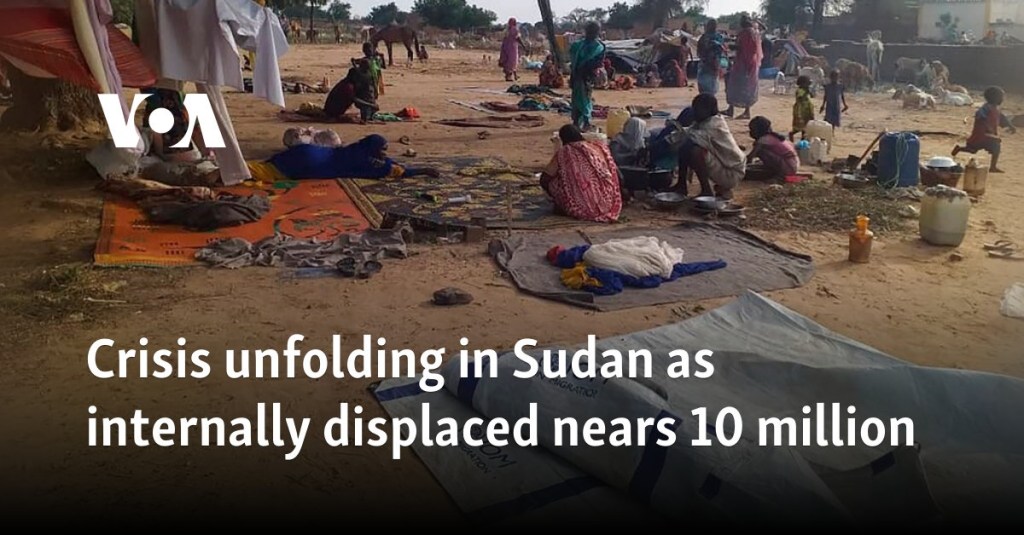
May 3, 2026 (KHARTOUM) – On Sunday, the Camp Coordination and Camp Management (CCCM) cluster issued a warning that millions of displaced individuals are at increased risk of gender-based violence and sexual exploitation because there is no funding available for site management.
The CCCM cluster, a collaborative effort among agencies aiding people displaced due to conflict and natural disasters, mentioned that financial tracking documents indicate no monetary aid has been allocated for site management in 2026. Around $15 million is needed to deliver basic services to 4 million internally displaced individuals who currently require site management support.
The group emphasized that the funding shortfall is making it more challenging to recognize and tackle risks associated with gender-based violence, sexual abuse, and child protection. With no consistent presence to carry out safety inspections and ensure proper lighting, privacy, and confidential reporting systems, at-risk groups continue to be at risk.
Sudan is currently home to around 9.1 million displaced individuals, of which 4 million need site management assistance. The CCCM cluster plans to assist 1.7 million people, with 1.5 million classified as a top priority.
The statement also highlighted that the shortage of resources heightens the likelihood of forced evictions and conflicts over property rights in schools, public structures, and informal settlement areas. This is due to the lack of timely monitoring and official communication with local authorities or property owners.
“The absence of funding for site management leads to less fair aid,” the statement highlighted, adding that families encountering difficulties with mobility, paperwork, language, age, or disability are frequently neglected without proper oversight.
Other dangers involve public health emergencies and a higher risk of floods and fires caused by overpopulation, inadequate drainage systems, and hazardous cooking spaces. The group also cautioned that without community reporting and oversight, the civilian nature of the camps is at risk due to the possible existence of armed groups, forced conscription, or disruption of aid distribution.
In reaction to the financial deficit, the group is urging stakeholders to enhance government responsibility and involvement. The cluster intends to employ mobile units to focus on key camps rather than keeping permanent teams at each location, a decision in line with its 2025–2029 plan.
Provided by SyndiGate Media Inc.Syndigate.info).



 jasdooit
Leave a comment