
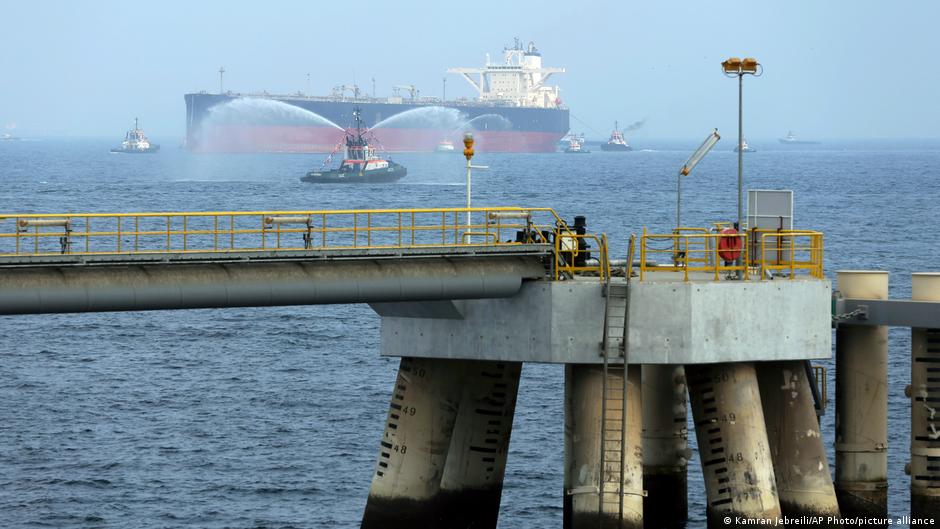
The United Arab Emirates has confirmed missile and drone strikes originating from Iran, marking the first such incidents since the April ceasefire. This occurs as the US works to assist vessels passing through the Strait of Hormuz. Here’s the latest.
The United States reports that two commercial ships traveled through the Strait of Hormuz, accompanied by a US Navy escort.
UAE states that its air defense systems are countering missile and drone attacks, with reports of fires at an oil facility.
Iran states that meddling in the Strait would be considered a breach of the ceasefire.
Tehran is considering Washington’s reaction to the 14-point plan
The United States relocated 22 personnel from the detained Iranian vessel to Pakistan.
Here are the most recent updates fromthe conflict in Iran and the broader Middle East on Monday, May 4:
Iranian media cautions the UAE against a ‘mistake’
State-backed Iranian media has cautioned that the United Arab Emirates and “all of its interests” might be at risk if Emirati officials “take a wrong step.”
A semi-official news outlet, Tasnim, quoted “an informed Iranian military source” who cautioned that if the UAE supports Israel and acts against Iran, “they will face a lesson they will never forget.”
“The UAE is aware that it is in a very delicate situation, and this sense of insecurity is extremely harmful to it,” Tasnim reported, citing an anonymous source.
The remarks follow the UAE’s announcement of detecting several cruise missiles and drones launched from Iran’s direction, and it blamed Iran for attacking an empty oil tanker trying to pass through the Strait of Hormuz.
Commander of CENTCOM states that the US has reached out to ‘dozens’ of stranded vessels
The U.S. military’s Central Command (CENTCOM) has released a statement from its commander, Admiral Brad Cooper, regarding the operation known as “Project Freedom” initiated by President Donald Trump, aimed at facilitating the movement of commercial ships through the Strait of Hormuz, despite Iran’s attempts to regulate the route.
Cooper stated that the ships currently stuck in the Persian Gulf belonged to 87 nations and were “simply neutral and innocent observers” during the ongoing conflict.
“During the past 12 hours, we have contacted numerous vessels and shipping firms to promote the movement of traffic through the [Strait of Hormuz], in line with the president’s goal to assist ships in navigating the critical trade route safely,” Cooper stated.
The remark failed to specify the number of vessels that had replied to the US communication, whether their responses were favorable or unfavorable, or what constituted promising vessel movement.
Several hours prior, CENTCOM mentioned that two American-owned commercial ships had navigated the Strait “as an initial move.”
Cooper did not comment during a press call about whether CENTCOM considered the ceasefire to have ended, but claimed that Iran “engaged in aggressive actions” in the Strait of Hormuz on Monday, and stated “we will simply respond to that.”
He mentioned that military helicopters had destroyed six Iranian small boats that were aiming to attack civilian ships in the Strait. Trump also brought up this incident in a post on Truth Social.
German mine-sweeping vessel travels to the Mediterranean for a forward deployment
The German navy’s FGS Fulda, a mine-hunting vessel, has departed from the port in Kiel, northern Germany, heading towards the Mediterranean.
It is advancing to a forward deployment location in case it is required to assist a European operation in safeguarding sea transport through the Strait of Hormuz following a peace agreement between the United States and Iran.
The U.S. Embassy in Germany shared extensive information online regarding Monday’s deployment, as Berlin aims to ease tensions with Donald Trump after Chancellor Friedrich Merz’s remarks about the war earlier in the week and Trump’s strong reaction.
The embassy stated that Fulda was positioning itself to be able to reach the Gulf as swiftly as possible if needed. It mentioned that Germany could provide support in sea-based mine countermeasures, command and logistics, and aerial surveillance.
“Any deployment necessitates three distinct conditions: a lasting cessation of hostilities; a legal mandate according to international law; and approval from the German Parliament (Bundestag),” the embassy stated.
More German naval forces were anticipated to join the Fulda in the following weeks, according to the Embassy.
Crude oil prices increase amid rising tensions in Hormuz
Both standard oil prices increased significantly during Monday’s trading session amid rising tensions in the Strait of Hormuz.
Shortly after 1600 GMT/UTC, when European and Asian markets were closed but trading continued in the US, a barrel of Brent Crude was being sold for slightly more than $114 (approximately €97.50). This was higher than the price around $105 at the beginning of the day.
West Texas Intermediate, on the other hand, was being sold for approximately $105 per barrel, versus about $100 at the beginning of the day.
Throughout most of February, prior to the attacks on Iran, a barrel of Brent Crude was being sold for slightly over $65. It reached brief instances of trading above $120 during the conflict, and the highest daily average prices in recent weeks are just below the levels it was achieving on Monday night.
Other items that are shipped in large quantities via the Strait of Hormuz — such as liquefied natural gas, fertilizers, and aviation fuel — have also experienced significant increases in recent weeks.
Qatar denounces the Iranian strike on an unused UAE oil vessel
The Foreign Ministry of Qatar states it “firmly denounces” Iran over a reported drone strike on an empty oil tanker flying the UAE flag that occurred earlier in the day.
In an online statement, Qatar referred to the attack as “a clear violation of international law and the principle of free maritime movement, as well as a serious breach of Security Council Resolution No. 2817.”
Resolution 2817, approved in March of this year, criticized Iran for its strikes on Gulf nations and their properties following US and Israeli attacks on it, stating these actions violated international law and posed a risk to world peace. Russia and China chose not to vote, allowing the resolution to pass 13-0.
“The Foreign Affairs Ministry emphasizes the State of Qatar’s complete rejection of utilizing the Strait of Hormuz as a means of pressure, urging its immediate and unconditional reopening, and stating that the freedom of passage through this crucial waterway is a well-established principle that should not be undermined,” the ministry stated.
Despite being a much less active exporter compared to the UAE, oil and gas remain significant exports for Qatar.
UAE confirms missile and drone strikes, blaze at oil installation
The United Arab Emirates has issued additional alerts regarding potential missile and drone attacks. The Defense Ministry reported that four missiles were launched toward it, but all were either stopped or fell to the ground.
“Four cruise missiles were observed moving towards the nation from Iran. Three were effectively stopped within the country’s maritime boundaries, while the fourth landed in the ocean,” the ministry stated.
In a later statement, the Gulf nation, situated just across the Strait of Hormuz, mentioned that its air defense systems were “actively involved in operations against missiles and UAVs,” referring to unmanned aerial vehicles or drones.
The government asked people to stay composed and adhere to any directions provided by authorities.
In the meantime, the media office of the port city of Fujairah stated that a fire erupted at the Fujairah Oil Industry Zone, which it referred to as an attack coming from Iran. It mentioned that civil defense units were quickly sent to the location to control the fire.
No attacks have occurred in the UAE in recent weeks since the truce between Iran and the US was implemented on April 8.
WATCH — How China, with its high demand for oil, protected itself from the impact in the Gulf
China is the largest oil importer in terms of volume globally — and by a significant difference.
It is also broadly seen as the largest purchaser of Iranian oil through so-called “teapot refineries,” which can bypass restrictions without involving Beijing.
Even though it is increasing its local oil production, approximately three-quarters of its oil is still imported.
So why does China appear to be in a stronger position compared to many other Asian nations during the current shipping delay? This video provides an explanation:
South Korea is looking into the reason behind a fire on an HMM vessel in the Strait of Hormuz.
The South Korean Foreign Ministry has stated that it is looking into the reason behind a fire and explosion on a vessel managed by HMM in the Strait of Hormuz.
It mentioned that 24 crew members were aboard.
The ministry stated that the vessel was moored near the United Arab Emirates within the Strait of Hormuz when the fire occurred, indicating it was among the group of ships awaiting or seeking to pass through the waterway.
The ministry stated that it would work closely with the appropriate nations to identify the reason behind the fire and the extent of the damage incurred.
“The bureau of consular affairs is checking details about a South Korean ship being attacked. We have initially confirmed that there are no injuries to our citizens,” said an official from South Korea’s Yonhap news agency.
A representative from HMM shipping company informed Reuters news agency that there have been no accounts of injuries or fatalities, and that the fire started in the engine room of one of their bulk carriers.
UAE issues its first missile alert in weeks, but later confirms everything is safe
Authorities in the United Arab Emirates have released their initial mobile phone notification regarding possible missile dangers since early April, although they quickly issued a clearance.
An alert was issued as the conflict between the United States and Iran, concerning Donald Trump’s intention to deploy the military to assist commercial ships in passing through the Strait of Hormuz, risked intensifying.
It also followed soon after the UAE alleged that Iran attacked an empty oil tanker.
The Ministry of the Interior stated less than half an hour after sending the SMS alert that individuals could return to their usual routines “while maintaining caution and implementing the required safety measures.” Initially, it had advised people to find a secure location and wait for additional guidance.
The United Arab Emirates, located just across the Strait of Hormuz, faced regular attacks in the early stages of the conflict following the US and Israel’s strikes on Iran, especially in March.
However, following the Iran-US ceasefire that took effect on April 8, the situation has significantly eased.
The United States reports that two commercial ships “successfully passed through” the Strait of Hormuz.
The U.S. military announced that two Navy guided-missile destroyers have entered the Gulf to overcome an Iranian blockade, while two American-owned merchant ships passed through the Strait of Hormuz, as Iran attempts to prevent unauthorized movement.
“US Navy guided-missile destroyers are currently active in the Arabian Gulf following their passage through the Strait of Hormuz, as part of support for Operation Freedom,” stated Central Command (CENTCOM), which oversees military activities in the area, mentioning Donald Trump’s latest initiative aimed at assisting commercial ships navigate the strait.
Iran and many others call the sea in question the Persian Gulf instead of the Arabian Gulf, but it refers to the same marginal sea within the Indian Ocean.
“U.S. troops are currently supporting initiatives to resume transportation for commercial vessels. As an initial action, two American-owned merchant ships have successfully passed through the Strait of Hormuz and are now en route safely,” CENTCOM stated.
Iran had previously stated that it would view US initiatives to direct merchant vessels through the Strait of Hormuz as a breach of the truce.
During the truce, both military forces kept attempting to limit sea movement—Iran aiming to dominate the Strait of Hormuz and the US striving to isolate Iran’s ports.
The U.S. military claims that reports from Iran about missiles hitting a warship are untrue.
The US military’s Central Command, which oversees activities in the Middle East and the Gulf region, states that claims by Iranian sources about missiles hitting a US vessel are incorrect.
Iranian state media reports that Iran’s Islamic Revolutionary Guard Corps targeted a U.S. warship with two missiles,” Centcom stated online. “No U.S. Navy vessels have been hit. U.S. forces are assisting in Operation Freedom and maintaining the naval embargo on Iranian ports.
Semi-official news outlets such as Fars and the Iranian Labour News Agency have claimed that Iran conducted attacks on a U.S. ship in the area southeast of the Strait of Hormuz near Iran’s coastline, alleging that the vessel had “breached maritime security and navigation standards.”
The conflicting assertions arise during the introduction of “Project Freedom,” a controversial initiative from the US Navy aimed at assisting specific commercial vessels through the Strait, while Iran strives to block the majority of ships from passing through the narrow passage.
U.S. President Donald Trump unveiled the proposal on Sunday, although specifics about its potential contents remain unclear.
Iran reacted by stating it was a breach of the terms of the delicate ceasefire that has largely stopped active combat between the two parties, aside from the naval disputes regarding access to the strait and other waters in the region.
UAE alleges Iran carried out a drone strike on an empty oil vessel
The United Arab Emirates has alleged that Iran utilized drones to target an unoccupied oil tanker while it was navigating the Strait of Hormuz.
The vessel “Barakah” is owned by the Abu Dhabi national oil company ADNOC.
ADNOC stated that the Barakah facility was targeted by two drones, although no casualties were reported.
“The UAE emphasized the importance of Iran ceasing these unprovoked attacks, committing fully to an immediate end to all hostilities, and completely and unconditionally opening the Strait of Hormuz,” said the UAE’s Ministry of Foreign Affairs.
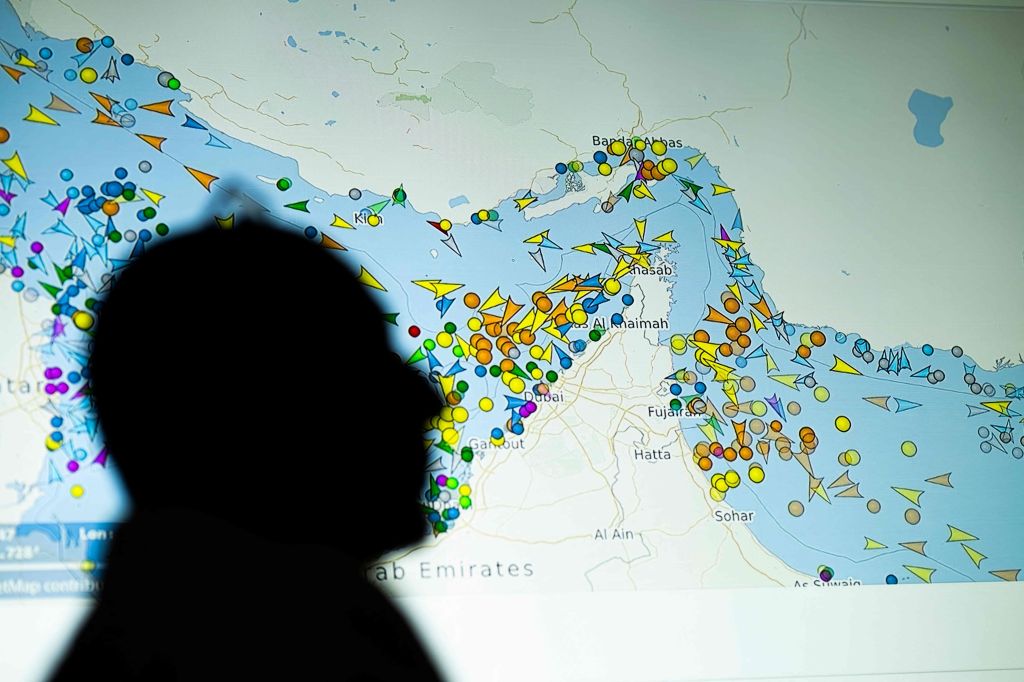
Iran has prohibited numerous foreign ships from traversing the Strait of Hormuz since the US and Israel started targeting it on February 28. It has warned of striking vessels that move through the passage without permission.
The UK Maritime Trade Operations (UKMTO) organization previously stated that a tanker in the area was struck by unidentified projectiles.
Crude oil prices increase even with Trump’s initiative to direct vessels away from Hormuz
Crude oil prices climbed on Monday, as financial markets showed little enthusiasm for US President Donald Trump’s proposal to assist vessels stuck in the critical oil passage, the Strait of Hormuz.
Brent crude first increased by 1.54% to $109.84 per barrel for July delivery, while U.S. crude gained more than 2% to reach $104.18, indicating increased worries about supply.
Traders continue to doubt the success of the US initiative.
The US Central Command stated it would back the effort with 15,000 soldiers, naval vessels, planes, and unmanned aerial vehicles, although Trump has provided limited operational information.
A follow-up report from Axios suggested that the US Navy might not directly protect merchant vessels, increasing market instability.
Brent crude prices climbed further later, surging past $2.50 to reach $110.73 per barrel, following a recovery from initial declines during Asian market hours.
Crude oil prices have shown significant fluctuations—last week, they surpassed $126 per barrel, reaching the highest point since 2022, after Russia launched a full-scale attack on Ukraine.
ANALYSIS: What is the strategy of Europe to ensure the safety of Hormuz?
The United Kingdom and France are at the forefront of initiatives to create a multinational mission aimed at protecting maritime traffic through the Strait of Hormuz. However, uncertainties still exist regarding the extent of the operation.
‘S Anchal Vohra examines the role of Europe in the Strait of Hormuz.
U.S. sends crew of captured Iranian vessel to Pakistan
On Monday, Islamabad verified that 22 crew members from an Iranian container vessel captured by the US would be relocated to Pakistan.
The Foreign Ministry of Pakistan referred to it as a “confidence-building measure” backed by both parties. The statement mentioned that the crew would subsequently be handed over to Iran.
Read the complete report regarding the transfer of Iranian ship crew members to Pakistan.



 jasdooit
Leave a comment