
The 9th nationwide simultaneous local elections are approaching within a month. These local elections, scheduled for the 3rd of next month, were restarted in 1995, 34 years after they were halted following the May 16, 1961 coup.
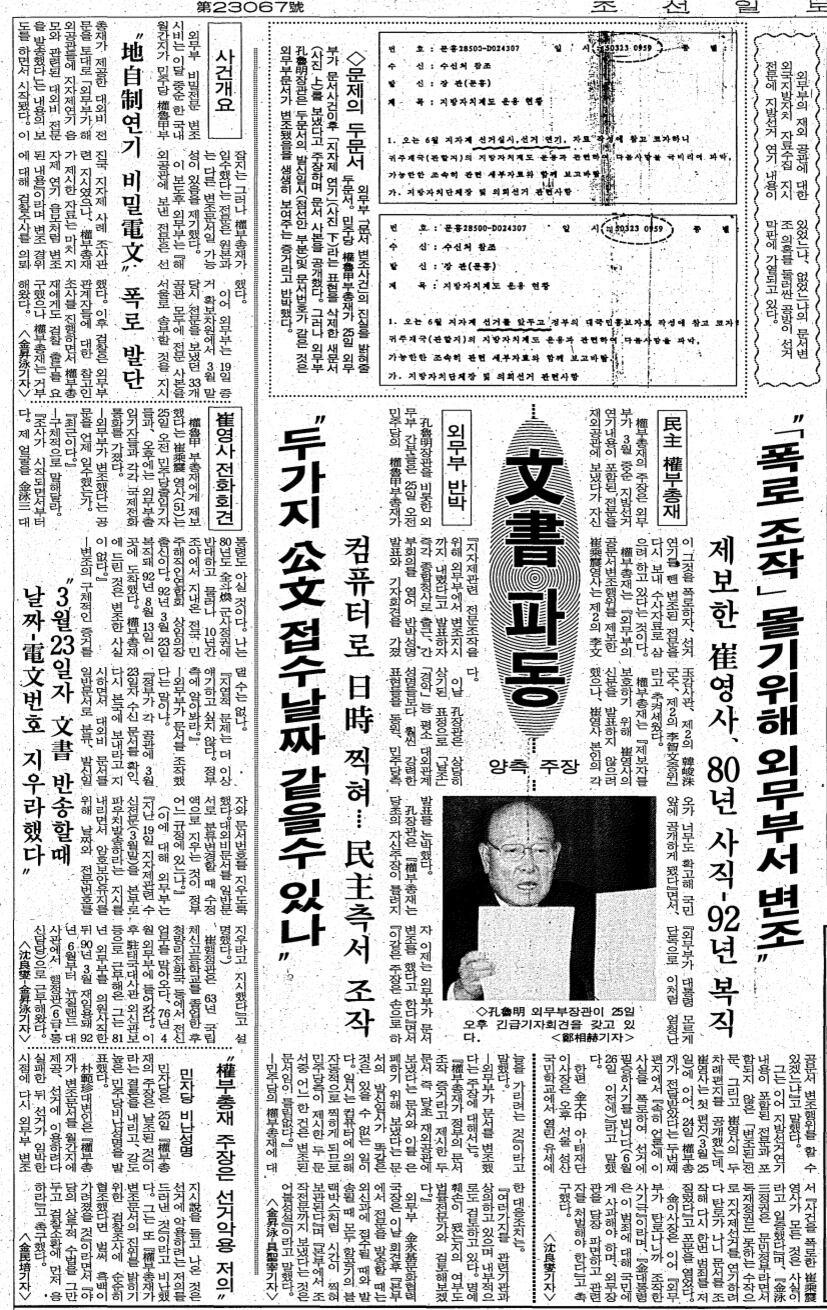
During the last phase of the 1995 local elections, the Democratic Party stated, “The Kim Young-sam administration sent a telegram directing the postponement of overseas voting for the local elections,” causing major political unrest. It was later discovered that Consul Choi Seung-jin from the South Korean Embassy in New Zealand had modified the telegram and provided it to the Democratic Party, an event seen as highly sensitive at the time. Recently, a special report by the journalist who initially reported the story has been published, generating interest.
“Kwon No-gap White Biography” Receives Acclaim in Political Circles
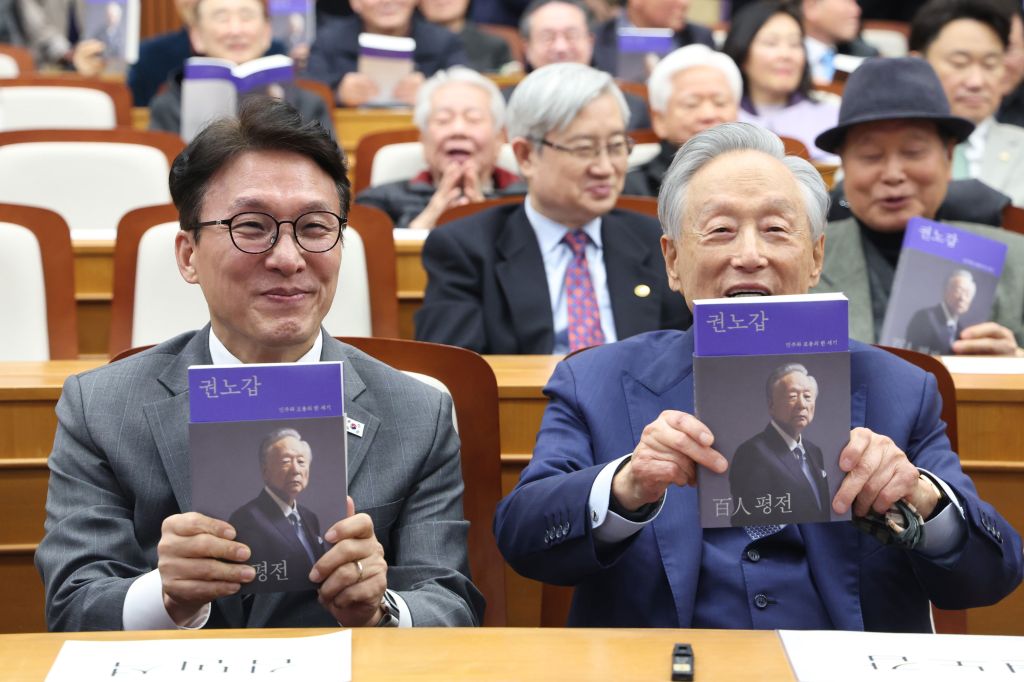
In March, on the occasion of the 96th birthday of Kwon No-gap, the head of the Kim Dae-jung Foundation, the book *Kwon No-gap White Biography* was released. The volume includes writings from 117 politicians, academics, and journalists reflecting on Kwon’s political journey, sharing their insights and experiences. The launch event was graced by Prime Minister Kim Min-seok, former National Assembly Speakers Kim Won-ki, Lim Chae-jeong, Chung Sye-kyun, Moon Hee-sang, and Park Byeong-seug, former Prime Minister Kim Boo-kyum, Unification Minister Chung Dong-young, Sangdo-dong faction leader Kim Deok-ryong (chairman of the Kim Young-sam Democratic Center), former Grand National Party (GNP) leader Seo Chung-won, and former Saenuri Party leader Kim Moo-sung, among many others, generating a vibrant atmosphere.
The book, which strongly acknowledges Kwon’s efforts while supporting President Kim Dae-jung through difficult times, features writings from journalists who were close to him. One of these is an article by a journalist who was involved with the 1995 diplomatic document forgery scandal, the most significant controversy during the resurgence of local elections. At that time, the journalist was working in the political section of Dong-A Ilbo and described how he acquired the documents from Kwon and reported on them in *Shindonga*, a related publication.
Reporter Y’s Exclusive: ‘National Security Planning Agency (NIS) Discussed Delaying Local Elections’
By the end of 1994, during the mid-term of the Kim Young-sam government, the political focus was on the upcoming local elections. Their resurgence following the May 16 coup made them an indicator for the 1997 presidential election.
Nevertheless, as President Kim Young-sam’s popularity declined, there were talks within the ruling party about delaying the elections. As reported by Reporter Y in *Kwon No-gap White Biography*, he was a junior reporter at Dong-A Ilbo in November 1994, covering the Donggyo-dong faction. One late night, he went to Kwon’s home in Pyeongchang-dong, Seoul. While exchanging a regular greeting, Kwon, who was then a member of the Democratic Party’s Supreme Council (later becoming deputy leader during the document forgery scandal), suddenly said, “Wait here. I have something to give you,” and returned with a document.
“Ah, those people (the Kim Young-sam administration) are trying to push back the local elections,” Kwon said. Reporter Y reviewed the document, which showed that the Agency for National Security Planning (now the National Intelligence Service) had ordered regional offices to “carry out detailed research on delaying local elections.”
Reporter Y considered the document important, folded it, and put it in his inner pocket. However, as the ruling party showed no indication of postponing the elections and President Kim’s determination to move forward remained strong, the document was set aside.
The circumstances changed in 1995. The governing party started talking about “local administrative restructuring,” and on February 14, Kim Deok-ryong, the party’s secretary-general, officially suggested changes to administrative districts, bringing back the discussion on delaying the election. Reporter Y shared the document with his editor, and the story became the front-page headline of Dong-A Ilbo, sparking a political controversy. Kim Deok, who was the Deputy Prime Minister and Minister of Unification and had been in charge of the Agency for National Security Planning when the document was created, was quickly replaced, as was First Deputy Director Jung Hyung-keun. (Reporter Y later mentioned in his autobiography that revealing the Agency’s consideration of postponing the election was a major accomplishment.)
Kwon No-gap Offers Another Special Insight to Reporter Y
This was not the conclusion. Kwon later acquired papers suggesting that the Ministry of Foreign Affairs had also directed embassies abroad to examine election postponements. Believing them to be genuine, he provided them to Reporter Y. Nevertheless, Reporter Y remembered feeling uncertain about using another document from Kwon following his earlier report.
At that moment, Reporter H, his superior who had relocated to *Shindonga*, came to him and said, “I need content for the July edition. Do you have anything?” Reporter Y provided the documents. “The outcome was unexpected,” he later noted.
Reporter H, while checking the documents with the Ministry of Foreign Affairs, contacted me. “The documents appear to be fake. The original copies sent by the ministry are different from what we possess. The main problem is the falsification of foreign ministry documents, not the postponement of the election.”
Reporter Y hurried to Kwon.
“Reporter H claims the documents are fake,” “That’s impossible. I received them from the foreign ministry,” Kwon insisted, shaking his hands in refusal.
The controversy broke out on June 19, eight days prior to the June 27 local elections, following a report in *Shindonga*’s July edition. The publication disclosed that the Ministry of Foreign Affairs had dispatched a telegram on March 24 to 18 embassies, including those stationed in the U.S. and Japan, asking for secret information about local administrative systems. Nevertheless, some sections of the document acquired by Kwon were reportedly modified for hidden purposes.
*Shindonga* analyzed the original text and Kwon’s version, highlighting around 30% differences. Kwon’s document mentioned, “As the June elections draw near, examine whether elections need to take place in June or can be delayed, using examples from other nations for public relations purposes—report in a confidential and secure manner.”
Lee Jae-chun’s Autobiography: First Vice Minister of the Foreign Ministry
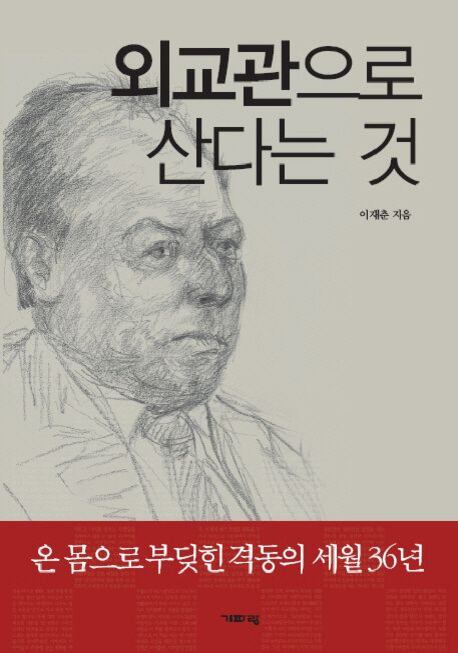
Lee Jae-chun, who was the First Vice Minister of the Foreign Ministry (and later became the Ambassador to Russia), outlined the event in his book *Living as a Diplomat*. He mentioned that in March 1995, during a routine vice-ministerial meeting led by Lee Won-jong, the political chief of Cheong Wa Dae, Vice Minister Lee Si-young dispatched a telegram titled “Investigation of Local Governance Systems.”
An internal inquiry found that Choi Seung-jin, a consul at the South Korean Embassy in New Zealand, changed the telegram’s title to “Concerning the Postponement of Local Elections” and altered sections to suggest the government was considering a delay. He then shared a copy with Kwon.
The ministry promptly notified the Democratic Party and Kwon (deputy leader) about the situation and asked them to cease using false information for political purposes. Nevertheless, Kwon claimed there was proof, and the Democratic Party along with Kim Dae-jung kept promoting the “election delay conspiracy,” leading to legal measures being taken.
According to Lee, the Democratic Party, including Kwon, did not accept the ministry’s explanation. Kwon also alleged that the ministry had created new documents to conceal the original ones and revealed Choi’s identity and letters, expressing criticism towards the ministry. He praised Choi as a “second Lee Moon-ok, Han Joon-soo, or Lee Ji-moon,” referencing whistleblowers from previous scandals.
On the same day, Kim Dae-jung, head of the Asia-Pacific Foundation and de facto leader of the Democratic Party, stated during a gathering at Seoul’s Seongsan Elementary School that Choi had substantiated the claims. He criticized the Kim Young-sam administration for trying to postpone elections as a dictatorship would, and then concealing it by fabricating records. He called for President Kim to issue an apology, remove the foreign minister, and hold those responsible accountable.
Minister Kong No-myung’s Frustrated Denial
Kong No-myung, recognized for his calm nature, unexpectedly reacted with frustration. He rebuked Kwon, saying, “After his first accusation fell apart, he now claims the ministry is involved in forgery—this is akin to attempting to conceal the sky with one’s hand.”
Kong noted that the two documents Kwon provided as proof—the original and the supposedly fake one—shared the same timestamp, which was not possible because timestamps are created automatically. He therefore determined that one of them must be fake.
Because of Kim Dae-jung’s participation, the ministry had to contemplate legal measures. Lee’s comments during a strategy meeting demonstrated the ministry’s gravity:
If we stay quiet, the public will consider us as tools of President Kim Young-sam. Why be afraid of the truth? We need to protect the ministry’s dignity. I suggest taking legal action against Kwon and Kim Dae-jung for defamation and holding Choi responsible for falsifying documents.
A quiet descended. Minister Kong stated, “I concur. Issue a recall notice to Choi and get ready to file a lawsuit.”
The following day, June 26, the ministry initiated a defamation lawsuit against Kim Dae-jung and Kwon. Choi was relieved of his duties and instructed to return to the main office. Lee stated, “The head of the Ministry’s Planning and Management Office, Kim Hang-kyung, filed the lawsuit, and media attention on the conflict between the Democratic Party and the ministry started. This was the beginning of my confrontational relationship with Kim Dae-jung.”
Continued next week >
 jasdooit
Leave a comment