

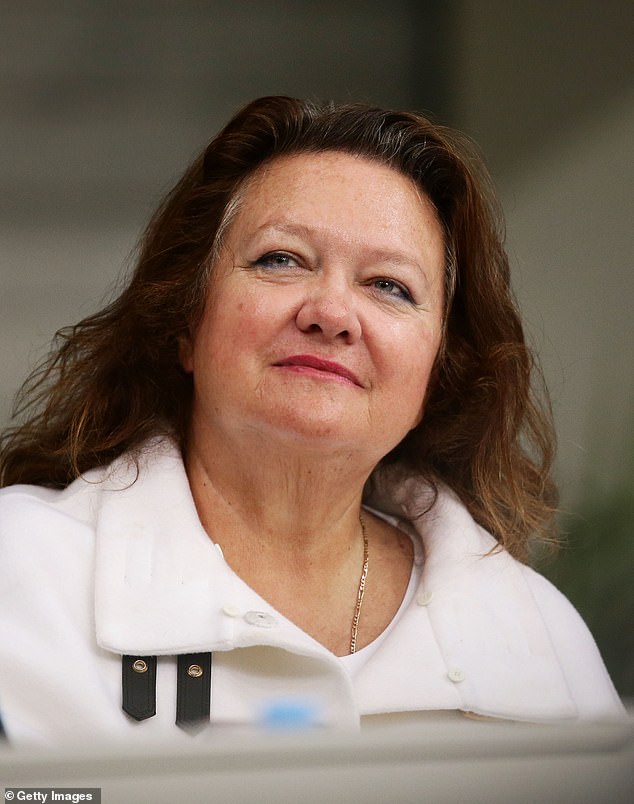
- Gina Rinehart remains at the top of a wealth ranking for the seventh consecutive year.
- The top 200 richest individuals possess a total of $707 billion.
While Australians face increasing interest rates and rising living expenses, certain individuals with substantial wealth have kept on increasing their assets.
The 2026 Wealth Index from the Australian Financial Review, released on Wednesday, features 200 individuals, such as mining and hospitality tycoons, technology innovators, and leaders in manufacturing.
The group possesses a total wealth of $707 billion, with nearly a third (31 percent) held by Australia’s 10 most affluent families.
Gina Rinehart, whose fortune was accumulated through mining, remained at the top of the list for the seventh consecutive year, with an estimated net worth of $39 billion, an increase of $900 million compared to the previous year.
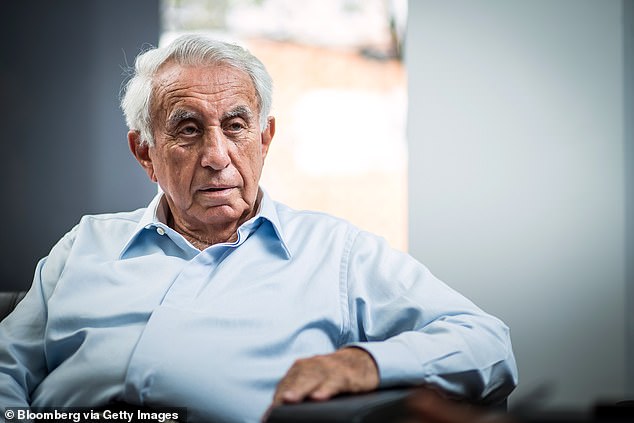
Meriton’s founder, Harry Triguboff, 93, is in second position with an estimated net worth of $32.29 billion, an increase from $29.65 billion in the previous year.
Anthony Pratt, the executive chairman of Visy, who co-owns the U.S.-based manufacturing company with his sisters, came in third with an estimated net worth of $25.19 billion.
Two of the top mining billionaires, Ivan Glasenberg and Clive Palmer, are positioned fourth and fifth on the list, with their net worth estimated at $22.4 billion and $19.6 billion respectively.
They are followed by the youngest individuals in this year’s Top 10 richest list, Melanie Perkins and Cliff Obrecht, co-founders of Canva, aged 39 and 40, who are ranked sixth with an estimated net worth of $17.56 billion.
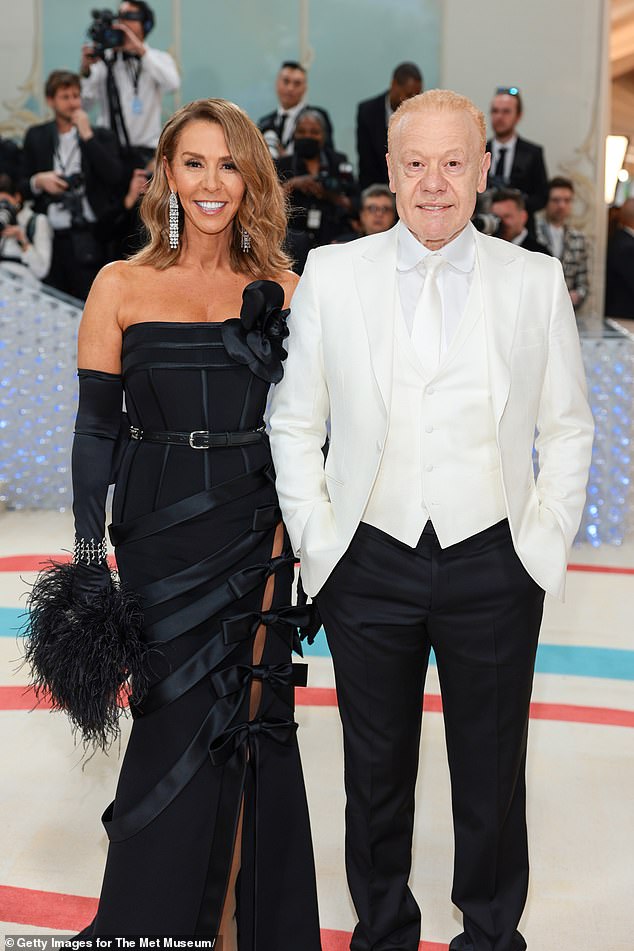
Former spouses Nicole and Andrew Forrest, who earned their wealth through mining, come next, with $17.3 billion and $15.9 billion each.
Michael Dorrell, the founder of Stonepeak, ranks ninth with a net worth of $13.82 billion generated via data center investments.
The founders of Chemist Warehouse, Mario, Marcello, and Adrian Verrocchi, valued at approximately $12.76 billion, displaced media mogul Kerry Stokes from the top 10.
Out of the entire list of Australia’s 200 wealthiest individuals, 78 reside in New South Wales, 52 are located in Victoria, 21 are based in Queensland, and 19 are found in Western Australia.
Five individuals on the wealth list reside in South Australia, two in Tasmania, and one in the Northern Territory.
Additional names are located abroad, including eight in the United States, three in the UK and China, two in New Zealand, and one each in Switzerland, Argentina, the Bahamas, and Cyprus.
Reports on the rapidly increasing wealth of the ‘rich listers’ emerge during the same month as the Albanese government’s Federal Budget, which featured initiatives aimed at tackling growing living expenses.
Over 13 million Australians will be eligible to get a $250 Working Australians Tax Offset each year starting from mid-2028.
The WATO, referred to by Treasurer Jim Chalmers as the “largest cost-of-living initiative in this Budget,” will amount to $6.4 billion over the first two years, equivalent to $4.81 per week.
However, Australians will not receive a single cent of this until 2028.
Chalmers mentioned that the government was “making room to address bracket creep” for employees, with possible additional tax reductions in the future.
Nevertheless, wealthy individuals such as Clive Palmer and Lindsay Fox have opposed the policy, arguing that it overlooks both financial status and age, and fails to effectively tackle generational inequality even though it was presented as a solution to rising living costs.
“They claim this (Budget) promotes fairness between generations, and yes, it benefits my generation,” Mr. Palmer stated.
Anyone in my situation who receives the WATO should immediately pass it on to (a) Foodbank. I will hand it directly to Foodbank to help feed hungry Australians.
Meanwhile, 89-year-old Lindsay Fox, whose net worth is approximately $6 billion through the logistics company Linfox, stated he would probably be eligible for the payment despite his wealth.
“I pay taxes, and if I qualify that year, I prefer to give the $250 to a community-supporting initiative instead of the government retaining it,” he said to The Australian.
I believe the government does not manage funds as effectively as the community. I don’t think many politicians recognize this.



Leave a Reply