
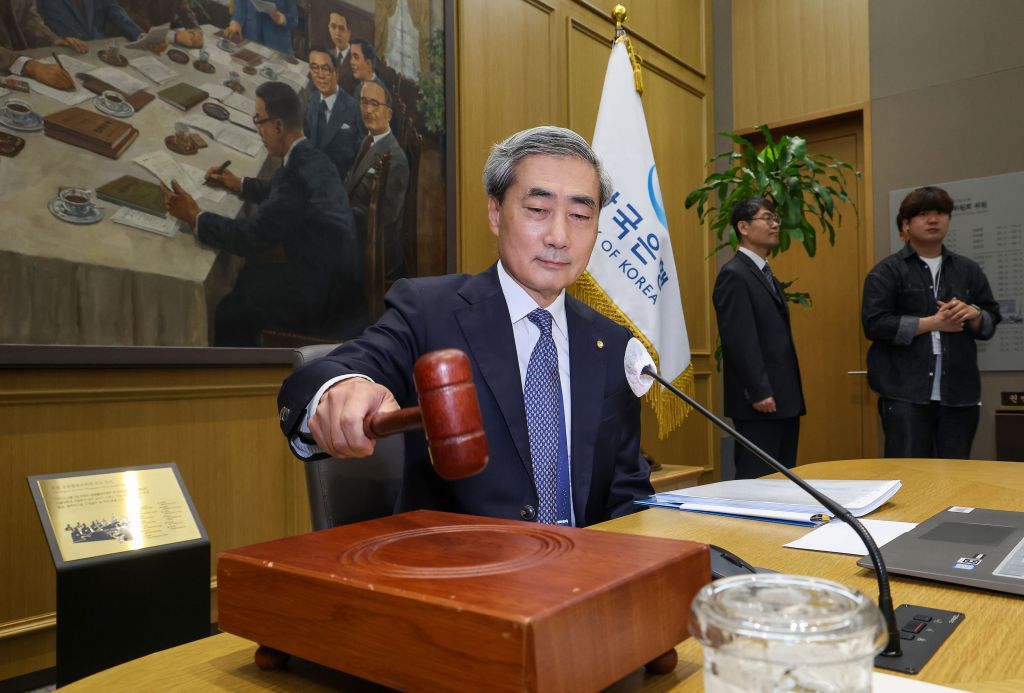
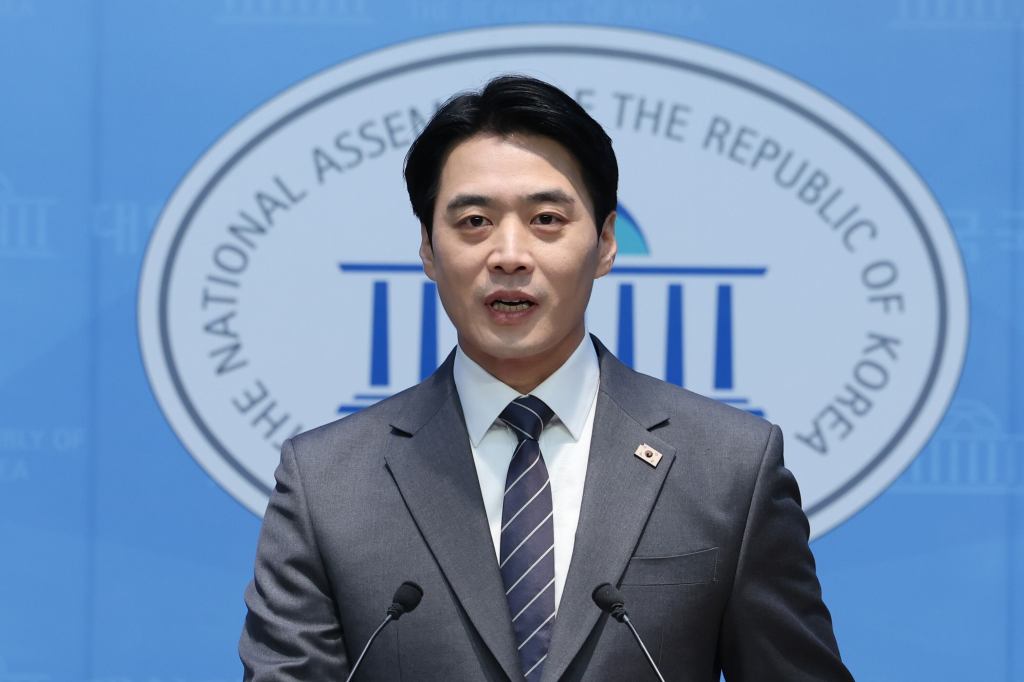
The Bank of Korea conducted a Monetary Policy Board meeting on the 28th and chose to keep the benchmark interest rate at 2.5% per year. This is the eighth straight pause by the Monetary Policy Board since the rate was reduced by 0.25 percentage points in May of last year, resulting in a full year of stability. This gathering was the first session led by Governor Shin Hyun-song, who assumed his position on the 21st of the previous month.
Amid predictions that the Bank of Korea could increase interest rates this year because of the growing effect of the Middle East conflict, which began at the end of February, Governor Shin chose to maintain the current rate during his initial meeting. This choice seems to indicate concerns about ongoing uncertainty regarding the war’s development and inadequate signals from the market. Nevertheless, two of the seven members of the Monetary Policy Board held a minority view, suggesting that raising the benchmark interest rate by 0.25 percentage points to 2.75% would be beneficial.
The Monetary Policy Direction Decision Statement was also updated to reflect a distinctly ‘hawkish’ (favoring tightening) approach. Although last month’s Monetary Policy Board, which unanimously chose to keep rates unchanged, noted that interest rate direction would be determined “while closely watching internal and external conditions,” this time it introduced for the first time the term “raising” rates, stating, “We will determine the timing of benchmark interest rate increases while monitoring the level of inflationary pressure, the progress of economic recovery, and financial stability.”
Even though a freeze was decided this time, the chance of the Bank of Korea increasing interest rates during the year is slowly rising. This is due to the fact that the Bank of Korea’s main focus on “price stability” is being affected by rising oil prices caused by the conflict in the Middle East. Additionally, the economic growth forecast has been increased as semiconductor export companies performed much better than anticipated, leading to decreased worries about an economic slowdown compared to earlier.
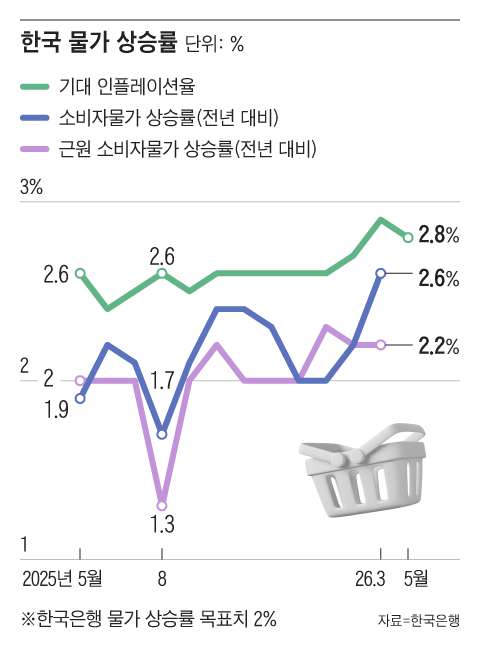
The consumer price inflation rate last month stood at 2.6%, up from the same period a year ago, surpassing the Bank of Korea’s 2% inflation target for the second month in a row. This marks an increase from 2.2% recorded in March. Analysts suggest that without the government’s price control initiatives, such as the cap on oil prices, the inflation rate would have surpassed 3%.
The core consumer price index, which excludes energy and food costs, one of the metrics emphasized by Governor Shin, increased by 2.2% from the previous month in March and April, also surpassing 2%. The anticipated inflation rate, reflecting consumers’ expectations for prices one year ahead, slightly dropped to 2.8% from 2.9% in the prior month but continues to be notably higher than 2%. Considering Governor Shin’s previous focus on a “preemptive approach,” there are predictions of an interest rate increase as early as July. There will be no meeting of the Monetary Policy Board to determine the benchmark interest rate in June.
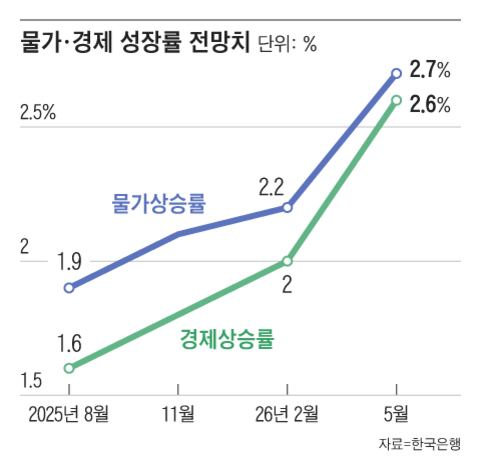
In the meantime, the Bank of Korea increased its economic growth projection for this year, moving it from 2.0% to 2.6%, which had been estimated in February. The prediction for consumer price inflation, initially anticipated at 2.2%, was adjusted upwards to 2.7%. The Bank of Korea issues its economic outlook reports in February, May, August, and November.


Leave a Reply