

Financial pressure has compelled Filipino migrants such as Jeffrey Ongoco to remain separated from their loved ones for many years, as they strive to provide for those they left behind.
For over ten years, Jeffrey Ongoco has observed much of his daughter’s childhood via a screen.
A 46-year-old individual, employed as a document controller at a construction company in Doha, departedthe Philippinesin 2007, I worked in Saudi Arabia for a job, then relocated to Qatar in 2010.
He and his wife are based in Doha to provide for their 16-year-old daughter, who has been residing in the Philippines since birth, raised by family members in Bataan province, approximately 130km (80 miles) northwest of Manila.
Are you curious about the major issues and developments happening globally? Find the solutions withSCMP Knowledge, our latest platform featuring curated content including explainers, FAQs, analyses, and infographics, presented by our acclaimed team.
It was an offering the pair believed they needed to make in order to provide her with a more favorable existence.
“As parents, we don’t wish our children to face the challenges we encountered. Therefore, even though it’s tough for parents to be separated from their kids, we will do whatever it takes for their future,” Ongoco stated.
Their narrative highlights the challenging dilemma faced by numerous overseas Filipino workers (OFWs): the opportunity to earn higher income overseas, yet frequently at the expense of being separated from the loved ones they left behind to assist.
A study conducted in January by the U.S.-based money transfer company Remitly, involving over 3,000 migrants from 21 countries, revealed that Filipinos experienced the highest levels of longing for home, at 96.15 percent, followed by individuals from South Africa, Canada, Mexico, and Brazil.
Regarding Ongoco, those emotions have never truly disappeared.
Even though he and his wife make an effort to visit their daughter annually, financial setbacks have caused them to extend the interval between their meetings.
“Because our company delayed our salaries, we had to travel back home every two years. At times, my wife and I would alternate our trips to save more money and send it back to the Philippines. The cost of plane tickets is very high when both of us are traveling,” he said.
It’s never simple to be separated from your family, particularly when you leave a young child behind. Throughout her childhood, she often expressed her desire for us to be there with her, especially when she began school and saw other children with their parents.
OFW experience
Ongoco’s background is similar to that of numerous overseas Filipino workers, who form one of the most recognizable global diasporas.
The Middle East is home to more than 2 million Filipino employees, with the majority located in the United Arab Emirates and Saudi Arabia. Although being far from home often leads to longing for food, celebrations, and daily habits, a survey by Remitly indicates that the most profound sense of loss among these workers is related to their families.
“Most people miss the ones they love more than anything else,” Remitly stated on its website, noting that 80 percent expressed a strong desire to be with their family members, while 62 percent mentioned close friends as their top longing.
“Having loved ones nearby to spend time with, rely on for support, or create memories with is crucial, and being distant, particularly in different time zones, can lead to feelings of sadness, anxiety, and isolation,” it noted.
Almost half mentioned that homesickness could appear unexpectedly, while 53 percent stated that this could be caused by talking to friends or family.
During challenging periods, some of them felt a sense of homesickness, with 43 percent reporting that they encountered it around holidays and festivals.
For Ongoco, some of the most challenging times were when his job kept him from being present for family events, such as his daughter’s graduation.
“There are moments when being a parent is really challenging. You can’t assure your child that you’ll be present for a significant event because you’re out of town, and there’s no certainty that you’ll be able to take time off,” he said.
There were moments when we considered returning to the Philippines permanently, as being together would have made us all more content. However, we had to think about supporting our family. We needed to help our child realize that we were doing this for her future. Fortunately, she was able to understand.
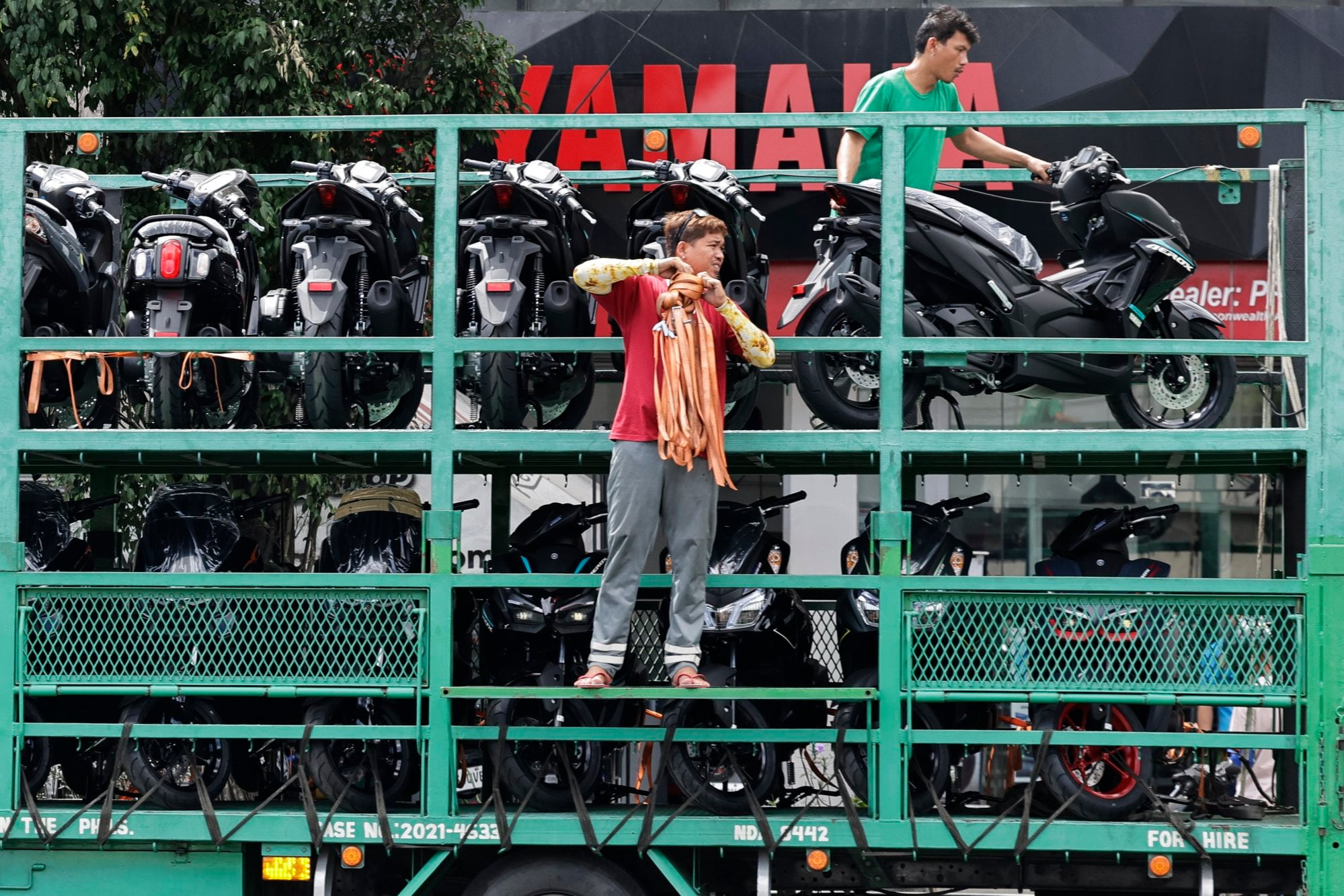
Although there is an emotional price to pay for being separated, Filipinos still experience a combination of pressure and drive when choosing whether a parent or primary earner should work overseas, as stated by Yvan Ysmael Yonaha, a Filipino sociologist specializing in labor who is working on his doctorate at the Chinese University of Hong Kong.
It is possible that there are more favorable prospects for career growth abroad, such as higher salaries or an opportunity to relocate. However, financial need continues to be a significant consideration for many Filipino families, and working overseas might appear as a viable choice to deal with various economic challenges,” Yonaha stated.
He mentioned that the significant number of OFWs resulted from Manila’s long-standing policy of encouraging migration, which businesses have since adapted to.
Recent studies indicated that foreign remittances accounted for 7 percent of the nation’s gross domestic product in the previous year, Yonaha stated.
“For nursing, this indicated the rise of recruitment agencies and private institutions focused on training nurses to satisfy international demand,” he said.
Referencing the research of migration expert Yasmin Ortiga, who is based in Singapore, Yonaha mentioned that Philippine educational institutions have been restructured to align with the expectations of OFWs abroad.
However, the same system that equips Filipinos for international opportunities also causes families to struggle with maintaining close relationships over long distances.
“Scholars have observed that Filipino domestic workers, for instance, still raise their children by utilizing a mix of digital devices and presents,” Yonaha stated, although she emphasized that there were qualitative distinctions between being physically present and being accessible online.
For OFWs such as Ongoco, virtual communication has emerged as a method to carry out their parental responsibilities while working overseas, although he acknowledges the constraints of this method.
Once, we were speaking to our child via video call, and she was crying because of a toothache, and we just listened as she fell asleep from her tears,” he said. “It was very painful to see her and we couldn’t do anything to ease her discomfort.
Yonaha mentioned that the Philippines’ social and institutional structures still promote the idea among Filipinos that working overseas is essential for a better life. This involved formal agreements with certain nations to safeguard Overseas Filipino Workers, along with rules regulating the placement of workers abroad, including domestic helpers, nurses, and seafarers.
“These institutions are widespread, many Filipinos are already working overseas, and the belief that there are few opportunities at home might encourage people to seek work abroad,” he stated.
The government and the private sector have directed Filipinos toward the international market.
Nevertheless, for Ongoco, the sacrifices over the years have been worthwhile, as their daughter is now set to join them in Doha.
“Just need to trust and have confidence,” he stated.
More Articles from SCMP
Three researchers receive Hong Kong’s Shaw Prize for creating treatment for a rare form of leukemia
This piece was first published in the South China Morning Post (www.scmp.com), a top news outlet covering China and Asia.
Copyright (c) 2026. South China Morning Post Publishers Ltd. All rights reserved.




Leave a Reply